

Nathan Sheets: "US in Shock from 'S Fear'... Fed to Cut Rates in October"
Summary
- Nathan Sheets, Citigroup's Chief Economist, diagnosed that the US economy is facing a stagflation shock.
- He predicted that the US Federal Reserve (Fed) would cut rates in October after observing the economic situation.
- Sheets warned of the potential for ongoing supply chain shocks due to tariff issues between the US and China.
In Times of Chaos, Listen to the Gurus
(7) Citigroup Chief Economist Nathan Sheets
Trump's Tariffs on China Still High
Pandemic-Level Supply Disruptions Expected
Prepare for Labor Market Deterioration
US Consumers Closing Wallets
Second Half Growth Rate Expected to be 0%
Could Record Slight Negative
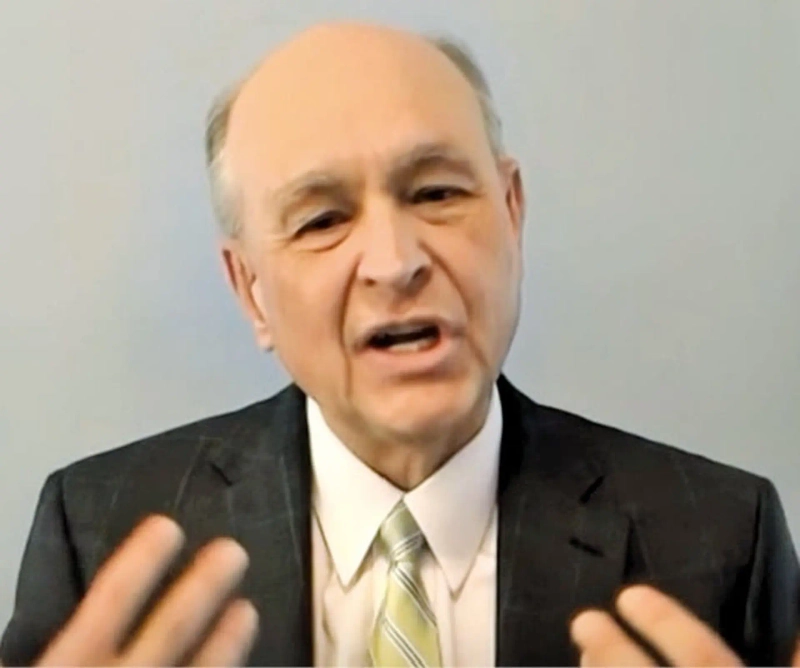
"The US economy is experiencing a stagflation shock."
Nathan Sheets, Citigroup's Chief Economist, diagnosed the US economy this way in a video interview with the Korea Economic Daily on the 9th. He predicted that the risk of economic slowdown amid inflation would become a more long-term and serious issue. He forecasted that the US Federal Reserve (Fed) would observe the economic situation with patience over the summer and cut rates in October.
◇"Second Half Economy Could Be Slightly Negative"
He said, "A rate cut in September is possible but not certain," adding, "For rates to be cut sooner than September, a very sharp economic contraction would need to occur, but the US economy still shows strong resilience." Sheets pointed to the fact that while consumer and business sentiment has recently deteriorated, real indicators like consumer spending remain quite robust.
He predicted that the US economy would experience a slowdown in consumption in the second half as the effects of tariffs accumulate. He anticipated that spending would be brought forward before tariffs are imposed and that spending would be conserved in the second half.
Sheets expected the US to experience a "reverse spiral" where consumption and the labor market negatively impact each other. After the COVID-19 pandemic, retaliatory consumption and labor shortages led to simultaneous increases in prices and wages, but this year, the opposite phenomenon is expected. Consumption is expected to slow, and companies will restrain wage increases in response.
He said, "Currently, I see the average economic growth rate for the US in the second half at roughly 0%," adding, "It might even record a slight negative."
◇"Second Supply Chain Shock"
Sheets argued that even if the US lowers tariffs on China, it would experience supply shocks similar to those during the COVID-19 pandemic. He noted that even if negotiations between the US and China are made, tariffs are higher than at the beginning of Donald Trump's presidency. He said, "During the pandemic, logistics disruptions and sudden surges in product demand were issues, but this time, the problem will be the inability to procure goods or parts from China due to high tariffs."
Sheets pointed out that "while lowering US tariffs on China would help, the real tariff rate on China was 11% when Trump took office." He explained that the tariffs discussed between the US and China have increased significantly since before the Trump administration, making it likely that US companies will begin to reorganize their supply chains outside of China. He predicted that "if high tariffs persist for a period, they will cause disruptions in supply chains and shortages, leading to chaos."
◇"US Government Needs to Prove Tariff Benefits More"
Sheets criticized that the US government needs to "more convincingly prove that the current pain will benefit the American people in the long run" regarding its tariff policy. He identified the core issue as the uncertainty among economists, politicians, and the general public about whether the current pain from tariffs will lead to a better future.
He said global investors share similar thoughts. "Investors are starting to question whether the US is still the best investment destination," he said, "and it's time for the US to convince them that it remains the top destination for global capital."
Sheets explained that "American exceptionalism is a topic actively discussed among global investors," but "the US has attractive economic fundamentals like artificial intelligence (AI)."
New York = Park Shin-young Correspondent nyusos@hankyung.com

Korea Economic Daily
hankyung@bloomingbit.ioThe Korea Economic Daily Global is a digital media where latest news on Korean companies, industries, and financial markets.