

Wall Street Leaders Like Ken Griffin Emphasize 'Cash' Amid Uncertainty
Summary
- Wall Street leaders like Ken Griffin emphasized that holding cash is the best way to prepare for market volatility.
- Griffin pointed out that government tariff policies act as a regressive tax on low-income Americans, making it a difficult time for investors.
- Larry Fink stated that amid global economic uncertainty, cash transactions and fund redistribution are expected to increase.
"Holding Cash Might Be Best During Rapid Policy Changes"
"Tariffs Are a Regressive Tax Hitting Low-Income Americans Harder"
Larry Fink: "Volatility Will Be High Until a New Balance Is Certain"
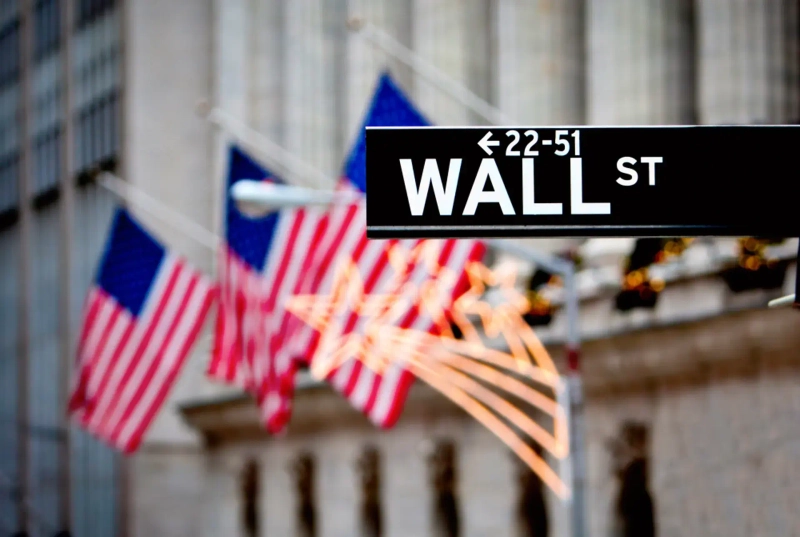
Despite the sharp rebound in the U.S. stock market following the U.S.-China tariff truce, Wall Street leaders emphasized cash in preparation for ongoing market volatility.
Ken Griffin, who founded the world's largest hedge fund, Citadel, also stated in an interview with Bloomberg on the 13th (local time), "Looking back over the past month, it would have been better to hold cash and wait." He said, "Most of the value of the companies we invest in is determined by rapidly changing government policies, making it a really tough time for investors."
The 56-year-old billionaire Griffin mentioned that "holding cash might have been the best way to navigate this situation."
A Republican supporter, Griffin has consistently criticized Trump's tariff policies. He reiterated that tariffs are "a regressive tax that hits America's working class harder." He said in an interview with Bloomberg, "Trump's tariff policies will pay a 'real price' in the midterm elections."
Nevertheless, he praised Treasury Secretary Scott Vessent for significantly improving trade conditions between the U.S. and China compared to just a few days ago.
Larry Fink, CEO of the world's largest asset manager, BlackRock, also said at the Saudi-U.S. Investment Forum held in Riyadh on the 13th, "There will be significant volatility until it is clear what the new balance is."
He said this new balance depends on how the U.S. reshapes the global trade order. He also mentioned, "As uncertainty rises, there will be more cash transactions."
Fink also pointed out that investors' preferences are changing. He noted, "There is a slight redistribution of funds from the U.S. to other economic zones, especially Europe." He added that more capital could flow into the Middle East, India, and Japan.
Jenny Johnson, CEO of Franklin Templeton, said, "When volatility occurs, the market reorganizes, and that's when active management succeeds." She also mentioned the rise of the secondary private equity market as investors seek liquidity during uncertain times.
The secondary private equity market refers to the market where private equity investors (LPs) sell their fund shares or the shares of companies invested in by private equity to other investors. It is mainly used for liquidity and risk management purposes.
Guest reporter Kim Jung-ah kja@hankyung.com

Korea Economic Daily
hankyung@bloomingbit.ioThe Korea Economic Daily Global is a digital media where latest news on Korean companies, industries, and financial markets.