

'Milan Exchange Rate Negotiations' News Strengthens Won... Is Appreciation Demanded? [Lee Sang-eun's Washington Now]
Summary
- It was reported that the US and South Korea conducted exchange rate consultations, leading to a strengthening of the won.
- There is speculation that the US government might demand currency appreciation, heightening market tension.
- The US exchange rate negotiations are likely to focus on reducing market intervention, but actual demands remain to be seen.
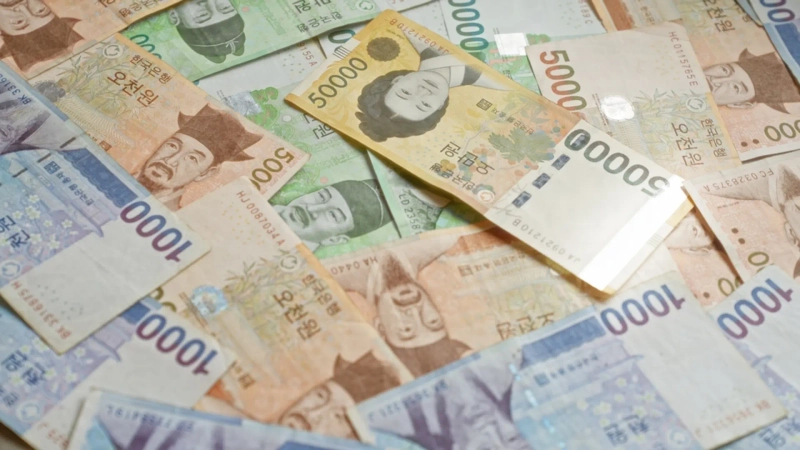
Following reports that the US and South Korean negotiation teams conducted exchange rate consultations last week, the Korean won is showing a strengthening trend.
Among market participants, there is a prevailing expectation that the Trump administration will ultimately pursue policies to weaken the dollar.
Previously, a report by Steve Miran, the White House Economic Advisor, garnered significant attention for suggesting the possibility of a Mar-a-Lago agreement similar to the second Plaza Accord. Since he pointed out that the excessive strength of the dollar is a reason why US manufacturing is not doing well, there is speculation that policies to weaken the dollar might be implemented to address this.
Due to this context, whenever the US government mentions discussions on currency with other countries, the dollar value tends to drop, and the value of counterpart currencies appreciates. Recently, the Taiwanese dollar rose first, followed by the Korean won, and between yesterday and today, the won's value has been rising.
The official stance of the White House is that they are not currently pursuing a weak dollar policy. According to Bloomberg News, US officials have guidelines not to address currency policy promises in global trade negotiations.
However, only Treasury Secretary Scott Besant is authorized to handle currency issues. Secretary Besant maintains an external stance that the strong dollar policy is "intact" and "unchanged." It is believed that a strong dollar is still somewhat necessary to suppress the inflation effects caused by tariffs.
Nevertheless, the market is not taking Secretary Besant's words at face value. There is widespread tension in the market that the US could demand currency appreciation from allies at any time, and many experts lean towards this perspective.
For now, the White House explains that currency policy was not discussed in the trade negotiations with China. However, during the first negotiations on the 24th of last month, Secretary Besant suggested discussing the exchange rate issue separately with our government. Reuters reported that a meeting actually took place earlier this month in Milan, Italy. Discussions with Japan and Taiwan are also expected.
The specific details of what was discussed have not been disclosed. However, the current situation is not suitable for the US to unilaterally demand appreciation from our government. Since the government does not unilaterally decide exchange rates, even if appreciation is attempted, it is likely to be quickly absorbed by the market, resulting in little change in exchange rates and only incurring costs.
A currency policy expert stated, "Even if both governments agree to appreciate the won, if such a position is publicly exposed, it becomes even less effective." This is because "it becomes certain that one can make money by taking the opposite position and attacking." Secretary Besant himself was one of the key figures who, along with George Soros in 1992, attacked the British central bank's plan to defend the pound's value by placing large bets on its decline, creating 'Black Wednesday.' He cannot be unaware of such risks.
Therefore, even if the US government conducts exchange rate negotiations, many views suggest that it is more likely to include demands to reduce market intervention rather than direct appreciation. However, since President Trump is less concerned with aggressive market intervention or distortion compared to Secretary Besant, we will have to wait and see what actual demands may arise.
Washington Correspondent Lee Sang-eun selee@hankyung.com

Korea Economic Daily
hankyung@bloomingbit.ioThe Korea Economic Daily Global is a digital media where latest news on Korean companies, industries, and financial markets.