

Summary
- Moody's announced that it downgraded the US credit rating from Aaa to Aa1.
- It analyzed that the increase in US federal government debt and rising treasury yields are the main reasons.
- Moody's mentioned the strengths of the US economy and adjusted the rating outlook to 'stable'.
Moody's Downgrades US Credit Rating from Aaa to Aa1
"US Federal Debt Rapidly Increasing"
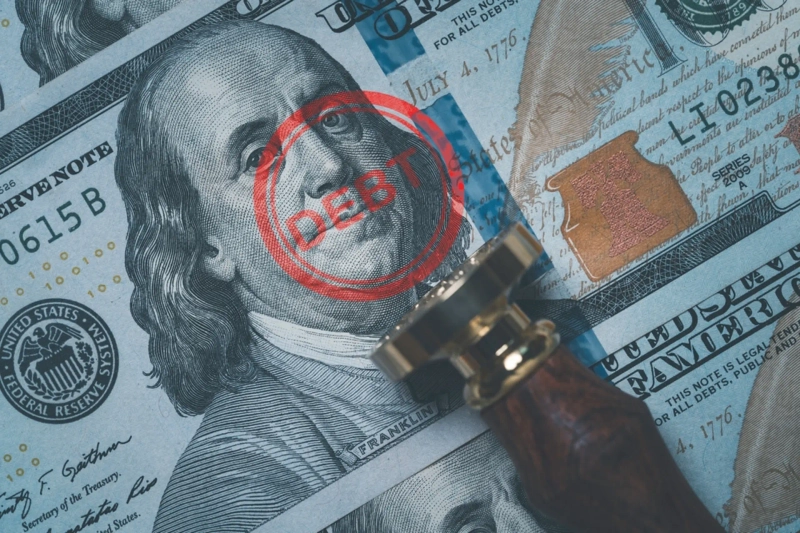
On the 16th (local time), international credit rating agency Moody's downgraded the United States' national credit rating from the highest rating of 'Aaa' to 'Aa1'. The increase in US federal government debt is the main reason. Additionally, the rise in treasury yields, which increased the government's interest burden, also had an impact.
Moody's announced that it has downgraded the US national credit rating (long-term issuer rating) from Aaa to Aa1. In its rating change report, Moody's explained, "Over the past decade, US federal government debt has rapidly increased due to continuous fiscal deficits," and "During this period, federal fiscal spending has increased while tax policies have reduced fiscal revenue."
According to the US Treasury, the US national debt is approximately $36.22 trillion as of the 15th. Debt arises when the government spends more money than it receives in a given year, borrowing money through the issuance of treasury bonds. The US government has recorded a fiscal deficit every year since 2001. Since 2016, spending on social security, medical services, and interest payments has increased faster than revenue. In particular, from fiscal years 2019 to 2021, government spending increased by 50% to respond to COVID-19.
Moody's pointed out, "As fiscal deficits and debt increase and interest rates rise, interest payments on government debt have also significantly increased." Moody's estimated that the proportion of mandatory spending, including interest costs, in total fiscal spending will rise from about 73% in 2024 to about 78% in 2035.
There is analysis that President Donald Trump's sudden announcement on April 9 (local time) to defer mutual tariffs for 90 days was due to the unusual selling of treasury bonds. The yield on the US 10-year treasury bond rose to levels seen during the global financial crisis, causing panic in the market.
Moody's adjusted the rating outlook to 'stable', stating that the many strengths of the US economy provide resilience to shocks.
Moody's assessed, "While there is a possibility of a short-term slowdown in US growth due to the impact of tariff increases, it is not expected to have a significant impact on long-term growth," and "Additionally, the status of the US dollar as the world's reserve currency provides significant credit support to the country."
Previously, in November 2023, Moody's adjusted the outlook for the US national credit rating from 'stable' to 'negative', indicating the possibility of a downgrade. Moody's had been the only one among the three major international credit rating agencies to maintain the US credit rating at the highest level.
It has been 1 year and 9 months since the three major credit rating agencies downgraded the US credit rating. Previously, Fitch downgraded the US national credit rating from AAA to AA+ in August 2023. Before that, Standard & Poor's (S&P) downgraded the US rating from AAA to AA+ in 2011.
New York = Park Shin-young Correspondent nyusos@hankyung.com

Korea Economic Daily
hankyung@bloomingbit.ioThe Korea Economic Daily Global is a digital media where latest news on Korean companies, industries, and financial markets.