

PiCK
Democratic Party: "Stablecoins Can Overcome 'Exchange Rate Risk'"
Summary
- The Democratic Party emphasized that Korean won-based stablecoins can be a means to overcome exchange rate uncertainties in overseas venture capital investment contracts.
- Democratic Party lawmaker Min Byung-deok stated that Korean won stablecoins can be competitive in emerging markets such as Southeast Asia and can secure a role in the dollar-centered market.
- Academics, including Professor Lee Jong-seop of Seoul National University, stated that stablecoins can complement the limitations of central bank digital currencies (CBDC) and are essential for innovating outbound retail finance such as overseas remittances and payments.
Democratic Party 'Stablecoin Forum'
"Contributing to Reducing Corporate Uncertainty"
Criticism of Candidate Lee Jun-seok's Remarks Continues
"Revealing Ignorance of Virtual Assets is Regrettable"
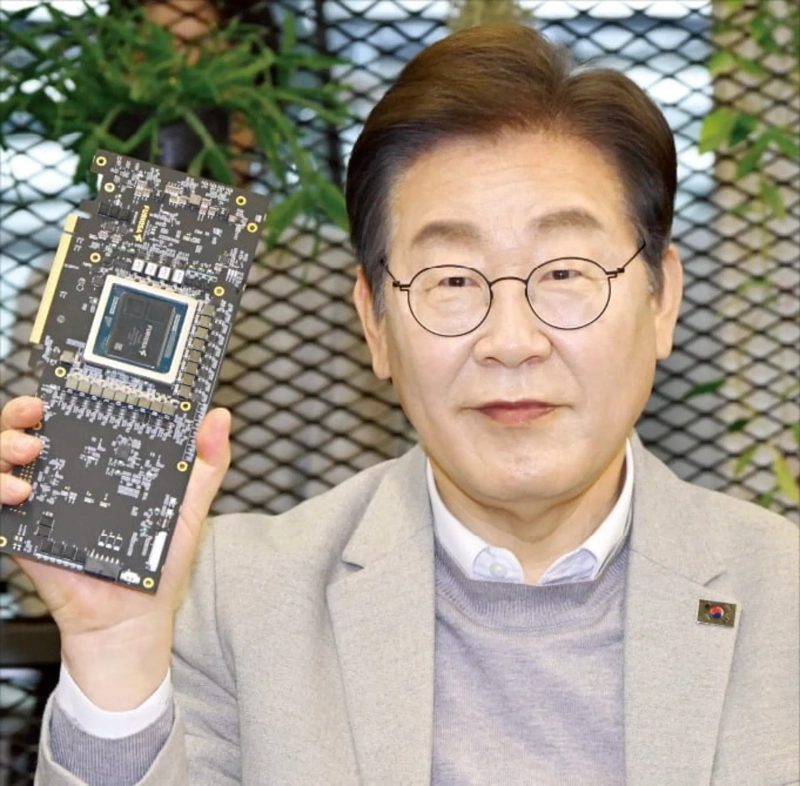
The Democratic Party has stated that stablecoins based on the Korean won can overcome 'exchange rate risk'. They criticized Lee Jun-seok, the Reform Party's presidential candidate, for his criticism of Lee Jae-myung's stablecoin policy, saying, "He is revealing his misunderstanding as it is." Analysts say the Democratic Party is accelerating its efforts to take the lead in the virtual asset issue ahead of the early presidential election.
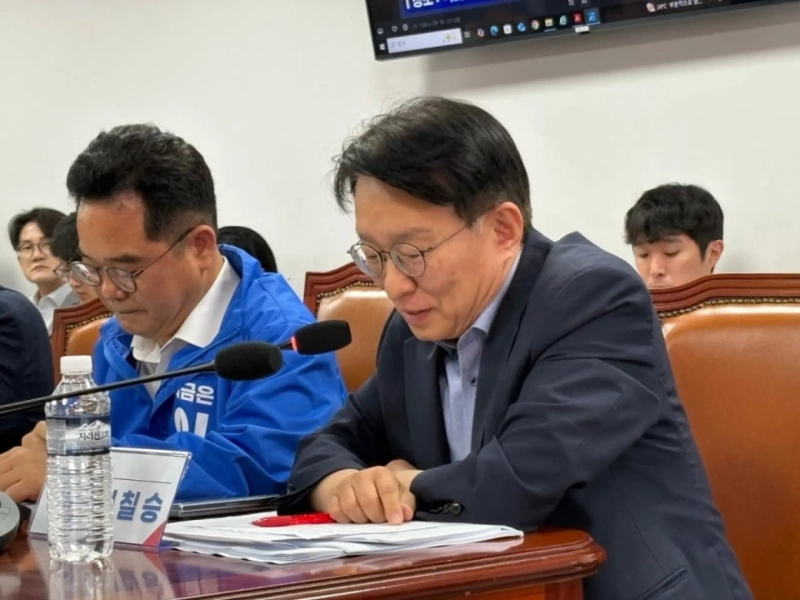
Democratic Party lawmaker Kwon Chil-seung attended the 'Democratic Party Digital Asset Committee Stablecoin Forum' held at the National Assembly Hall in Seoul on the 21st, saying, "Stablecoins can overcome existing exchange rate uncertainties" and "Stablecoins can be used as an intuitive and rapid means of attracting global funds."
Lawmaker Kwon mentioned a startup case where an investment contract with a foreign venture capital (VC) was canceled due to exchange rate uncertainty. He said, "A startup signed an investment contract with a foreign venture capital firm, but the investment was canceled due to exchange rate risk and complex foreign exchange-related laws," adding, "Currency mismatches and time lags in financial transactions are approaching as uncertainties for companies."
Lawmaker Kwon emphasized, "If (stablecoins) can be used within the institutional framework, they can be a device to overcome existing exchange rate uncertainties and complex foreign exchange transaction risks." He continued, "Although laws and systems are not yet fully established, and there are debates about the technological reliability and regulatory compliance of (stablecoins), if we find a point where policy and technology are organically connected, digital assets can act as a platform to enhance the fairness and accessibility of capital procurement beyond investment means."
"Korean Won Stablecoins Also Have Sufficient Competitiveness"
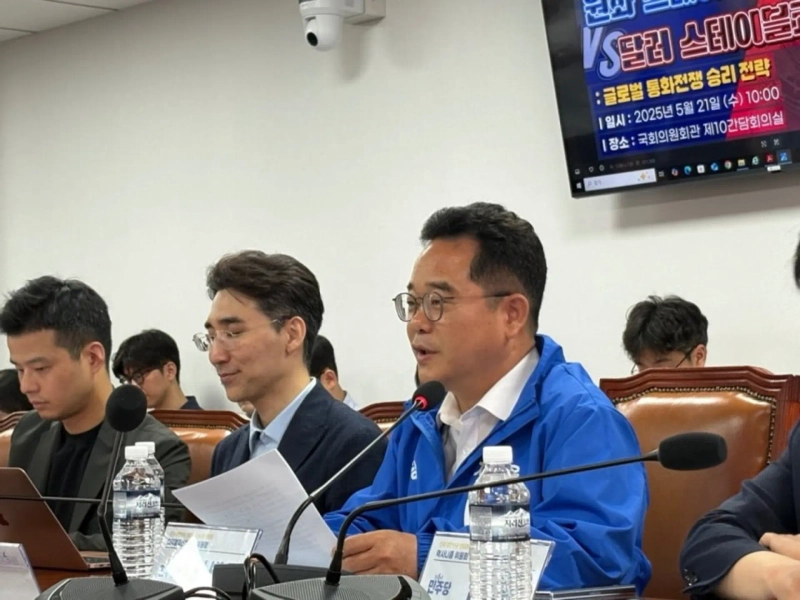
The Democratic Party also pointed out candidate Lee Jun-seok's remarks regarding stablecoins. Democratic Party lawmaker Min Byung-deok attended the forum and said, "As the (financial) paradigm is changing, if we focus our capabilities, Korean won stablecoins can also have sufficient competitiveness," adding, "Some politicians' remarks reveal their misunderstanding of this trend." This was aimed at Lee Jun-seok's remarks on stablecoins during the first presidential candidate TV debate.
At that time, candidate Lee Jun-seok criticized Lee Jae-myung's stablecoin policy, saying, "Issuing (Korean won stablecoins) without a concrete strategy will only stir up the market." The Democratic Party's Digital Asset Committee also issued a statement on the 20th, rebutting candidate Lee Jun-seok's remarks on stablecoins. Through the statement, the Democratic Party said, "Candidate Lee Jun-seok attracted the attention of the digital asset industry with questions about stablecoins during the TV debate, but at the same time, he revealed his ignorance, causing concern," adding, "We hope candidate Lee Jun-seok will calmly learn about the development of digital assets."
The Democratic Party believes that the competitiveness of Korean won stablecoins can be secured through policy support. Lawmaker Min said, "If we utilize platforms where we have strengths, such as K-culture, we can grow the ecosystem of Korean won-based stablecoins, focusing on emerging markets such as Southeast Asia," adding, "By doing so, we can secure our role in the dollar-centered (stablecoin) market." He continued, "(Candidate Lee Jun-seok) also misunderstands the domestic feasibility of collateralized stablecoins," adding, "Saying that Korea, as a latecomer, should give up because global companies are already leading is the same logic as opposing the investment in high-speed internet networks during the Kim Dae-jung administration."
The United States, which is accelerating the institutionalization of stablecoins, was also mentioned. Lawmaker Min said, "On the 20th, the Genius Act (Stablecoin Act) debate was concluded in the U.S. Senate," adding, "In Korea, it would be like a filibuster being concluded, meaning the (bill) has effectively passed." He continued, "The U.S. is moving ahead, but (other presidential candidates) are talking about 'anti-crypto' without knowing the opponent's policy," adding, "Whether Korea remains a passive acceptor of the global order or can leap forward as an active designer will depend on how we respond."
"Stablecoins Complement CBDC Limitations"
In academia, there is a consistent opinion that the introduction of Korean won stablecoins is inevitable. This is because stablecoins can complement the limitations of central bank digital currencies (CBDC). Professor Lee Jong-seop of Seoul National University's Business Administration Department said at the forum, "CBDC is merely converting the 'digital credit' used domestically through bank applications (apps) into a form directly distributed and managed by the state," adding, "CBDC lacks scalability, so to innovate outbound retail finance such as overseas remittances and payments, the introduction of Korean won stablecoins based on public blockchain is essential."
The issues of dollar-based stablecoins like Tether (USDT) were also mentioned. Senior Researcher Kim Gap-rae of the Capital Market Research Institute said, "Korean won stablecoins are necessary to respond to the problems caused by dollar stablecoins in the domestic market, such as weakening monetary policy, intensifying won substitution, and accelerating capital outflow." He continued, "In the process of institutionalizing stablecoins, it is necessary to consider protecting won sovereignty, trade settlement efficiency, and exploring overseas markets using products with national competitiveness such as K-content."
There was also a suggestion that stablecoin issuers should not be limited to financial institutions in future legislative processes. Director Yoon Min-seop of the Digital Consumer Research Institute said, "If issuers (of stablecoins) are limited to banks like in Japan, scalability will inevitably decrease," adding, "When licensing issuers, it is necessary to consider whether to issue (Korean won stablecoins) and be satisfied or use it as a means to expand the currency territory." This means that to expand the currency territory through Korean won stablecoins, the scope of issuer licensing should also be broadly set.

JOON HYOUNG LEE
gilson@bloomingbit.ioCrypto Journalist based in Seoul