

Summary
- The yield on the US 30-year Treasury bond surpassed 5%, highlighting concerns over the budget deficit.
- Former Treasury Secretary Mnuchin emphasized that the US budget deficit is a bigger issue than the trade deficit.
- Major indices showed a downward trend, particularly influenced by concerns over debt increase due to Trump's tax cuts.
Concerns Over Additional $3 Trillion to $5 Trillion Deficit Due to Trump's Tax Cuts
Former Treasury Secretary Mnuchin: "Budget Deficit More Serious Than Trade Deficit"
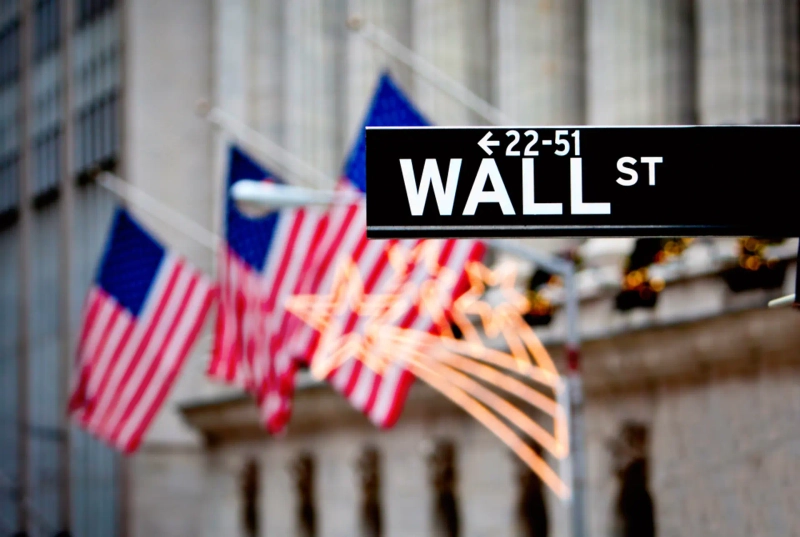
Concerns over the budget deficit have resurfaced due to the Trump administration's tax cuts, causing the yield on the US 30-year Treasury bond to surpass 5% once again. As a result, on the 21st (local time), US stocks, along with bonds and the dollar, all declined.
At 10 AM Eastern Standard Time, the S&P 500 index fell by 0.4%, and the Nasdaq Composite index dropped by 0.3%. The Dow Jones Industrial Average decreased by 0.7%.
The 30-year Treasury yield rose by 5 basis points (1bp=0.01%) to 5.018% on this day. The benchmark 10-year Treasury yield also increased by 5bp to 4.533%. Long-term Treasury yields exceeded 5% after Moody's downgraded the US credit rating last weekend.
The Bloomberg Dollar Spot Index fell by 0.4% against major currencies. Spot gold traded at $3,306.10 per ounce, up 0.5%. Bitcoin fell by 0.3% to $106,670.12.
Reports that Israel is preparing for a possible attack on Iran also worsened risk sentiment. Despite the uncertainty of the attack decision, international oil prices rose. West Texas Intermediate (WTI) crude traded at $62.64 per barrel, up 1%.
The rise in Treasury yields, which had stabilized the previous day, was due to concerns over worsening budget deficits as Republican leaders finalized the budget for tax cuts.
Analysts said Trump's tax cuts could add $3 trillion to $5 trillion to the US federal government's debt, which stands at $36.2 trillion (₩49,660 trillion).
David Russell, head of global market strategy at TradeStation, described it as "pouring fuel on the fire" with budget uncertainty added to tariff uncertainty amid the unraveling of American exceptionalism.
Former US Treasury Secretary Steven Mnuchin, in a panel discussion at the economic forum in Qatar, urged the government to prioritize fiscal recovery, stating that the US budget deficit is a bigger issue than the trade deficit.
All three major indices remain higher than the trading levels on April 2, when President Trump announced reciprocal tariffs. The S&P 500 index is currently hitting a yearly high, having once entered a correction with a drop of over 20% from its peak, but has since rebounded sharply.
Christian Kerr, head of macro strategy at LPL Financial, pointed out, "The recovery of the US stock market over the past month has been remarkable in both speed and scale, but the reality is that many uncertainties remain."
Guest reporter Kim Jung-ah kja@hankyung.com

Son Min
sonmin@bloomingbit.ioHello I’m Son Min, a journalist at BloomingBit