

PiCK
Bitcoin Surpasses $110,000… 'US Stablecoin Bill' Ignites the Surge [Hwang Doo-hyun's Web3+]
Summary
- Bitcoin has reached an all-time high of $111,880, drawing attention from the market.
- This is attributed to the progress of the US stablecoin bill in the Senate, reflecting expectations for the institutionalization of cryptocurrencies.
- In Korea, the need for stablecoin-related legislation is emphasized, with the US GENIUS Act being cited as a major reference.
Bitcoin Hits New High… Expectations for US Stablecoin Bill
Introduction of Bank-Level Regulations on Stablecoins
Debate Intensifies in Korea… "Legislation Needs to Be Prepared"

Bitcoin (BTC) has reached a new all-time high in four months. On the 21st (local time), Bitcoin traded at $111,880 on the global cryptocurrency exchange Binance, up about 6% from the previous day, surpassing the previous high of $109,588.
The industry points to the legislative progress of the US Senate's stablecoin bill, the 'GENIUS Act,' as the background for this new high. The possibility of the bill's passage has increased, reflecting market expectations for the institutionalization of cryptocurrencies. Bloomberg reported that "some Democratic lawmakers have withdrawn their opposition, increasing the likelihood of the bill passing," and "expectations for regulatory clarity have led to Bitcoin's rise."
As of the 22nd, the bill has entered the amendment process after passing the cloture motion (a procedure allowing the bill to be debated by blocking a filibuster). So what does the GENIUS Act, the source of these expectations, contain?
The Core is 'Licensing'… Bank-Level Regulations Applied to Stablecoins
The GENIUS Act is centered on a 'licensing system' that limits the issuance of stablecoins in the US to 'permitted payment stablecoin issuers.'
Stablecoin issuers are limited to non-bank institutions approved by the Office of the Comptroller of the Currency (OCC), uninsured national banks, and federal agencies. Non-bank institutions under state supervision can also issue stablecoins if they receive permission from regulatory authorities. However, all issuers must demonstrate compliance with federal regulatory standards that are substantively similar.
For foreign issuers, issuance is exceptionally allowed only in countries with regulatory systems substantially similar to those of the US. In this case, issuers must meet all requirements, including ▲holding reserves in US depository institutions ▲registering with federal regulatory authorities ▲complying with legal orders. If these regulations are not complied with, the distribution of the stablecoin will be prohibited after a 90-day grace period.
Prohibition of Profit Payments… Reserves Centered on US Treasuries
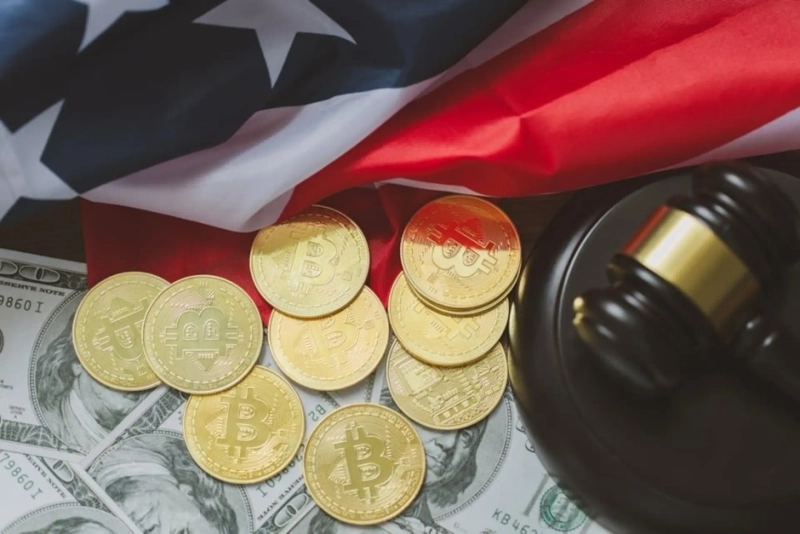
The GENIUS Act clearly defines stablecoins as a 'means of payment' rather than a financial product. Accordingly, issuers cannot provide any form of compensation such as interest or profits, and 'profit-type stablecoins' are fundamentally blocked.
All stablecoins must deposit reserves in highly liquid assets such as cash, US Treasuries, insured deposits, and short-term repurchase agreements at a 1:1 ratio. If the issuance exceeds $50 billion, monthly reserve disclosures and external audits are mandatory.
Consumer protection measures are also in place. Stablecoin holders will have priority rights to recover deposits over creditors in the event of issuer bankruptcy, and reserves must be managed separately from issued assets. Additionally, if stablecoins are misrepresented as legal tender or insurance to deceive consumers, a fine of up to $500,000 will be imposed.
Strengthened Anti-Money Laundering and Legal Violation Sanctions
Internal control requirements to prevent financial crimes have been significantly strengthened. All issuers must fulfill obligations such as ▲Know Your Customer (KYC) ▲Anti-Money Laundering (AML) internal controls ▲identifying and reporting sanctioned individuals ▲Suspicious Transaction Reporting (STR), and submit a certificate of compliance annually.
The US Treasury is also required to mandatorily research the introduction of innovative technologies such as AI and blockchain forensics into AML, and will pursue the establishment of specific guidelines through FinCEN (Financial Crimes Enforcement Network) in the future. If a foreign issuer refuses a legal order, the Treasury can designate the issuer as 'non-compliant' and completely halt distribution in the US.
Issuing stablecoins without permission will result in fines of ▲up to $100,000 per day ▲$200,000 for intentional violations ▲up to $1 million for violations by foreign issuers, and a prohibition order on trading is also possible. Regulatory authorities can exercise strong supervisory powers such as removing issuer executives and suspending operations if necessary. Technical control requirements are established so that US authorities can freeze, block, and destroy stablecoins upon command.
Political Debate in Korea… "Legislation Needs to Be Prepared with US Standards in Mind"

Political debate over stablecoins is also heating up in Korea. Lee Jae-myung, the Democratic Party's presidential candidate, argued for the necessity of a won-based stablecoin, while Lee Jun-seok, the Reform New Party's presidential candidate, criticized it as an "unrealistic idea," questioning the reserve ratio and issuing entities.
In the first presidential TV debate held on the 18th, candidate Lee Jun-seok pointed out that "the Democratic Party is stimulating the market without a strategy for the reserve ratio or issuing entities," and challenged candidate Lee Jae-myung, asking "Do you know the structural differences between USD Coin (USDC) and Tether (USDT)?" In response, the Democratic Party's Digital Asset Committee countered that "stablecoins are most reliable when the reserve ratio is 1:1, and Korean companies have sufficient technology to issue stablecoins."
The industry unanimously stated that Korea should urgently prepare stablecoin legislation by referring to the US GENIUS Act.
Bok Jin-sol, a researcher at Populous, said, "It's unfortunate that Korea is still at a very basic level of discussion while the US is on the verge of passing the first federal stablecoin bill," and "we need to quickly prepare regulations by referring to the US stablecoin bill and move towards issuing capital market-driven stablecoins."
Another industry official suggested, "I think the Korean political and financial sectors are overly sensitive about KYC, AML, and depositor protection," and "if private financial companies are allowed to issue by referring to the stablecoin regulations of the US, Singapore, and the European Union (EU), it will be much more advantageous in terms of future stablecoin utilization and adoption."
Hwang Doo-hyun, Bloomingbit Reporter cow5361@bloomingbit.io

Doohyun Hwang
cow5361@bloomingbit.ioKEEP CALM AND HODL🍀