

PiCK
Trump pushes for 'tax rate hike' on foreign unearned income… Wall Street warns of worsened investor sentiment
Summary
- It was reported that the Trump administration is pushing for a bill to raise tax rates on foreign investment.
- The bill states that it could increase tax rates on foreigners' unearned income such as interest and dividends in the U.S. by up to 20 percentage points.
- Experts warned that such a measure could dampen foreign investor sentiment and lead to U.S. market instability.
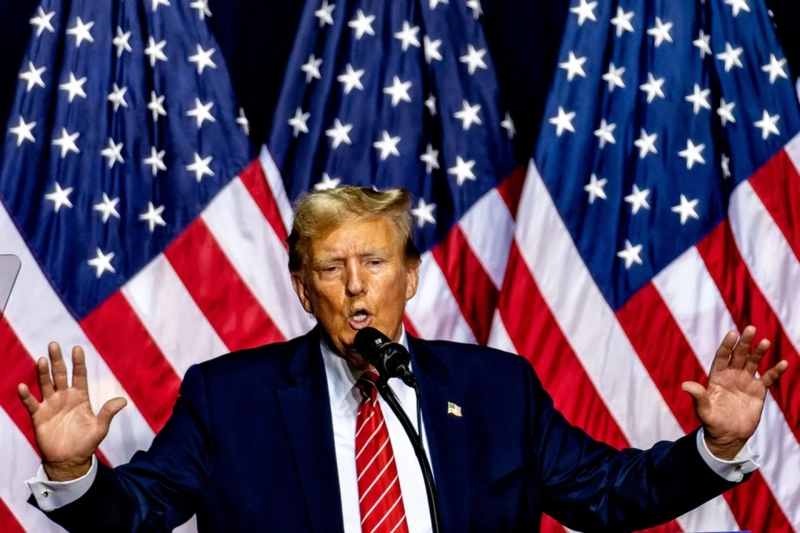
The Trump administration in the U.S. is reportedly pursuing a bill to impose additional taxes on foreign investment. If this bill is enacted, there are concerns that it could further worsen foreign investor sentiment, which is already dampened by trade wars and other factors.
According to major foreign media such as Bloomberg and the Financial Times (FT) on the 29th (local time), the 1,000-page tax-and-spending bill that passed the U.S. House last week includes 'Section 899,' a tax-related provision. The title of this provision is 'Enforcement of Measures Against Unfair Foreign Taxes,' and it stipulates that the U.S. government will sharply increase unearned income tax rates for individuals and companies from countries whose tax policies are deemed 'discriminatory.' Essentially, it means the U.S. will raise taxes on passive income such as interest and dividends that certain foreign nationals earn through assets in the country.
Specifically, Section 899 targets countries that have imposed digital taxes on big tech companies such as Google and Meta or have introduced a global minimum corporate tax. If a certain country's tax policy is considered 'discriminatory' against the U.S., Section 899 requires that the unearned income tax rate on nationals of that country be raised by 5 percentage points in the first year, and then increased by an additional 5 percentage points annually. Additionally, Section 899 allows a tax rate up to 20 percentage points higher than the statutory rate for these taxes. Bloomberg reported that "almost all entities, including corporations, sovereign wealth funds, pension funds, public institutions, and individual investors, would be affected."
Experts are concerned about a decline in foreign investor sentiment. Global investment bank Morgan Stanley predicted that Section 899 could trigger a weakening not only in the dollar but also in European equities. Gilles Moec, chief economist at the global investment bank AXA, analyzed, "(Section 899) could add upward pressure on long-term interest rates."
There is also concern that the provision could lead to instability in the bond market. Michael Brown, a strategist at the British firm Pepperstone Group, told Bloomberg, "U.S. Treasuries are already not particularly attractive to foreign investors," and explained, "If the tax burden also increases, foreign investors will have one more reason to shy away from the U.S. market." Global research firm Gavekal noted, "This provision is part of President Trump’s strategy to gain negotiating leverage over countries adopting digital and global corporate taxes, but the market could become unsettled simply by Section 899’s existence."

JOON HYOUNG LEE
gilson@bloomingbit.ioCrypto Journalist based in Seoul