

PiCK
The Democratic Party Directly Criticizes Lee Chang-yong’s Remarks…"If Banks Monopolize Stablecoins, They Become Ineffective"
Summary
- The Democratic Party of Korea stated that a monopoly by banks in the issuance and introduction of stablecoins could lead to a loss of market competitiveness.
- The party's Digital Assets Committee asserted that private sector participation can maximize utilization and investment opportunities for won-based stablecoins.
- There are concerns that bank-centered policies may surrender the market to dollar-based stablecoins, and the Bank of Korea is urged to strengthen its capabilities in blockchain and AI.

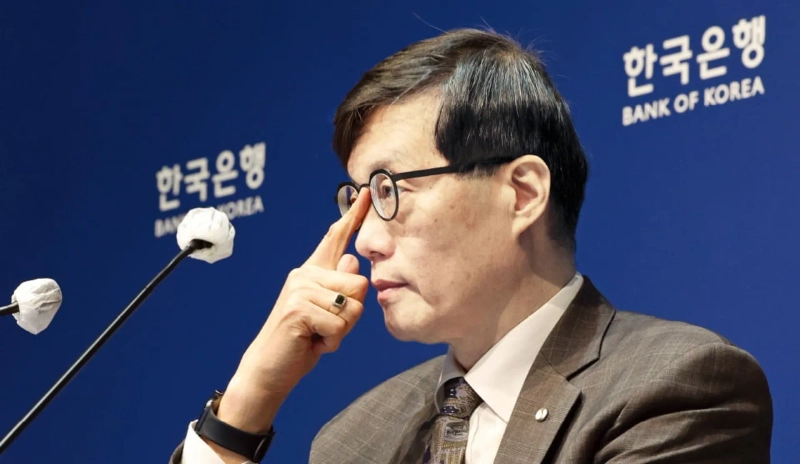
The Democratic Party of Korea has criticized Lee Chang-yong, Governor of the Bank of Korea, for his remarks related to stablecoins. When Governor Lee expressed the opinion that the Bank of Korea should supervise won-based stablecoins, the Democratic Party directly rebuffed this stance.
On the 30th, the Digital Assets Committee under the party’s election committee issued a statement, saying, "Dollar-based stablecoins are rapidly dominating global payment networks and encroaching on the Korean market as well," adding, "In this reality, an approach centered on central bank licensing and supervisory authority may not align with global regulatory and technological trends, which is concerning."
Earlier, on the 29th, Governor Lee had emphasized the Bank of Korea's authority over the management and supervision of stablecoins. He stated, "Won-based stablecoins could be used as a means to evade capital regulations," and further said, "For now, issuance should begin with banks that are capable of being supervised." He added, "Since won-based stablecoins are substitutes for currency, if non-bank institutions freely issue them, it could significantly undermine the effectiveness of monetary policy."
In contrast, the Democratic Party asserts that private sector participation is essential to foster won-based stablecoins. The Digital Assets Committee said, "Won-based stablecoins have a variety of potential uses, not only as a domestic payment method but also for uses such as purchasing K-Culture products overseas," adding, "Discovering creative uses abroad can be maximized when entrusted to the private sector, not just a handful of domestic banks."
The committee also stated, "If the domestic banking industry monopolizes (stablecoins), it could become an ineffective tool due to slow implementation, failure to create a relevant ecosystem resulting from restricted participation by overseas investors and partners, and insufficient discovery of use cases," and continued, "Ultimately, we must also consider the possibility that the market could be overtaken by dollar-based stablecoins."
The Democratic Party called for the Bank of Korea to strengthen its relevant capabilities regarding stablecoins. The committee said, "We hope that, even belatedly, the Bank of Korea can develop its capabilities in blockchain and artificial intelligence (AI) so that stablecoins become an opportunity for more efficient, real-time regulation and supervision," adding, "(Such measures) would be a realistic way for Korea to secure leadership in the global payment power struggle while maintaining monetary policy stability."

JOON HYOUNG LEE
gilson@bloomingbit.ioCrypto Journalist based in Seoul