

PiCK
Leaders of Korea’s Major Virtual Asset Exchanges: "Only Repetitive Digital Asset Support Pledges… Regulation Remains Opaque"
Summary
- Leaders of Korea’s major virtual asset exchanges said that although the government and political parties are reiterating their digital asset development pledges, the institutional foundation remains inadequate.
- The CEOs stated that policy uncertainty, declining global competitiveness, industrial constraints, and an excessive competition structure are hindering industry growth.
- Industry leaders emphasized the need for the introduction of virtual asset ETFs, the establishment of a taxation system, support for corporate participation in investment markets, and greater institutional clarity.
The leaders of South Korea’s major virtual asset (cryptocurrency) exchanges have pointed out the lack of effectiveness in government and political parties’ digital asset support pledges, stating that "regulation remains under shadow regulation." They also expressed ongoing concerns about the weakening of global competitiveness amid insufficient institutional foundations and an uncertain policy environment.
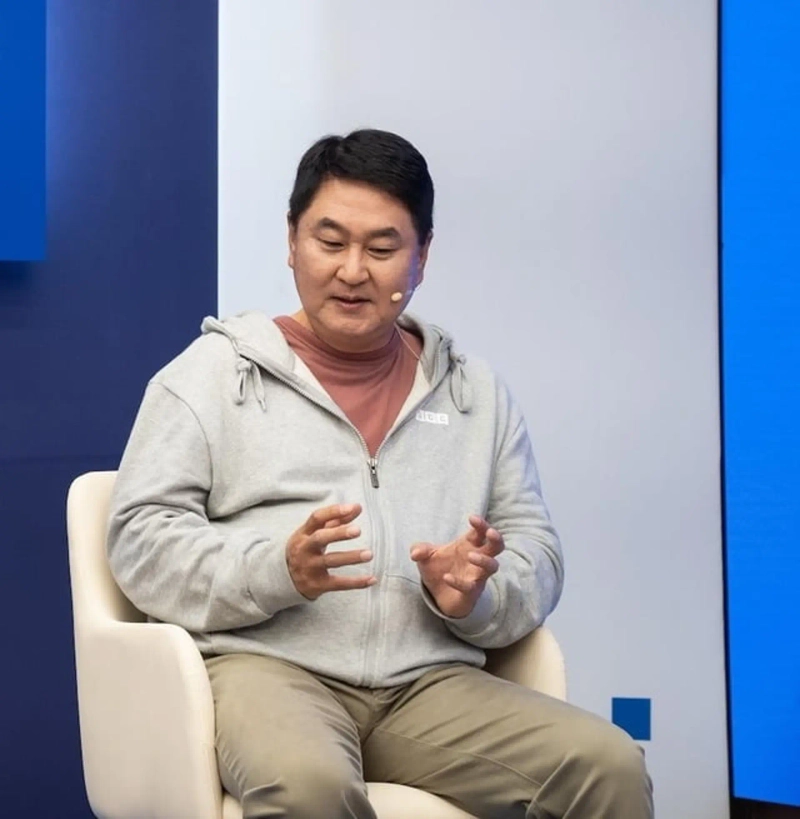
According to the industry on the 30th, Seokwoo Lee, CEO of Dunamu, said at the "Digital Asset Policy Roundtable with People Power Party" held at the National Assembly that day, "Major global countries are embracing the digital asset industry as a national strategy, but in South Korea, shadow regulations have yet to be resolved." He added, "The United States, Japan, Hong Kong, and Singapore are all racing to become digital asset hubs, but South Korea is lacking both direction and speed."
At the roundtable, the leaders of the five major domestic exchanges, including Upbit, attended and expressed their views on industry realities and institutional challenges. The attendees commonly pointed out issues such as lack of industry recognition, a gap between repeated pledges and practical execution, a supervisory system centered on the discretion of officials, and declining global competitiveness.
CEO Lee stated, "The People Power Party’s pledges, such as introducing virtual asset futures ETFs and promoting the globalization of domestic exchanges, are timely," but emphasized, "If only further policy support is added, South Korea could also become a digital asset powerhouse."
Cha Myung-hoon, CEO of Coinone, noted, "Digital assets are a key infrastructure for the future economy, but domestically, the industry faces policy uncertainty and excessive competition." He emphasized the need for "opportunities reflecting substantive situations rather than just formal equality, orderly policies to preempt market accidents, and a self-directed market environment."
Lee Jae-won, CEO of Bithumb, commented, "South Korea’s digital asset industry has long suffered from limitations rooted in the exchange-based nature of the business," adding, "Establishing a tax system, enabling corporate participation in investment markets, and promoting globalization are long-standing tasks demanded by the industry." He stressed, "Digital assets are not merely investment vehicles but are the core infrastructure of future finance. The government, National Assembly, and the industry must lay a foundation for growth together."
Choi Han-gyeol, Vice President of Streami (operator of GOPAX), pointed out, "There is little change between the presidential pledges from three years ago and those now," adding, "The supervisory system based on the Special Act on Specified Financial Transactions remains incomplete, and business operators’ statuses are still unstable." He said, "To prevent supervisory authority from overly depending on officials’ discretion, institutional clarity is essential."

Minseung Kang
minriver@bloomingbit.ioBlockchain journalist | Writer of Trade Now & Altcoin Now, must-read content for investors.