

PiCK
Will Stablecoins Bring Changes to the Financial System…"Legitimacy Will Be Granted to Assets If Legislation Passes"
Summary
- It was analyzed that if the Stablecoin Bill passes in the United States, legitimacy will be granted to stablecoins and increased demand is expected.
- It was stated that the expansion of stablecoin circulation could have tangible effects on the financial market, such as increased demand for U.S. Treasury bonds, reinforcement of the dollar's status as a global reserve currency, and growth of fintech firms.
- However, it was also noted that issues such as asset trustworthiness, unfair competition, and the risk of a bank run require scrutiny.
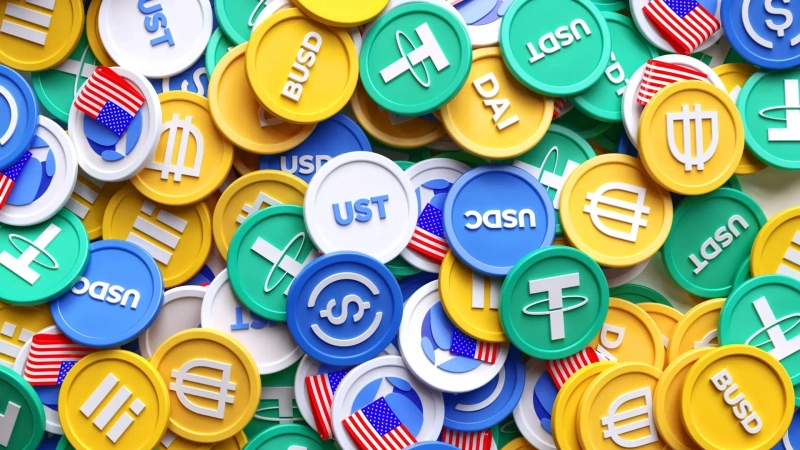
There is a range of opinions surrounding the hot topic of stablecoins (virtual assets whose value is linked to fiat currencies) in the recent virtual asset (cryptocurrency) market. In particular, some forecasts suggest that, if stablecoin legislation is passed in the United States, stablecoins could restructure the U.S. financial system.
On the 1st (Korean time), Bloomberg News stated, "Recently, stablecoin legislation is gaining bipartisan support within the United States," and assessed that "if this bill passes and demand for stablecoins surges, it could completely change the U.S. financial system."
The outlet further diagnosed that the effects of stablecoins could include ▲ increased demand for U.S. Treasury bonds, ▲ strengthened global reserve currency status of the U.S. dollar, and ▲ growth of fintech companies.
Analysts also endorsed these opinions. Theresa Ho, a JPMorgan Chase analyst, explained in a stablecoin report, "If stablecoin legislation passes in the United States, mainstream adoption and legitimacy of stablecoins could accelerate," and she analyzed that "demand for stablecoins could increase."
There is also an analysis that demand for U.S. Treasuries, which can be used as collateral assets for stablecoins, will rise. Ronit Ghose, a Citigroup analyst, forecasted, "Stablecoins will additionally purchase as much as USD 1 trillion worth of U.S. Treasuries by 2030, which could have a tangible impact on financial markets."
There are also analyses that the use of stablecoins may expand beyond the current crypto-asset market. Marion Laboure and Camilla Siazon, Deutsche Bank analysts, explained, "Stablecoins offer low remittance fees and are a payment method available 24/7," adding, "They are efficient for trade, remittance, and payment." Furthermore, they noted, "In emerging economies, stablecoins may be used as a means to hedge against inflation," and "It may stimulate unofficial dollarization."
However, there are still issues that need to be reexamined concerning stablecoins. Notably, whether trust in assets can be maintained and concerns about unfair competition. Analyst Theresa Ho stated, "If finance is restructured by stablecoins, bank runs into stablecoins could occur in stressful situations. Furthermore, there's a potential for unfair competition depending on whether there is access to the Federal Reserve." Nonetheless, she continued, "One thing that is certain is that, as the industry continues to research integrating stablecoins into traditional finance, there will be even more changes moving forward."

Uk Jin
wook9629@bloomingbit.ioH3LLO, World! I am Uk Jin.