

Summary
- There is growing expectation for trade tensions to ease after President Trump and President Xi held a phone call for the first time in five months.
- Recently, the two countries agreed to cut tariff rates and suspend certain trade measures, but disputes continue over key items such as rare earths and semiconductors.
- Ongoing trade disputes between the US and China have led to reduced trade and increased burdens for major American retailers.
Discussion on Follow-Up Measures for Trade Negotiations
Chinese State Media: "Trump Made Direct Request"
After High-Level Talks Last Month
Agreement to Lower Tariff Rates Was Reached
Yet Disputes Emerge over Rare Earths, Visas, etc.
Trump Seeks Direct Deal Between Leaders
Will US-China Tensions Ease?
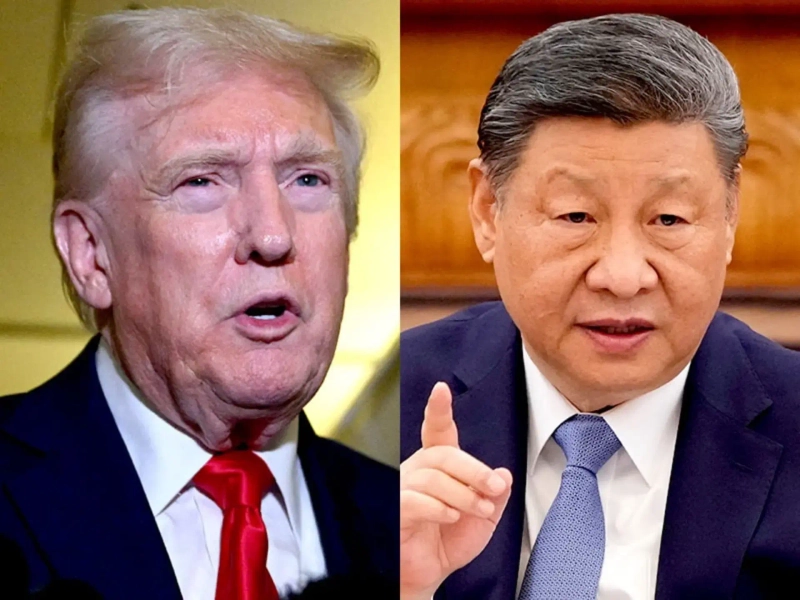
Donald Trump, President of the United States, and Xi Jinping, President of China, held a phone call on the 5th. It was the first conversation since just before Trump’s inauguration on January 17th. Since the start of the US-initiated tariff war, communication between the two leaders had been cut off.
Chinese state media outlet Xinhua News Agency reported that the phone call took place at the request of President Trump. Xinhua described the call using the term 'Yingyue (應約・responding to a request)'. Analysis suggests that the call between the two leaders raises the possibility that the US-China tensions may be entering a phase of resolution.
Although the specific content of the call was not disclosed, it appears Trump and Xi discussed ongoing disputes over implementing the truce on the tariff war agreed during last month’s meeting in Geneva, Switzerland.
The US and China held high-level trade talks in Geneva on the 10th-11th of last month, and the US agreed to lower the US tariff imposed after the Trump administration took office on Chinese imports from 145% to 30% (10% base tariff + 20% fentanyl tariff), while China also agreed to cut its tariff on US goods from 125% to 10%. This measure will last for 90 days until August 9th. China also committed to suspending its non-tariff trade measures on the US. However, disputes flared up again recently over rare earth elements and visa issues.
On the 30th of last month, President Trump claimed, citing China’s failure to lift export restrictions on rare earths, that "China has completely violated the Geneva agreement." China, which produces 69% of the world's rare earths, has countered US tariffs by withholding exports of seven key rare earths used in permanent magnets and other applications.
In response, since the 23rd of last month, the US ordered its semiconductor electronic design automation (EDA) software companies to halt exports to China. The US, controlling 80% of the essential EDA market for chip design, mobilized this industry as part of its retaliation against China. China, on the other hand, has maintained its controls on rare earth exports by citing US controls on AI semiconductor exports and the suspension of visas for Chinese students and researchers.
With both sides imposing tariffs exceeding 100%, US-China trade has contracted rapidly since April. Some container ships carrying Chinese goods have turned back or had their shipments cancelled rather than enter the US because of the tariffs, sharply reducing volumes at American ports. Major US retailers, such as Walmart, have appealed to President Trump to lower the tariffs.
Since the start of the tariff war, Trump had repeatedly sent messages seeking talks or conversations with Xi, but an agreement proved elusive. Aside from disagreements over rare earths, tariffs, and semiconductors, observers pointed to very different diplomatic styles between Trump and Xi as a reason.
The Chinese side reportedly wanted the phone call with the US to be thoroughly prepared in advance, wishing for all details to be coordinated ahead of time. In contrast, President Trump preferred a spontaneous, leader-to-leader negotiation style. China remained wary of Trump’s "ambush diplomacy" and "humiliation diplomacy" tactics. A Washington source commented, "Incidents like Volodymyr Zelenskyy, President of Ukraine, being invited to the White House only to be snubbed and sent away, or Cyril Ramaphosa, President of South Africa, hearing unfounded claims about white genocide, may have heightened Xi’s wariness."
Washington = Sang-eun Lee / Beijing = Eun-jeong Kim, Correspondents selee@hankyung.com

Korea Economic Daily
hankyung@bloomingbit.ioThe Korea Economic Daily Global is a digital media where latest news on Korean companies, industries, and financial markets.