

Lee Jae-myung administration embarks on economic stimulus... Full-fledged discussion of ₩20 trillion supplementary budget
Summary
- The Lee Jae-myung administration is expected to actively pursue economic stimulus by discussing a second supplementary budget of about ₩20 trillion.
- As major institutions expect Korea’s economic growth rate to drop to the 0% range this year, the necessity for a supplementary budget is being emphasized.
- The government plans to promote mid- to long-term economic growth policies focused on innovation, deregulation, and support for domestic demand and consumption.
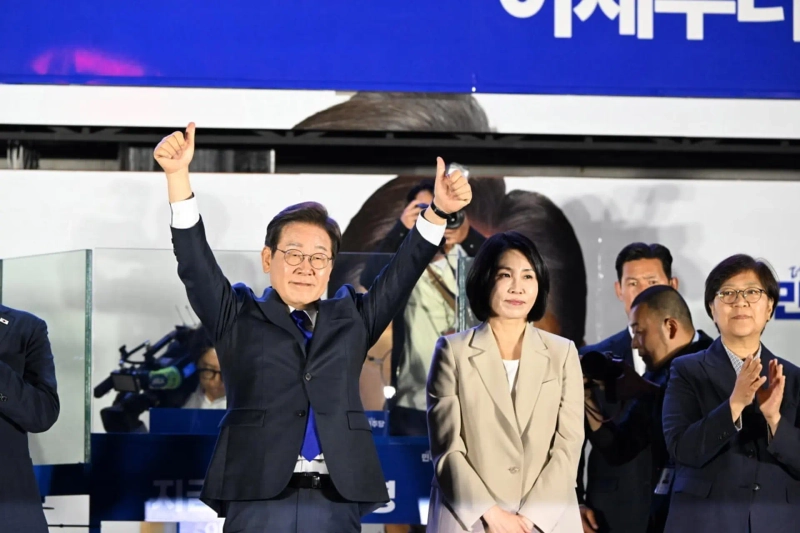
The Lee Jae-myung administration is expected to actively pursue economic stimulus with the goal of achieving a potential growth rate of 3%.
According to related ministries on the 8th, President Lee Jae-myung discussed the second supplementary budget at the Emergency Economic Inspection Task Force held on his inauguration day, the 4th. At the meeting, President Lee inquired about the financial capacity for the supplementary budget and the effect of economic stimulus, and is said to have called for active economic stimulus and risk management.
In response, Ministry of Economy and Finance Budget Director Yoo Byung-seo also initiated the formal process of preparing the supplementary budget by convening a meeting with directors of planning and coordination from each ministry. The second supplementary budget is expected to total at least ₩20 trillion. Jin Sung-joon, Policy Committee Chairman of the Democratic Party of Korea, emphasized in a radio interview, "Earlier this year, the Democratic Party stated that a supplementary budget of ₩35 trillion was necessary. If you subtract about ₩14 trillion from the first supplementary budget, the party's basic stance is that an additional ₩20-21 trillion is needed."
A significant portion will be allocated as a universal support fund of ₩250,000 per person, with key items for the second supplementary budget also including a local currency budget enabling the purchase of local gift certificates at a 10% discount and the cancellation of COVID-19 loans for the self-employed and small business owners.
The goal of the second supplementary budget is economic stimulus, as this year’s GDP growth rate projection for Korea has fallen to the 0% range. Major institutions foresee Korea’s growth rate will stay at or below 1%.
Recently, the Bank of Korea and Korea Development Institute (KDI) sharply lowered their forecasts for Korea’s 2023 economic growth rate from 1.5% and 1.6% to 0.8%, respectively. Hyundai Research Institute projected 0.7%, while the International Monetary Fund (IMF) and Organisation for Economic Co-operation and Development (OECD) each predicted 1.0%. Among overseas investment banks (IB), France’s Société Générale (SG) forecast the lowest growth rate at 0.3%, while J.P. Morgan saw 0.5% and both Goldman Sachs and HSBC projected 0.7%.
Next year’s regular budget, to be set by the end of August, is also expected to increase more rapidly than under the previous Yoon Suk-yeol administration. President Lee stated in his presidential campaign pledges, "Considering the rate of budget increase, we will reflect the potential economic growth rate and target inflation rate." Although sharp increases in spending will be difficult due to fiscal constraints, this is interpreted as meaning that spending should at least keep pace with the nominal growth rate from the perspective of utilizing fiscal policy as an economic stabilizer.
Instead of pursuing taxation policy in a specific direction such as tax hikes or cuts, the government is likely to outline plans to support domestic demand and consumption by issue. There are also observations that reversing the Yoon Suk-yeol administration’s tax reductions could hurt households and businesses in a sluggish economy, so it is likely to be postponed until after economic recovery.
In the mid- to long term, the focus is expected to shift toward policies that support corporate innovation by relaxing regulations. Continuing expansionary fiscal policy by relying on deficit bond issuance has clear limitations, and fundamentally, the view is that only corporate innovation can drive economic growth.
It is also notable that Ha Joon-kyung, a Hanyang University professor who has researched Joseph Schumpeter’s theory on economic growth emphasizing innovation, creative destruction, and entrepreneurship as key engines, was selected as Senior Secretary for Economic Growth in the presidential office. By switching to a ‘negative’ regulatory approach, where all activities except prohibited acts are permitted, the administration aims to promote greater corporate dynamism.
Reporter Oh Se-seong, Hankyung.com sesung@hankyung.com

Korea Economic Daily
hankyung@bloomingbit.ioThe Korea Economic Daily Global is a digital media where latest news on Korean companies, industries, and financial markets.