

Bank of Japan to reduce government bond purchases next year as well…“Continued monetary normalization”
Summary
- The Bank of Japan announced its plan to extend the reduction in government bond purchases policy even after the 2025 fiscal year.
- This decision is aimed at continuing the monetary normalization trend and allowing interest rates to be set more freely in the market.
- The Bank of Japan also revealed it is considering reducing the amount of reduction by up to half to prevent market turmoil.
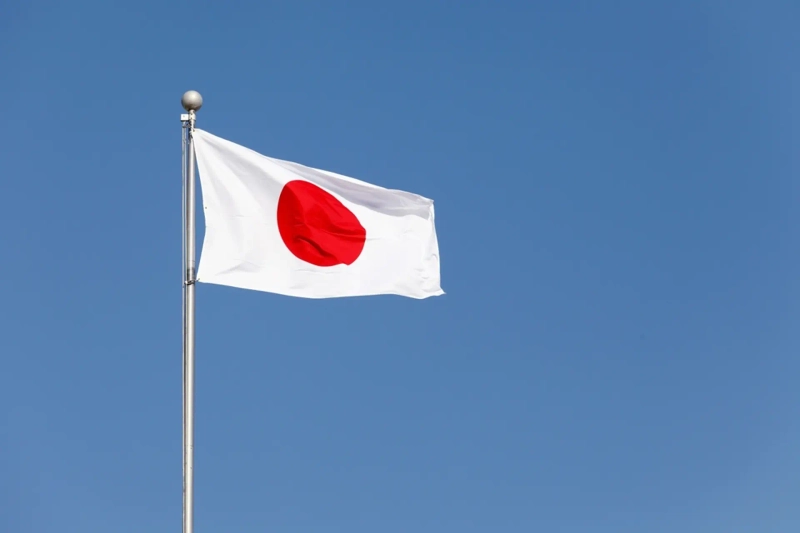
The Bank of Japan will continue its policy of reducing government bond purchases next year. This means that it remains committed to the path of monetary normalization.
According to The Nikkei on the 8th, the Bank of Japan has decided to further reduce its government bond purchases after the 2025 fiscal year (April 2025 to March 2026). This is an extension of the original reduction plan, which was set until March next year. The decision is expected to be made at the monetary policy meeting scheduled for the 16th and 17th.
As of the end of last year, the Bank of Japan held 52% of the entire market’s government bonds, exceeding half the total. Kazuo Ueda, Governor of the Bank of Japan, said in a lecture on the 3rd, "We have heard from many market participants that it is appropriate to continue reducing (government bond) purchases even after April 2026."
The Bank of Japan began quantitative easing (QE) in 2001, using government bond purchases as part of its monetary easing policy. The strategy involves buying government bonds in the market to inject liquidity and keep government bond yields low by suppressing interest rates through bond price increases.
In the "quantitative and qualitative monetary easing" begun in April 2013, the Bank of Japan doubled its liquidity supply over two years, purchasing a massive amount of government bonds. In September 2016, it implemented yield curve control (YCC) to suppress long-term interest rates. As a result, the Bank of Japan’s holdings of government bonds soared, reaching ¥93 trillion at the end of March 2013 and ¥581 trillion at the end of 2023.
The Bank of Japan removed YCC in March last year, excluding government bond purchases as a monetary policy tool. In June of the same year, it decided to reduce purchases and began implementing the reduction in August. It has been reducing purchases by ¥400 billion each quarter, effectively entering a phase of quantitative tightening (QT). The purchase amount, which was ¥5.7 trillion in July last year, will decrease to ¥2.9 trillion in January next year.
At this monetary policy meeting, the Bank of Japan is expected to establish a plan to continue reductions through March 2027. The intention is to further scale back government bond purchases so that interest rates are set more freely in the market.
However, a proposal to reduce the scale of cuts (¥400 billion) to as little as half (¥200 billion) is also under consideration. The Nikkei reported that “plans to shrink the scale of reductions are being discussed because there is a need to prevent market turmoil such as sudden spikes in interest rates.”
Tokyo = Il-Kyu Kim, Correspondent

Korea Economic Daily
hankyung@bloomingbit.ioThe Korea Economic Daily Global is a digital media where latest news on Korean companies, industries, and financial markets.