

Lee seeks balance amid US-China conflict... May be asked to join 'pressure on China'
Summary
- President Lee Jae-myung will face his first test of pragmatic diplomacy at the G7 summit.
- It is noteworthy from an investment point of view that the US and other Western countries are likely to call for Korea's participation in pressure on China.
- Discussions on a tariff agreement and defense cost-sharing package are expected to intensify following talks with President Trump.
Attending the G7 summit from the 15th to 17th... First test for 'pragmatic diplomacy'
Restarting summit diplomacy after half a year pause
Lee emphasizes strengthening cooperation with the US and Japan while also maintaining ties with China and Russia
Breaking the 'pro-China, anti-US' perception is a challenge
Ruling party: 'Must clarify pragmatic diplomacy to prevent misunderstandings'
Possibility of separate Korea-US summit
Tariff and defense cost package may be discussed
Some argue Korea's strength in shipbuilding and other sectors should be highlighted
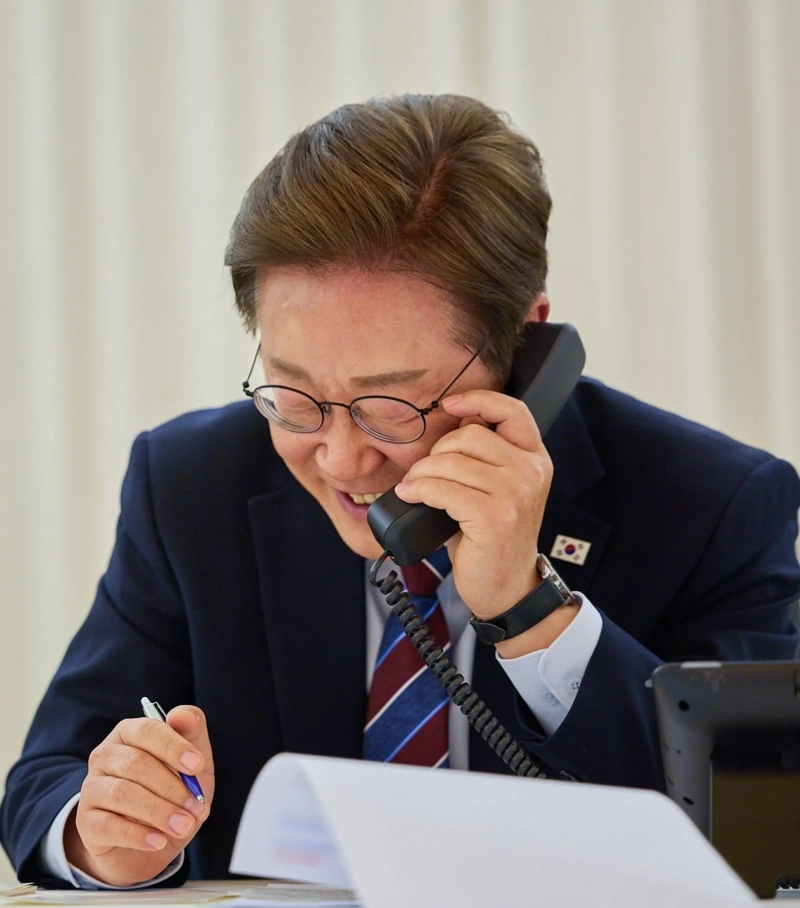
The G7 summit, which marks President Lee Jae-myung's debut on the multilateral diplomatic stage, is a gathering of leading Western nations including the United States, Canada, the United Kingdom, France, Germany, and Italy. G7 members have presented a united stance on issues such as Russia's invasion of Ukraine and China's military threats toward Taiwan.
President Lee has stressed the need for practical diplomacy with China and Russia based on the Korea-US alliance and trilateral security cooperation with the US and Japan; now, his approach will be tested. Observers note that Lee's pragmatic diplomacy faces its first real challenge amid escalating US-China tensions.
Will he be asked to 'choose' between the US and China?
According to diplomatic sources on the 8th, Lee is highly likely to be asked by the US and other liberal Western powers at the G7 summit to join in collective 'pressure on China.'
Recently, despite sending congratulations on Lee's election in Secretary of State Marco Rubio's name, the US also issued a statement through an anonymous White House official mentioning 'Chinese interference and influence.' Referring to China in a congratulatory message to the president of an ally like Korea is uncommon. Analysts interpret this as the Trump administration, now in its second term and waging a tariff war with China, making a direct warning to Korea not to side with Beijing.
At last month's G7 finance ministers' meeting, participants sent a strong message aimed at China. They opposed "unilateral actions such as use of force or coercion that threaten peace and stability" in response to China's military drills near the Taiwan Strait.
In contrast, during last year's general election, Lee commented, "Regardless of what happens with Taiwan, it's not really our business; as long as we're doing well, that's what matters." Even amid controversy during the presidential campaign, he said, "Did I say anything wrong?"
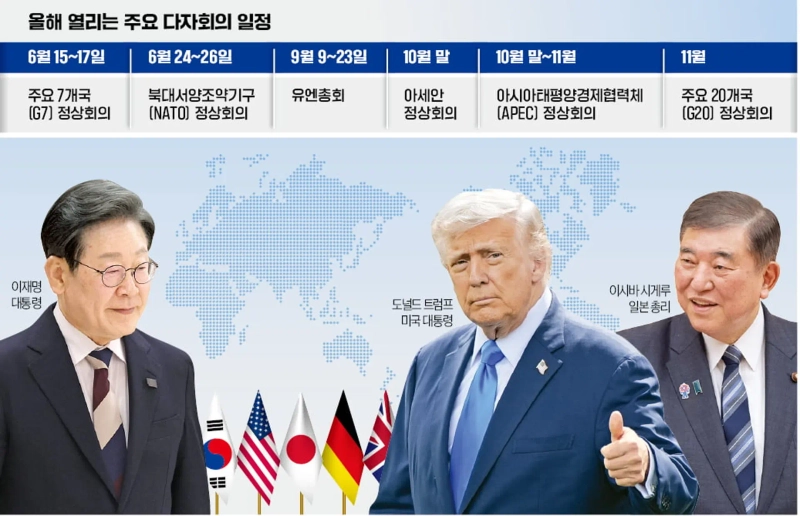
Experts point out that President Lee should actively dispel perceptions among hardline MAGA (Make America Great Again) circles around President Trump that his government is 'pro-China and anti-US.' An official from the ruling party said, "President Lee should meet Trump in person to explain the intent of his pragmatic diplomacy, clearly demonstrating that the Korea-US alliance is the foundation of cooperation."
Yoon Young-kwan, Chairman of the Asan Institute for Policy Studies, emphasized, "It is important to foster the idea that Korea is a 'partner to move forward together' by highlighting the alliance." He added, "Such efforts do not negatively impact relations with China." Yoon further noted, "Aside from strengthening the US alliance, managing ties with China is also crucial."
Korea-US tariff talks gaining momentum
The summit with President Trump during the G7 may accelerate discussions on tariff negotiations as well as cost- and role-sharing for US Forces Korea. In their first phone call on the night of the 6th, Lee and Trump agreed to work toward an early, mutually satisfactory agreement. They also decided to encourage officials to produce 'visible results' through working-level talks.
Given that the US has announced a tariff suspension for multiple countries, including Korea, until the 8th of next month, summit meetings may catalyze faster tariff negotiations between the two nations.
Kim Tae-hyung, a professor at Soongsil University and president of the Korean Association of International Studies, commented, "It is necessary to seize the upcoming summit with President Trump as an opportunity to move tariff negotiations forward."
President Trump may also use the issue of defense cost-sharing as leverage to adjust the role of US Forces Korea. The US may seek to expand their role beyond deterring North Korean threats to covering broader Asia-Pacific challenges such as China's threat to Taiwan.
A diplomatic insider noted, "President Trump might bundle the tariff talks and defense sharing into a single 'package.' It's unavoidable, and Korea should flexibly highlight its comparative strengths in industries such as shipbuilding and nuclear power to negotiate effectively."
By Han Jae-young / Lee Hyun-il jyhan@hankyung.com

Korea Economic Daily
hankyung@bloomingbit.ioThe Korea Economic Daily Global is a digital media where latest news on Korean companies, industries, and financial markets.