

Lee's 'Violation of Election Law' Trial Postponed… PPP Says 'Natural,' DP Says 'Judiciary Surrender'
Summary
- The Seoul High Court announced the indefinite postponement ('date to be designated later') of President Lee's remand trial for violating the Public Official Election Act.
- The court stated that the decision applies the Presidential Immunity from Prosecution under Article 84 of the Constitution.
- The legal community says there is continuing debate over whether ongoing criminal trials are covered by immunity from prosecution.
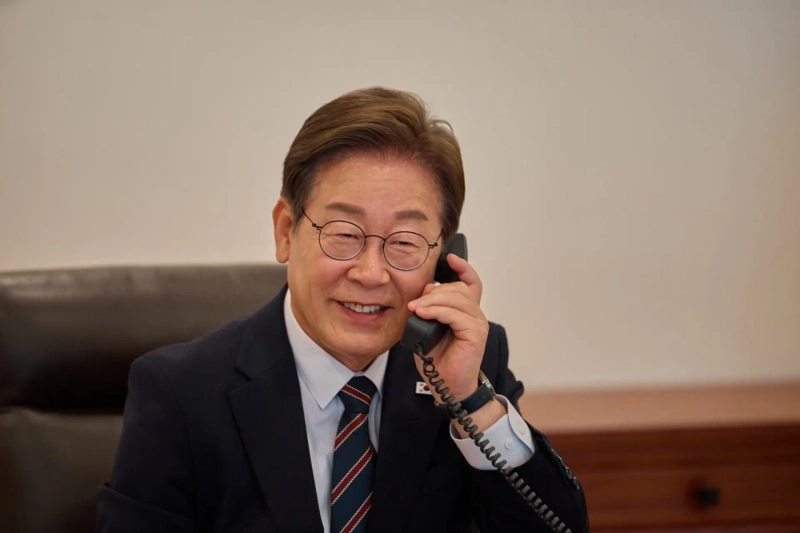
The court's postponement of the remand trial date for President Lee Jae-myung's violation of the Public Official Election Act has highlighted sharp differences between the Democratic Party of Korea and the People Power Party.
On Facebook on the 9th, Democratic Party lawmaker Park Hong-geun shared news of the court's postponement and commented, "The Amendment to the Criminal Procedure Act that suspends trials during a president's term is a '100% Utilization Act for President Lee Jae-myung.' It is a measure intended to make maximum use of President Lee," he said. "There is already not enough time to recover the people's livelihood and respond to tariff negotiations. Should we be wasting the time of a 'pro worker' (a very competent person) on a trial that is sure to end in acquittal due to retaliatory, baseless investigations and forced indictments without evidence?"
Park continued, "We're not even refusing the trial. The hearing is being postponed in accordance with Article 84 of the Constitution to after the presidential term. Today's move by the Seoul High Court's panel in charge of the unprecedented Supreme Court election intervention remand trial is seen in the same light," adding, "The PPP, which does nothing but mindless 'obstructionism', should stop needlessly shaking President Lee, who only wants to work. Instead, they need to seriously reflect by expelling or stripping membership from lawmakers who have supported sedition through actions like interfering with martial law liftings, acting as human shields in Yongsan, or inciting far-right rallies."
Assemblyman Park Ju-min said, "This is an utterly natural result. It is a sign that the Republic of Korea's Constitution stands firm, and that law and principles are being established," and stated, "Now it is time to devote ourselves to the people's livelihood."
Kim Ji-ho, former Senior Secretary to the President for Political Affairs, remarked, "I deeply welcome the judiciary's decision to uphold the spirit of the Constitution," adding, "Politically retaliatory investigations and unreasonable attempts to press ahead with trials themselves undermine democracy, and may be perceived as impure efforts to hinder the president in state affairs. Now we must move on from a time of judiciary to a time of livelihood and unity."
In contrast, there was a torrent of fierce criticism from the People Power Party. Lawmaker Kwon Young-se stated, "Even before the wind blows, the court lies down on its own. If the judiciary, the last bastion of the rule of law, behaves like this, there is much to worry about ahead." Lawmaker Jang Dong-hyeok said, "This day will go down in history as the day the judiciary surrendered to political power. The coming five years will be a country of Lee Jae-myung, by Lee Jae-myung, for Lee Jae-myung."
Former party leader Han Dong-hoon said, "Article 84 of the Constitution is not a provision mandating suspension of ongoing criminal trials begun before the presidential term, regardless of official duties. This will remain a serious stain on the history of the judiciary."
Earlier, Seoul High Court Criminal Division 7 (Chief Judge Lee Jae-kwon) announced that the trial date for President Lee's Public Official Election Act violation, previously scheduled for the 18th, was changed to 'date to be designated later.' The setting of a subsequent date means that the hearing is postponed, delayed, or continued without specifying a next date—commonly referred to as a 'subsequent designation' in legal practice, and is regarded as an indefinite postponement of the trial.
Criminal Division 7 said this postponement was "in accordance with Article 84 of the Constitution." Article 84 states, "Except in cases of insurrection or treason, the President shall not be liable to criminal prosecution while in office," thus enshrining presidential immunity from prosecution. The legal community has debated whether ongoing criminal trials fall under 'prosecution' in this context, and this panel appears to have decided that the immunity does indeed include ongoing trials.
Hong Min-seong, reporter at Hankyung.com mshong@hankyung.com

Korea Economic Daily
hankyung@bloomingbit.ioThe Korea Economic Daily Global is a digital media where latest news on Korean companies, industries, and financial markets.