

China prepares expedited rare earth supply process for EU and US auto industries
Summary
- China announced plans to shorten supply times for American and European automakers by preparing an expedited approval process for rare earths.
- While the EU and US are engaged in electric vehicle tariff negotiations and trade talks, this move is interpreted as a strategy to secure a favorable position in the negotiations.
- European industry and experts emphasize the urgent need to diversify rare earth supply chains and are closely watching whether the plan will be actually implemented and supply stabilized.
European industry: "Implementation is key", "Urgent need to diversify rare earth supply chains"
"China grants rare earth licenses to US auto industry as well"
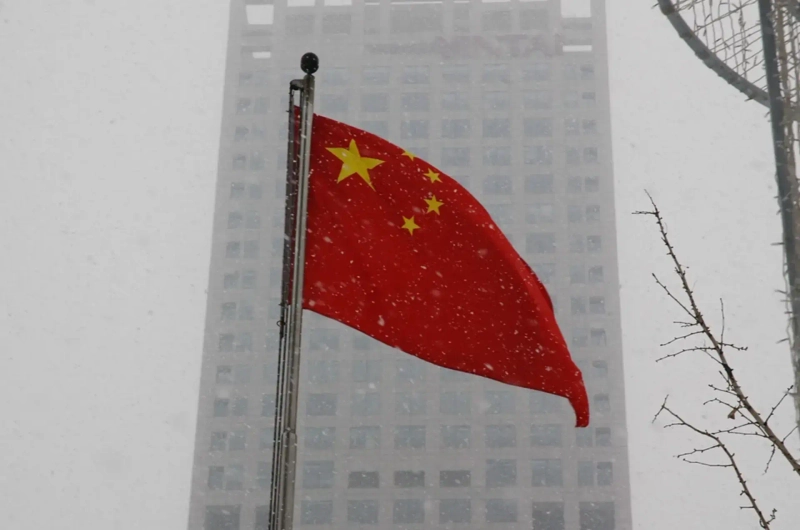
China has announced that it will shorten supply times for major American and European automakers, which have mentioned production shutdown risks due to rare earth shortages, by using an expedited approval process for rare earths. Toward the United States, this is read as a conciliatory gesture ahead of trade negotiations, and toward Europe, as a move to gain the upper hand in ongoing electric vehicle tariff negotiations that have been in place since November of last year.
According to CNBC on the 9th (local time), the Ministry of Commerce of China stated last Saturday that it is willing to establish a so-called "green channel" to expedite the import approval process for rare earth products for European Union (EU) companies. The Ministry of Commerce said, "We hope that the EU will take reciprocal measures and adopt policies to promote trade of high-tech products with China."
This move came out of trade talks last week between China's Minister of Commerce Wang Wentao and EU Trade Commissioner Maroš Šefčovič.
Europe has imposed additional tariffs between 17% and 38% on top of the existing 10% tariff on Chinese electric vehicles since the end of last year, resulting in total tariffs between 27% and 48%. China has requested tariff reductions. As both sides are negotiating tariffs on electric vehicles, there is a high possibility that any relaxation of rare earth export measures will be linked to these talks.
Reuters reported on the 6th that China has granted rare earth licenses to suppliers for General Motors, Ford, and Stellantis in the United States.
In early April, China's Ministry of Commerce implemented export restrictions on several rare earth elements and magnets widely used in the automotive, defense, and energy sectors. This was in response to tariff increases on Chinese products by then-US President Donald Trump.
Some of the rare earth elements subject to export controls are essential components for vehicle production. Some analysts noted that a halt in rare earth magnet supplies would be as devastating to car production as the global semiconductor supply crisis during the COVID-19 pandemic.
Maximilian Butek, Executive Director of the German Chamber of Commerce in China, pointed out that it is unclear whether the announcement by China's Ministry of Commerce will apply only to some large corporations or more broadly. He said, "China has created a massive bureaucratic monster, and it's uncertain whether the procedures can really be streamlined enough to issue as many licenses as needed."
Welcoming diplomatic progress, he also emphasized that "announcements are not enough; action is needed," highlighting the urgency for the EU to diversify its supply chains.
China accounts for about 60% of global rare earth minerals and material production. US officials have warned that this dominance will pose a strategic challenge during the transition to sustainable energy sources.
Before China announced the expedited export approval procedure to the EU, the European Automobile Manufacturers Association (ACEA) had warned that some supplier production lines had already stopped.
Japanese automaker Suzuki also stopped Swift production due to China's rare earth restrictions, according to Reuters.
Leading Korean vehicle and parts manufacturers such as Hyundai Motor Company and Kia Corporation are known to have secured significant rare earth stockpiles in advance.
As the clean energy transition accelerates, demand for rare earth elements and critical minerals is expected to surge over the coming years.
Byline: Kim Jeong-ah, contributing reporter kja@hankyung.com

Korea Economic Daily
hankyung@bloomingbit.ioThe Korea Economic Daily Global is a digital media where latest news on Korean companies, industries, and financial markets.