

US-China Trade Talks: What Will the US Offer if China Eases Rare Earth Export Controls? Market Focus Intensifies
Summary
- The United States of America and People's Republic of China are holding high-level trade talks in London regarding restrictions on rare earth exports.
- The current talks include discussions about the relaxation of US export controls on AI chips, with related stocks such as NVIDIA and AMD seeing significant increases.
- News of the resumption of China's rare earth exports has fueled gains in major global indices and AI-related stocks.
Bets on New York Stock Exchange as US Relaxes Export Restrictions on China-Only AI Chips
London Talks May Continue for Two Days in a Row
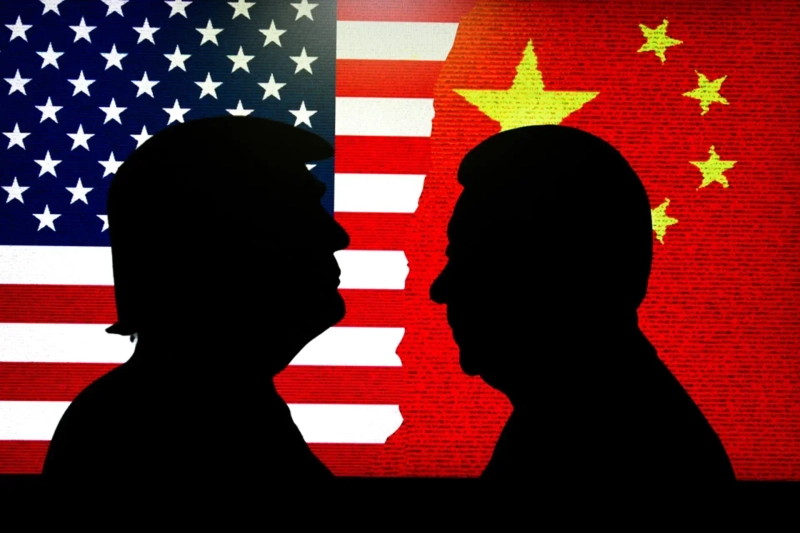
Senior officials from the United States of America and the People's Republic of China began talks in London on the 9th (local time) to resolve their trade dispute. The market is watching closely what card the US will offer to China if China guarantees to ease restrictions on rare earth exports during this meeting.
According to foreign media, officials from both countries gathered at Lancaster House, London, at 11:30 a.m. London Greenwich Mean Time and began the meeting at 1 p.m. to normalize the preliminary agreement reached last month in Geneva.
Attending the meeting were the US delegation led by Treasury Secretary Scott Bessent, Commerce Secretary Howard Lutnick, and US Trade Representative Jamieson Greer, and the China delegation led by Vice Premier He Lifeng.
The inclusion of Lutnick, who oversees the agency that supervises US export controls, is an indicator of how pivotal the issue of rare earths is. He did not attend the Geneva meeting, where the US and China agreed to grant a 90-day deferment on part of the 145% and 125% tariffs imposed on each other.
Another focal point of the current talks is whether export controls on AI chips will be partially relaxed. On this day, the share prices of NVIDIA and AMD, which have exported low-end AI chips exclusively for the Chinese market, rose sharply in the US stock market.
China's restriction on rare earth exports is a top concern for the US as it poses a major threat to key US industries such as defense and aerospace. While China wants an overall tariff reduction, simply lifting export restrictions on rare earths may not be enough to achieve this. Therefore, the resumption of supply of China-only AI chips by NVIDIA or AMD is considered one of the strong bargaining chips in the negotiations. On the same day, AI-related stocks such as NVIDIA, AMD, Marvell Technology, and Broadcom all surged immediately after the New York market opened.
The London talks following the Geneva meeting came just four days after a phone conversation between President Trump and Chinese President Xi Jinping.
According to a summary from the Chinese government, in the call that lasted over an hour, Xi Jinping told President Trump to withdraw trade actions that have shaken the global economy, and warned against taking threatening measures regarding Taiwan.
However, President Trump said on social media that the talks were mainly focused on trade and led to a "very positive conclusion."
The next day, President Trump announced that President Xi agreed to resume the export of rare earth minerals and magnets to the US. China's decision in April to suspend exports of essential minerals and magnets has disrupted the core supply chains of global automakers, aerospace manufacturers, semiconductor companies, and defense contractors.
Following the Geneva preliminary agreement, global stock markets rallied in relief. The S&P 500 index, which had dropped nearly 18% in early April when President Trump announced reciprocal tariffs, has now almost recovered to the all-time high recorded in mid-February. One-third of the uptrend occurred after the Geneva talks.
Kim Jung-ah, Contributing Reporter kja@hankyung.com

Korea Economic Daily
hankyung@bloomingbit.ioThe Korea Economic Daily Global is a digital media where latest news on Korean companies, industries, and financial markets.