

PiCK
The Democratic Party proposes the 'Digital Asset Basic Act'..."Addressing regulatory gaps"
Summary
- The Democratic Party of Korea announced the proposal of the 'Digital Asset Basic Act' to establish comprehensive and systematic regulation for digital assets.
- The Basic Act includes requirements for issuing stablecoins, market entry regulations, and the approval of leverage trading for virtual assets.
- Min emphasized that, if enacted, the bill is expected to enhance market reliability and transparency and strengthen investor protection.
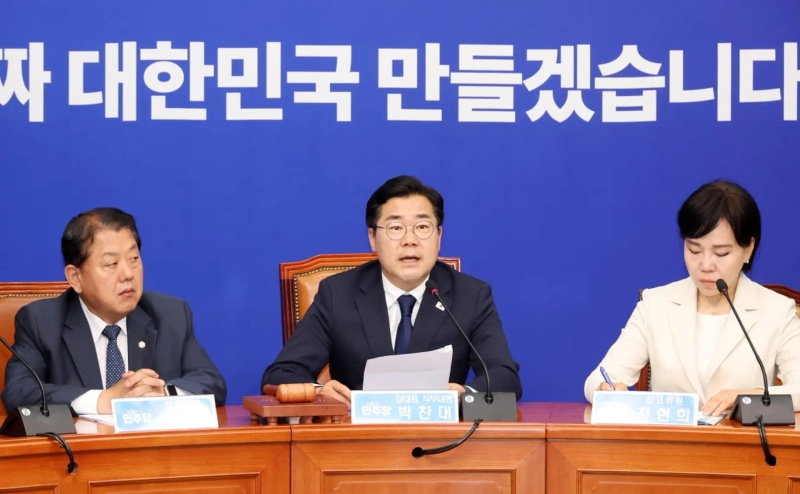
The Democratic Party of Korea is accelerating the process of enacting the 'Digital Asset Basic Act.' On the 10th, Min Byung-deok, a party member, announced he had introduced the Digital Asset Basic Act as the lead sponsor. This Act provides comprehensive regulation for digital assets including Bitcoin (BTC). Regarding the necessity of the Act, Min explained, "While major countries have already introduced regulations concerning the issuance and distribution of digital assets, Korea still lacks comprehensive and systematic regulation."
Through the Basic Act, the Democratic Party has established legal definitions and scope of application for digital assets and related industries. The bill also contains a plan to create the Digital Asset Committee under the direct control of the President to systematically support digital asset industry policies and includes provisions for entry regulation via approval, registration, and reporting systems overseen by the Financial Services Commission.
With the enactment of the Basic Act, a legal framework for issuing KRW stablecoins will also be established. Specifically, under the Basic Act, Korean corporations with self-owned capital of at least ₩500 million may issue stablecoins. Issuers must guarantee refunds by enhancing IT security and maintaining adequate reserves.
Furthermore, stablecoins and other asset-backed digital assets will require approval from the Financial Services Commission. An official from Min's office stated, "We strengthened user protection by introducing bankruptcy remoteness to ensure refunds are possible even if the issuer goes bankrupt," adding, "Other digital assets can be issued by submitting a notification to the authorities, and issuance is allowed once the filing is accepted."
With the introduction of the Basic Act, virtual asset leverage trading is also expected to become possible. The Act permits domestic virtual asset exchanges to extend credit (lend funds) solely for three sectors: trading, brokerage, and custody among virtual asset businesses. This means leverage trading on virtual asset markets, similar to the stock market, will be allowed. If credit extension for virtual asset businesses is fully approved, exchanges may be able to diversify their revenue sources.
The Basic Act also includes provisions for establishing the Digital Asset Industry Association. The Act requires the establishment of a Listing Support Eligibility Evaluation Committee and a Market Surveillance Committee under the association. The Listing Support Eligibility Evaluation Committee is responsible for evaluating and reviewing virtual asset listings and delistings, while the Market Surveillance Committee handles monitoring unfair trading practices.
In addition, the Act includes a ban on unfair trading practices within the digital asset market and grants the Financial Services Commission supervisory, investigative, and enforcement powers. Min commented, "When this bill takes effect, it will enhance the reliability and transparency of the digital asset market and help boost the digital finance ecosystem," adding, "We will do our best to facilitate both innovative industrial development and the protection of the public and investors."

JOON HYOUNG LEE
gilson@bloomingbit.ioCrypto Journalist based in Seoul