

PiCK
Expectations for US-China Trade Talks...Global Stocks Rise for Second Day
Summary
- It was reported that global stocks and the dollar have continued their rise for a second day thanks to optimism over US-China trade talks.
- While the MSCI World Index and major Asian stock indices rose, US stock index futures slipped slightly.
- Experts warned of an overbought market, but said progress in US-China negotiations could provide relief to the market.
MSCI Asia-Pacific Index and Emerging Markets Index rise by 0.4% and 0.5%, respectively
"The market is somewhat overbought, but any correction is unlikely to be significant"
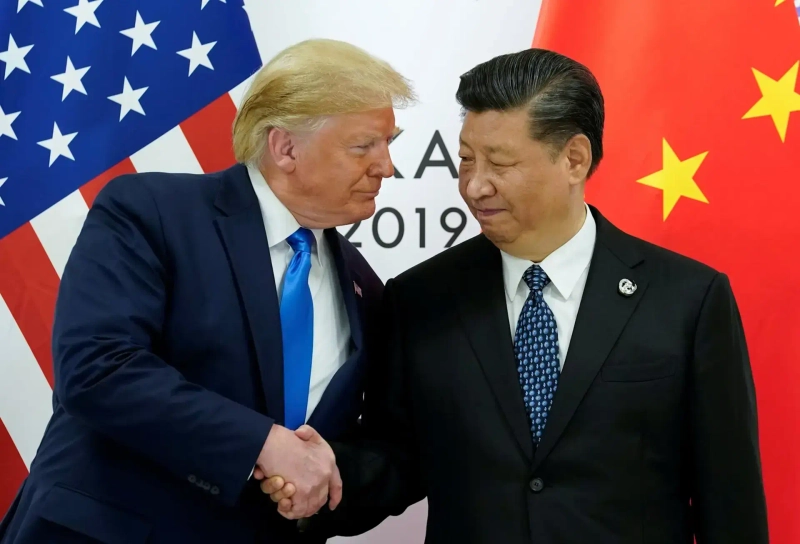
Global stocks and the dollar rose for the second straight day as investors awaited the outcome of the second day of US-China trade talks.
The MSCI World Index traded near a record high and the dollar strengthened. Japan's Nikkei 225 rose 0.3% from the previous day, and Korea's KOSPI also climbed 0.5%. The MSCI Asia-Pacific Index increased by 0.4%, and the MSCI Emerging Markets Index rose 0.5%, respectively.
US stock index futures slightly slipped after paring previous day's gains. S&P 500 index futures and Dow Jones Industrial Average futures edged down, with Dow Jones Industrial Average futures falling 0.1%.
Europe’s STOXX Europe 600 index edged lower as automakers and defense firms, pressured by rare-earth supply constraints, slipped. However, the UK’s FTSE 100 Index is showing strength, poised to hit a record high for the first time since March.
US Treasury prices continued to rise. The 10-year government bond yield dropped 2 basis points (1bp=0.01%) to 4.45%. Bond prices and yields move in opposite directions. The dollar advanced 0.2% against major currencies including the yen and euro.
Bitcoin gained 0.5%, trading at $109,278.48. Ether jumped 3.5% to $2,680.65.
While there was no breakthrough at the start of the US-China trade talks, US officials expressed optimism that tensions related to technology and rare earths would ease.
Ulrich Urbahn, Head of Multi Asset Strategy & Research at Berenberg, pointed out that "the market is somewhat overbought, but investors have not yet bought sufficiently." Therefore, he mentioned, "Even if a correction comes, it is unlikely to trigger a larger selling wave than the last time."
US President Donald Trump expressed a positive stance on the talks after the first day of the US-China London meeting.
Treasury Secretary Scott Bessent, Commerce Secretary Howard Lutnick, and US Trade Representative Jamieson Greer will meet again with the Chinese side in London on Tuesday.
Amid frequent tariff announcements from President Trump and rising US-China tensions—raising concerns over economic slump and supply chain disruptions in both countries and a global contraction—progress in negotiations is expected to provide relief to the market.
Jonas Goltermann, Senior Markets Economist at Capital Economics, forecast the tariffs imposed by the US on Chinese goods would be set at around 40%. He noted, "Market participants remain cautiously optimistic, but should not expect the tariffs to be removed entirely." On the other hand, many analysts predict that, except for steel and automobiles, the current policy of imposing 10% tariffs on all other imports into the US will stay in place.
Concerns over President Trump’s unpredictable trade policies and the growing US debt have undermined global investor confidence in American assets. As a result, the dollar has already dropped more than 8% this year.
Samy Chaar, economist at Lombard Odier, pointed out that "the quality of the US fiscal deficit itself has deteriorated." He stated, "Even if there’s a fiscal deficit, investing and spending in productive sectors could yield macroeconomic benefits. However, cutting taxes for the wealthy, who already have enough to spend, reduces tax revenues without leading to more consumption or investment."
Guest reporter Kim Jung-ah kja@hankyung.com

Korea Economic Daily
hankyung@bloomingbit.ioThe Korea Economic Daily Global is a digital media where latest news on Korean companies, industries, and financial markets.