

Oil Prices Surge 7% Amid Israel-Iran Escalation... Gold Nears Record High
Summary
- News of military clashes between Israel and Iran sent global oil prices surging by more than 7%.
- Markets forecast that with concerns over a Strait of Hormuz blockade, oil could reach as high as $130 per barrel.
- Rising Middle East tensions have prompted a flight to safety, pushing international gold prices close to a record high.
Infrastructure Damage & Hormuz Blockade Concerns
"Oil Could Reach $130 per Barrel"
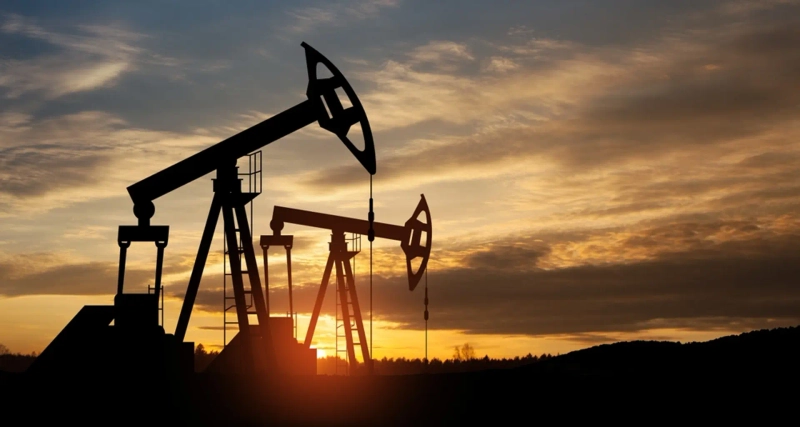
Global oil prices surged following news that Israel carried out airstrikes on Iranian nuclear facilities, and Iran retaliated by launching hundreds of missiles.
On the 13th (local time), the front-month Brent crude futures on the ICE Futures Exchange settled at $74.23 per barrel, up 7.0% from the previous session.
On the New York Mercantile Exchange, the front-month West Texas Intermediate (WTI) crude futures settled at $72.98 per barrel, a sharp increase of 7.3%. This is the biggest one-day gain since 2022 when Russia invaded Ukraine and energy prices soared. WTI futures prices at one point during Asian trading surged by over 14%.
Earlier, the Israeli military launched a surprise airstrike using 200 fighter jets early in the morning, targeting military installations such as the Natanz nuclear facility in central Isfahan. In the afternoon, further airstrikes hit Iran's ballistic missile production facilities and launch sites.
Iran fired a large number of missiles at Israel in retaliation. Iranian state media IRNA reported, "Hundreds of various ballistic missiles were launched, signifying the start of an operation to firmly counter the Zionist regime's (Israel's) brutal aggression."
There have been no reported damages to Iranian regional oil production facilities from Israel's airstrikes.
Markets are concerned that Iran might blockade the Strait of Hormuz—a major oil transport route in the Middle East—or attack tankers passing through.
The Strait of Hormuz handles 18 to 19 million barrels of oil daily, about one-fifth of global oil consumption. Crude oil imported to Korea from the Middle East also passes through this strait.
Investment bank JPMorgan forecast that if the Strait of Hormuz is blocked or conflict spreads across the Middle East, oil prices could rise dramatically to $130 per barrel.
Nikos Chabouras, Chief Market Analyst at trading platform Tradu, stated in an investor note that "For oil prices to continue rising, there will need to be actual physical supply disruptions, such as damage to Iran's oil infrastructure or a blockade of the Strait of Hormuz."
With the Middle East crisis escalating and demand for safe-haven assets rising, international gold prices also increased. As of 3:18 p.m. on the New York Mercantile Exchange, the front-month gold futures price was $3,457 per ounce, up 1.6% from the previous session and approaching the all-time high of $3,500 per ounce recorded on April 22, about two months ago.
Jung-sam Ko, Hankyung.com journalist, jsk@hankyung.com

Korea Economic Daily
hankyung@bloomingbit.ioThe Korea Economic Daily Global is a digital media where latest news on Korean companies, industries, and financial markets.