

7% Oil Surge on Iran's Retaliation... Will the Strait of Hormuz Be Blocked? [Global Market A/S]
Summary
- Amid escalating tensions in the Middle East, global oil and gold prices soared while the main indices on the New York Stock Exchange recorded sharp declines.
- Concerns over a possible blockade of the Strait of Hormuz highlighted risks of oil supply disruption, but some analysis suggested a prolonged shutdown was unlikely.
- Payments stocks such as Visa and Mastercard fell sharply following news of Walmart and Amazon considering stablecoin issuance.

Amid heightened tensions in the Middle East due to Israel's overnight surprise airstrike and Iran's missile retaliation, international oil and gold prices soared, and all three major indices on the New York Stock Exchange experienced a sharp drop. Most stocks fell except for defense industry companies such as Lockheed Martin and RTX, as well as Exxon Mobil and shale energy companies.
On the 13th (local time) at the New York Stock Exchange (NYSE), the S&P 500 index dropped 68.29 points (1.13%) from the previous close to 5,976.97, falling back below the 6,000 mark. The tech-heavy Nasdaq index, impacted by declines in Apple and Microsoft, fell 256.66 points (1.3%) to 19,406.83, and the Dow Jones Industrial Average ended the session down 769.83 points (1.79%) to 42,197.79.
U.S. Treasury yields rose across the board due to concerns about inflation triggered by a recovery in consumer indicators and rising oil prices. The 2-year yield, which is affected by Fed monetary policy, rose 4.4bp (1bp=0.01% pts) to 3.95% compared to the previous session, while the 10-year yield jumped 5bp to 4.407%. Following Israel's attack on Iran, the July West Texas Intermediate crude price surged about 8% to $72.54 per barrel on the NYMEX, and Brent crude also jumped over 7%, trading at around $74 per barrel.
● Iran Halts Nuclear Talks... Launches Large-Scale Retaliatory Airstrikes on Israel
Last night, Israel carried out the 'Rising Lion' operation, launching airstrikes on more than 200 targets, including Iranian nuclear facilities. In response, Iran halted nuclear talks and fired hundreds of ballistic missiles at Israel as a large-scale retaliation.
Iran's state news agency declared, "The resolute retaliation operation has begun," adding, "We have started a strong and decisive response to the recent brutal attacks by the Zionist regime." In a statement, Iran’s Supreme Leader Khamenei warned, "The Zionist regime will not escape the consequences of its crimes."
President Donald Trump told Fox News and others, "Iran's nuclear program cannot be tolerated," urging a return to the negotiating table. However, due to the intensifying conflict between Israel and Iran, the sixth round of nuclear talks scheduled for Sunday has been postponed indefinitely.
During Iran's missile retaliation, Israel's Iron Dome was activated in Tel Aviv but some facilities were damaged. According to NBC News, tensions continued with two explosions reported near Iran's underground nuclear enrichment facilities.
Israel's Ministry of Defense reported it eliminated key command personnel, including Hossein Salami, commander of Iran's Islamic Revolutionary Guard Corps, as well as six nuclear scientists. NBC News reported that, in addition to targeting Iran's nuclear program, the preemptive strike seemed also aimed at degrading Iran's long-range missile capabilities.
● Strait of Hormuz Blockade Fears... Soaring Global Oil Prices
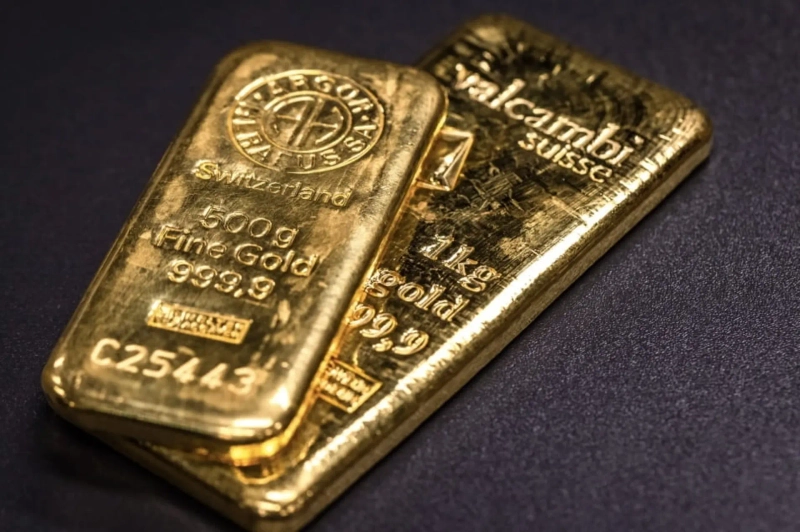
After Israel's attack on Iran, concerns over a possible blockade of the Strait of Hormuz sent global oil prices soaring around 7%, and gold prices broke above $3,400 per troy ounce. Fears of disruptions in oil supply rocked the overnight markets, but some Wall Street energy strategists were skeptical that the oil shipping route would be fully blocked.
The Strait of Hormuz connects the Persian Gulf and the Arabian Sea and is a vital chokepoint for about 20 million barrels per day, or one-fifth of the world's oil transportation. Some sections between the Arabian Peninsula and Iran are only 33 km wide, but due to regional characteristics involving the UAE and Oman, there has never been a successful historical blockade.
According to Bloomberg, Anas Alhajji, managing partner at Energy Outlook Advisor, explained, "Most of the Strait of Hormuz is too wide for Iran to block entirely," and "Iran would also have to block routes essential for its consumer goods imports." Helima Croft at RBC Capital Markets also analyzed, "It is extremely difficult for Iran to sustain a blockade of the strait for long due to the presence of the U.S. Fifth Fleet stationed in Bahrain."
Ellen Wald, president of Transversal Consulting, warned that a surge in oil prices from a blockade could trigger a backlash from China, Iran's largest oil customer. Due to U.S. sanctions, Iran relies on China for more than three-quarters of its oil exports.
Meanwhile, the revival of U.S. consumer sentiment raised market inflation fears. The University of Michigan's preliminary Consumer Sentiment Index for June jumped 16% month-on-month from 52.2 in May to 60.5 in June. While 1-year short-term inflation expectations fell from 6.6% in May to 5.1% in June, those expectations became less relevant due to the Middle East crisis. Joanne Hsu, director of surveys at the University of Michigan, diagnosed, "Consumers have somewhat stabilized from the April tariff shock but remain on alert for downside risks across the economy." The University noted that most survey components, including personal finances, labor market, and stock market outlook, fell short of last year's second-half optimism.
According to the U.S. futures markets, after the upcoming June 18 FOMC meeting, the Federal Reserve (Fed) is highly likely to maintain the federal funds rate at 4.25%-4.50%. Wall Street economists noted that pre-tariff inventory run-offs and supply chain redirection may have muted the inflationary impact on consumers, but they are watching for these impacts to strengthen after June. Gregory Daco, chief economist at EY-Parthenon, said ahead of the Fed's June meeting, "The Fed is showing no urgency in adjusting policy rates as uncertainty about the economic outlook has increased recently."

● Tesla Robotaxi Launch Platform... Sean Duffy "Permitting Streamlined"
Tesla's stock surged nearly 3% intraday after the Trump administration announced plans to ease the deployment of autonomous vehicles. Currently, the U.S. auto safety regulations categorize autonomous vehicles designed without steering wheels or brake pedals as "out of regulation."
In his statement, Secretary of Transportation Sean Duffy emphasized, "Developers were hampered by unnecessary procedures and couldn't keep up with the latest technologies," and, "We have streamlined procedures to give U.S. autonomous vehicle companies an edge over competitors." Peter Simshauser, senior advisor at the NHTSA, also added, "We will promote innovation by supporting the commercial introduction of autonomous vehicles."
This policy is expected to speed up the design and production of autonomous vehicles, such as Tesla Robotaxi and Waymo, which operate via computing power without a steering wheel or brake pedal. Starting on the 22nd, Tesla will officially launch a Model Y-based autonomous taxi service in Austin, Texas, under remote operator supervision.
Boeing fell over 1% after reports that Indian authorities are considering halting flights of the 787 Dreamliner, in connection with the Air India Flight 171 crash that killed 241 people. Boeing has also withdrawn from the Paris Air Show scheduled for next week. The NTSB and the UK AAIB are expected to send investigation teams regarding the accident.
Among individual companies, Oracle continued its rally for two days after its strong earnings report, recording a weekly gain of 24%—the largest since 2001—while major U.S. airlines, such as Delta Air Lines and United Airlines, fell in tandem due to the Boeing accident and geopolitical risks.
Major U.S. payments companies fell sharply after a Wall Street Journal report that Walmart and Amazon are considering issuing a stablecoin. Visa, the world’s largest payments company, dropped about 5%, and Mastercard fell more than 4.6%. Stablecoins are a means of bypassing traditional banks and payment systems, allowing transactions without card fees. However, the two retail giants can only proceed with related technologies if the GENIUS Act, a cryptocurrency regulatory bill currently under review in the U.S. Senate, is passed.
Archer Aviation, which is developing an eVTOL pilot program supported by President Trump's executive order, plunged over 15% intraday after announcing a rights offering. Archer Aviation aims to raise $850 million through the offering to build a new AI aviation platform and accelerate the introduction of air taxi services by the 2028 LA Olympics.
Kim Jong-hak, jhkim@wowtv.co.kr

Korea Economic Daily
hankyung@bloomingbit.ioThe Korea Economic Daily Global is a digital media where latest news on Korean companies, industries, and financial markets.