

"Sometimes You Have to Fight"...Trump, Will He Solve Iran's Nuclear Issue Through Israel?
Summary
- President Donald Trump is reportedly effectively permitting Israel's airstrikes on Iran in an attempt to resolve the Iranian nuclear issue.
- Israel's attacks have dealt significant blows to Iran's nuclear infrastructure, but it remains uncertain whether Iran's nuclear capabilities have been completely eliminated.
- If the Middle East conflict is prolonged, the United States may face weakened strategic competitiveness and increased political controversy.
Trump Condoning Air Strikes: Three Major Questions
As Iran Nuclear Talks Stall
Trump Effectively Permits Israeli Airstrikes
Seemingly Targeting Regime Change and Nuclear Facility Destruction
If Iran-Israel Hostilities Prolong
The U.S.'s Policy of 'Non-Intervention' Is Effectively Broken
Strategy to Check China Expected to Weaken
On the 15th (local time), U.S. President Donald Trump stated, "I hope Israel and Iran reach an agreement, but sometimes you need to fight to resolve things." Trump was originally reported to have opposed Israel's airstrikes on Iran, but suddenly condoned them and even appeared to encourage Israel's attacks. It is interpreted as an attempt to resolve the tricky Iranian nuclear issue by relying on Israel. However, it is uncertain whether this will go as intended, and some point out that this could become a 'Middle East war quagmire.' Let's examine related questions.
(1) Why Did Trump 'Condone Israeli Attacks'?
The reasons why President Trump effectively tolerated Israel's attack are multifaceted. Recently, nuclear negotiations between the U.S. and Iran have stalled. The U.S. strongly demanded that Iran halt uranium enrichment, but Iran refused, causing the talks to be deadlocked. Even so, President Trump had previously discouraged an Israeli attack on Iran. On the other hand, Israeli Prime Minister Benjamin Netanyahu is known to have emphasized the necessity of a preemptive strike, arguing that Iran was stalling for time.
The timing of Israel's airstrike is notable. In April, President Trump proposed a 60-day conditional negotiation to Iran and urged an agreement, but Iran did not accept the U.S. demands. The Israeli attack on Iran occurred on the 61st day since talks began with Iran. When Iran rejected a deal after the 'deadline,' it is interpreted that President Trump no longer discouraged the Israeli airstrikes.
The possibility of regime change in Iran is also considered a factor. On the 15th, Prime Minister Netanyahu said, "The aftermath of this attack could lead to regime change in Iran. The current regime is extremely weak." Within the Trump administration, there is also a prevailing sentiment that going for regime change, rather than negotiation, could fundamentally resolve Middle East issues. Professor Jeffrey Lewis of the Middlebury Institute of International Studies analyzed, "This Israeli attack targeted not so much Iran's nuclear facilities as the regime itself."
The weakening of Iranian allied forces was also a background to Trump's apparent acquiescence. Since 2023, Israel has relentlessly struck pro-Iranian militant groups such as Hamas in the Gaza Strip and Hezbollah in Lebanon, driving them to the brink of destruction. In brief skirmishes with Iran in April and October last year, much of Iran's air defense system was incapacitated. Thus, the chance of success for an Israeli strike on Iran became higher than ever. Observers suggest that Trump condoned the airstrikes in accordance with these strategic circumstances.
Alarm about Iran developing nuclear weapons and destabilizing the Middle Eastern situation was also a factor. The International Atomic Energy Agency (IAEA) recently revealed that Iran possesses 408 kg of highly enriched uranium. With additional enrichment, this is enough for nine nuclear bombs. President Trump has repeatedly said, "We cannot allow the most dangerous regime to possess the most dangerous weapons."
(2) Will the Israeli Airstrike on Iran Succeed?
So far, Israeli attacks with indirect U.S. support are considered to have had a considerable impact. Destruction of key nuclear infrastructure—including some of Iran’s revolution guard top command, nuclear scientists, and the Natanz facility—significantly damaged Iran's nuclear program. However, it is still uncertain whether the airstrikes have completely eliminated Iran’s nuclear capability. Iran can continue nuclear development covertly in underground facilities.
Although Iran retaliated, Israeli casualties remain limited. Except for the Houthis, Iran's allied forces have also remained largely inactive. However, widespread anger among the Iranian public could lead to increased unity. The Associated Press (AP) reported, “While there is strong support for the attack on Israel in the early days, international public opinion could shift rapidly if civilian casualties rise or the war drags on.”
(3) Is Trump Trapped in a 'Middle East War Quagmire'?
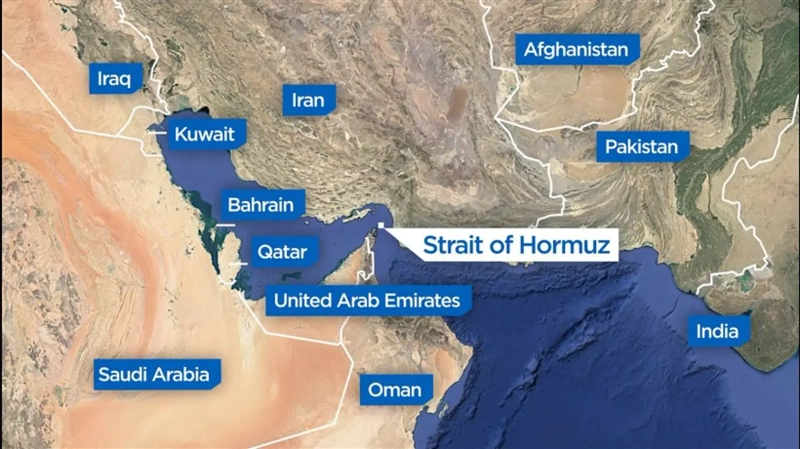
Trump's latest decision could backfire unexpectedly on America. To avoid provoking Iran, Trump continues to insist, “This attack has nothing to do with America.” However, Iran is pointing to the U.S. as the driving force behind the attacks. The possibility that Iran may strike U.S. military bases in Bahrain and elsewhere cannot be ruled out.
If this airstrike escalates to a full-scale or prolonged war between Israel and Iran, the U.S. could become stuck in a Middle East quagmire. In that case, Trump’s pledge to “end endless wars and bring America home” would vanish. It could also provoke major political backlash and controversy domestically in the U.S.
Moreover, if the Middle East war is extended and U.S. military assets are concentrated in the region, efforts to check America’s strategic rival, China, will inevitably be hampered. In the past, prolonged “wars on terror” and conflicts in Afghanistan meant the U.S. couldn’t adequately respond to China’s rise, and a similar situation could repeat itself.
Meanwhile, on the 16th, Iranian missile attacks again struck various major Israeli cities. Israel also continued attacks on Iranian military facilities for the fourth consecutive day. Over four days of clashes between the two countries, there were more than 500 casualties.
Reporter Kim Joo-wan kjwan@hankyung.com

Korea Economic Daily
hankyung@bloomingbit.ioThe Korea Economic Daily Global is a digital media where latest news on Korean companies, industries, and financial markets.