

TD Securities forecasts "China to guide yuan weaker against euro, Korean won, and ruble"
Summary
- TD Securities forecasts that the yuan will be guided weaker against major currencies such as the euro, Korean won, and ruble.
- China is likely to allow its yuan value to decline against the major trading partner currency basket to maintain export competitiveness.
- Market participants noted that the yuan's weakness may continue in the short term and could consequently impact other regional currencies.
The CEFTS yuan index has fallen from 102 at the start of the year to below 96.
"Maintaining export competitiveness against trading partners amidst hits to exports to the U.S."
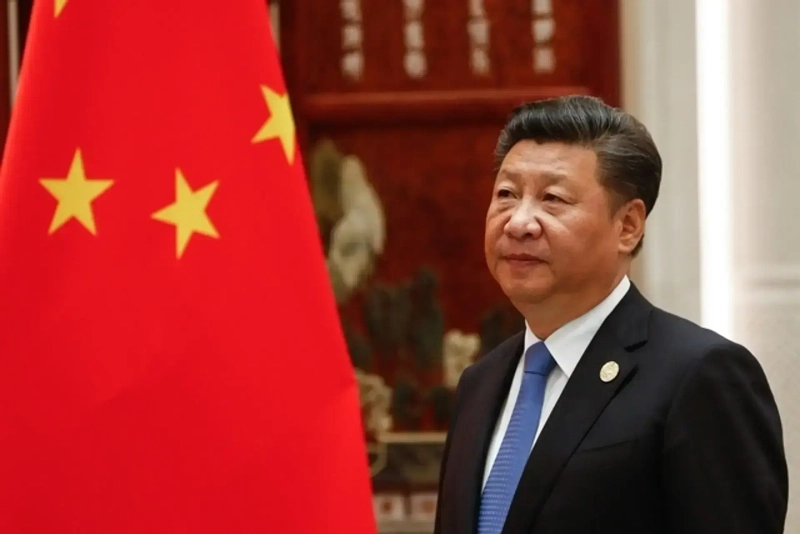
There is growing speculation that China will guide its currency weaker not against the dollar, but against currencies such as the Korean won, euro, and ruble to boost exports.
According to Bloomberg on the 16th (local time), TD Securities expects the yuan to fall by nearly 4% against the main currency basket. Previously, OCBC—which oversees the offshore yuan exchange rate—also recently mentioned that the yuan could fall up to an additional 3%.
The yuan index of the China Foreign Exchange Trade System (CFETS), which is under the People's Bank of China, measures the value of the yuan against a basket of 25 major trading partner currencies, including the dollar. Bloomberg reported that the CFETS yuan index dropped below 96 this month, reaching its lowest level since 2020. At the beginning of the year, it was as high as 102.
The People's Bank of China has kept the yuan's movement against the dollar relatively stable through daily exchange rate adjustments. However, instead of devaluing the yuan against the dollar—which is under heavy scrutiny by the U.S. during trade negotiations—China appears to be planning to guide weakness against other currencies to mitigate export losses and raise export competitiveness.
Alex Loo, a macroeconomic strategist at TD Securities, said, "The decline in the CFETS yuan index is primarily due to the yuan's weakness against the Russian ruble, EU euro, and South Korean won." He added, "China may allow further weakening of the yuan, possibly down to 92, the record lows seen in 2019 and 2020."
Some analysts suggest there is limited likelihood that China will depreciate its already weak currency further against competitor nations. They note that non-U.S. countries in the EU and elsewhere are raising complaints about product dumping, which could make it difficult for China to pursue such a strategy.
Ding Shuang, chief economist for Greater China and North Asia at Standard Chartered, said, "China's long-term goal is to raise the yuan's usability and international acceptance." He added that further weakening could trigger competitive devaluations by other countries, which would be unfavorable to all.
Recently, the Chinese central bank has been stabilizing the yuan's value against the dollar. The market sees this as a goodwill gesture in trade negotiations with the U.S. and an effort to avoid the 'currency manipulator' label. Since mid-May, the People's Bank of China has kept the yuan's daily reference rate within a narrow range.
Christopher Wong, chief FX strategist at OCBC, said, "Dollar weakness implies continued weakness for the yuan, which may affect other regional currencies."
China's exports in May grew only 4.8% year-over-year, missing the forecast of 6%. Also, despite last month's tariff truce, exports to the U.S. posted their largest decline since 2020.
Khoon Goh, head of Asia research at Australia and New Zealand Banking Group (ANZ), commented, "Chinese authorities are likely to allow the yuan to weaken further in the short term to maintain a competitive exchange rate for export support."
South Korea has consistently recorded billions of dollars in trade deficits with China over the past five years since 2020.
Jungah Kim, contributing reporter, kja@hankyung.com

Korea Economic Daily
hankyung@bloomingbit.ioThe Korea Economic Daily Global is a digital media where latest news on Korean companies, industries, and financial markets.