

OpenAI Joins the Defense Market
Summary
- OpenAI has announced that it secured an AI supply contract worth $200 million with the U.S. Department of Defense.
- Through this contract, OpenAI is formalizing its entry into the defense sector, and competition among Silicon Valley companies in the military AI market is intensifying.
- The report stated that military AI is emerging as a new business opportunity for OpenAI amid its management conflict with MS.
Cutting-Edge Security AI Developed with U.S. Department of Defense
Silicon Valley Teams Up with the Military One After Another
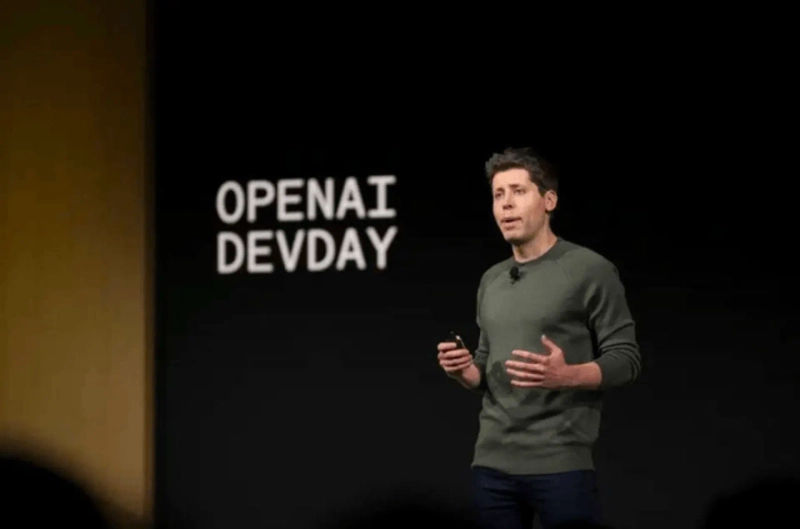
OpenAI has secured an artificial intelligence (AI) supply contract with the U.S. Department of Defense. This is the first time that OpenAI, previously focused only on consumers and businesses with ChatGPT, has partnered with the military. Amid the U.S. accelerating efforts to integrate AI into military power, there is increasing analysis that the defense sector is emerging as a new business opportunity for the U.S. tech industry.
On the 16th (local time), the U.S. Department of Defense announced that OpenAI has won a one-year contract worth $200 million (about ₩270 billion) to supply state-of-the-art AI, set to expire in July next year. Although the Department did not disclose specific development details, it stated in a press release that "OpenAI will develop cutting-edge AI prototypes to address critical national security challenges."
This contract follows just half a year after OpenAI officially entered the defense field. Last December, OpenAI announced for the first time that it intended to enter the military AI market by partnering with Anduril, a defense startup, to integrate its AI technology into U.S. military drone attack response systems. In April, Sam Altman, CEO (pictured) of OpenAI, revealed a strong intention to engage in national security, stating at Vanderbilt University in a conversation with Paul Nakasone, an OpenAI director and former director of the National Security Agency (NSA), that "I think we need to participate in national security, and I want to participate."
With OpenAI's involvement, competition among Silicon Valley companies to partner with the military is expected to intensify. In November last year, Meta designated the defense sector as a new business and unveiled its AI model for military use, and last month announced a partnership with Anduril to develop AI-based extended reality (XR) military equipment. Google, which had previously shown reluctance to enter the defense industry due to internal opposition, formally entered the field earlier this year by retracting its pledge to not use its AI technology for "military, war, nuclear-related industries, or espionage." Anthropic, considered OpenAI's key rival, announced a partnership with Palantir and Amazon to provide its AI technology to the U.S. military.
Military AI is expected to become a new business avenue for OpenAI amid its growing conflict with Microsoft (MS). On the same day, The Wall Street Journal (WSJ) reported, citing multiple sources, that OpenAI executives are even considering filing anti-competitive complaints against MS with U.S. federal antitrust authorities. The conflict began after MS, OpenAI's largest shareholder, refused a proposal from OpenAI and demanded a larger stake during the process of OpenAI's transition to a for-profit entity. According to reports, OpenAI wants MS to refrain from accessing the intellectual property (IP) of WindSurf, the coding startup it recently acquired, deepening the rift between the two companies.
Silicon Valley = Youngchan Song, Correspondent 0full@hankyung.com

Korea Economic Daily
hankyung@bloomingbit.ioThe Korea Economic Daily Global is a digital media where latest news on Korean companies, industries, and financial markets.