

Trump Returns Early from G7... Will He Hit Iran's Nuclear Facilities with a Bunker Buster?
Summary
- The U.S. is ramping up military support in the Middle East, dispatching assets such as the USS Nimitz aircraft carrier and B-2 stealth bombers.
- President Trump hinted at the possibility of striking Iran’s nuclear facilities and revealed the U.S. is considering providing GBU-57 bunker-buster bombs.
- While the U.S. is pushing diplomatic solutions alongside military pressure, it reported that military options could become reality if negotiations fail.
Will the U.S. Expand Involvement in the 'Israel-Iran War'?
Trump: "Regardless of a Ceasefire"
Nimitz Aircraft Carrier Dispatched to the Middle East
Iran's Underground Uranium Enrichment Facility
Israel Incapable of Destroying Alone
U.S. Considering B-2 Stealth Bomber Strikes
Nuclear Negotiations and Military Pressure in Parallel
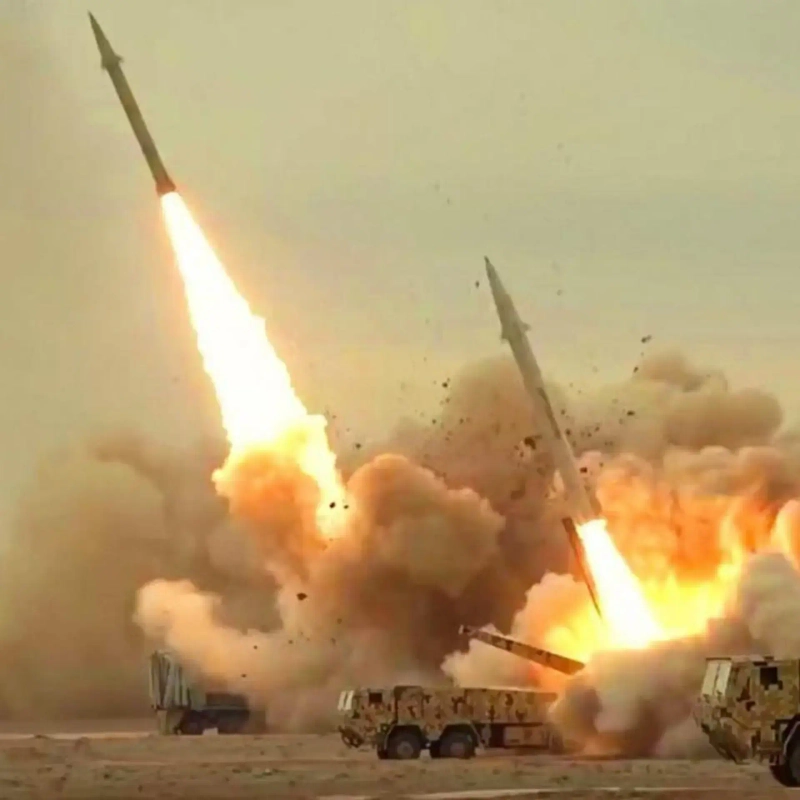
There are speculations that the U.S. might increase its military involvement in the Israel-Iran war. Donald Trump, President of the United States, stated, "It’s not about a ceasefire. Something much bigger is at stake," as he returned early to the White House during the Group of Seven (G7) Summit.
◇ US Strengthens Power in the Middle East
During the G7 Summit in Alberta, Canada, on the 16th (local time), President Trump said, "Iran must come to the table before it’s too late. A nuclear deal will be achieved, and it would be foolish for Iran not to sign it." He then advanced the G7 schedule by a day and headed back to the White House that night. It is reported that he planned to convene the National Security Council (NSC) immediately upon his return.
Simultaneously, the U.S. quickly deployed the aircraft carrier USS Nimitz, which was originally scheduled to call at Vietnam, to Middle Eastern waters. Over 30 U.S. Air Force aerial refueling aircraft were also recently confirmed to have moved from the U.S. mainland toward Europe and the Middle East. The U.S. Department of Defense explained this as "operational necessity," but Reuters analyzed that it was "a deployment to provide President Trump with real military options."
The New York Times (NYT) reported that, "If Iran does not halt the production of highly enriched uranium, the Trump Administration is reviewing plans to support Israel with the massive bunker-buster bomb GBU-57." Iran's nuclear facility is deep underground in the mountainous Fordow region. The GBU-57 is virtually the only conventional weapon capable of destroying an underground nuclear facility without ground operations. Weighing 13.6 tons, it can penetrate up to 60m of concrete. The bomb must be dropped with a U.S.-operated B-2 stealth bomber. U.S. forces are reported to have been preparing an operation to destroy Fordow over the past two years. Previously, Israel reportedly requested U.S. support for the GBU-57.
If President Trump approves the use of the bunker buster, it would mean U.S. intervention in the Israel-Iran conflict. The NYT reported, "The scope and manner of military intervention are expected to be determined based on the outcome of NSC discussions." President Trump stated, "Deploying full-scale ground troops is not under consideration."
◇ Iran and Israel, Clash Over Negotiation Conditions
On the 13th, Israel launched Operation 'Standing Lion,' carrying out a preemptive strike on Iran’s nuclear facility. Subsequently, it struck Tehran's state broadcaster, the Islamic Revolutionary Guard Corps (IRGC) headquarters, and fighter jets stationed at the airport. Iran retaliated with missiles and drones. According to local media, at least 24 people in Israel and about 225 in Iran were killed, with injuries on both sides estimated to exceed 2,000.
Benjamin Netanyahu, the Prime Minister of Israel, stated in a briefing that "this operation will bring significant change to the theocratic system headed by (Supreme Leader) Khamenei." He also stressed, "Israel is working closely with the United States to eliminate Iran’s nuclear program, ballistic missile capacity, and terrorist networks—three core targets." The Israeli military said that since the outbreak of hostilities, it has neutralized about 120 Iranian surface-to-surface missile launchers—about one-third of Iran’s missile launchers.
Iran is offering a diplomatic solution on certain conditions. Abbas Araghchi, Iran’s Deputy Foreign Minister, said in phone discussions with diplomatic officials from France, the United Kingdom, Germany, and the European Union (EU), "If Israel stops its attacks, we are ready to resume nuclear negotiations with the United States."
◇ "U.S. Last-Ditch Diplomatic Efforts"
The U.S. is known to be supporting Israel's military operations while also seeking diplomatic solutions. Axios, citing multiple sources, reported that discussions are ongoing between Steve Witkoff, President Trump’s Middle East envoy, and Iranian Deputy Foreign Minister Araghchi over a possible meeting this week on the nuclear deal and ending the war. It added, "While it is not yet confirmed, such talks represent President Trump’s final efforts to steer the situation from war toward a deal."
If diplomatic efforts fail, the U.S. may opt for military action. Brett McGurk, former White House National Security Council Middle East coordinator, said, "The Fordow nuclear facility is a strategic centerpiece," adding, "If enrichment continues, it cannot be considered a diplomatic achievement." European diplomats commented, "This may be the last chance to return to negotiations."
Reporter Sohyun Lee y2eonlee@hankyung.com

Korea Economic Daily
hankyung@bloomingbit.ioThe Korea Economic Daily Global is a digital media where latest news on Korean companies, industries, and financial markets.