

Stablecoin Stocks, the Stars of the New Government's Stock Market
Summary
- It was reported that as discussions on the institutionalization of KRW stablecoins accelerate, related stock prices have sharply increased.
- In particular, it was highlighted that companies such as ITCEN Global, Me2On, and Hecto Financial that are entering or preparing to enter the stablecoin business have seen especially notable increases in share prices.
- Potential volatility in valuations for related industries is expected to remain elevated for some time due to government nurture policies for stablecoins and expectations for global market expansion.
Discussions on Institutionalizing KRW Stablecoins
Related stocks such as ITCEN Global see 'surge' in share prices
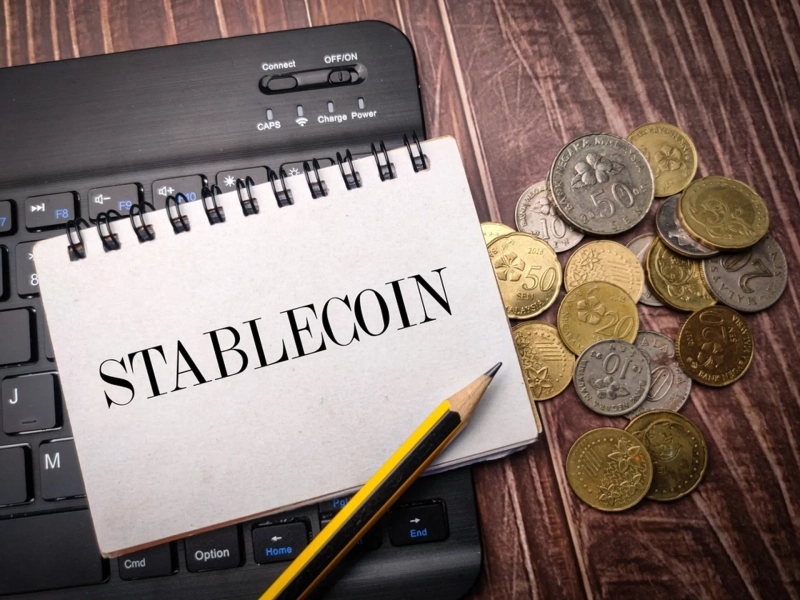
As discussions to introduce KRW-based stablecoins gain momentum, related stocks are soaring on the domestic stock market.
According to the Korea Exchange on the 19th, ITCEN Global, which is preparing to issue stablecoins pegged to fiat currency, has seen its share price jump 160.1% since the launch of the new administration through the previous day. It's been hitting record highs day after day.
This company is engaged in the physical gold (Gold) trading platform business through Korea Gold Exchange, which holds a 67.3% stake, and also supports fractional gold investment and peer-to-peer physical trading, mainly through the real asset platforms 'SEN Gold' and 'Geumbang Geumbang'. It also owns a 51% stake in the gold-based blockchain financial platform developer Credder.
During the same period, Me2On and Hecto Financial stock prices also soared by 115.7% and 95.1%, respectively. Me2On operates a stablecoin-based online casino business. Its wholly-owned subsidiary, Ace Gaming, recently launched a stablecoin-based casino platform that can be enjoyed in more than 180 countries worldwide. It is designed to enable linkage and exchange with the stablecoin (USDC) issued by Circle in the US.
Hecto Financial is preparing to enter the stablecoin market, leveraging its strengths in the existing payment, prepaid recharge, and regional currency sectors. It has signed a memorandum of understanding (MOU) for a technological alliance on stablecoin payment systems with High Five Lab, a blockchain security specialist company with proven experience.
In addition, Danal (85.7%), Kakao Pay (58.3%), and NHN KCP (42.1%) have also seen their stock prices increase sharply. This comes amid expectations that electronic payment companies could emerge as key stablecoin issuers.
The share price increases of these companies are believed to be driven by the anticipation of institutionalizing stablecoins in Korea. Unlike other virtual assets, stablecoins are coins that pursue stability by pegging their value to specific assets such as USD, EUR, US Treasury, or gold, while also retaining the convenience of virtual asset payments. This distinguishes them from general cryptocurrencies, such as Bitcoin, which have high volatility due to lack of fixed collateral.
Previously, Min Byung-deok, a member of the Democratic Party of Korea, represented the proposal of the 'Basic Digital Asset Act' on the 10th. The bill includes the establishment of the Presidential Digital Asset Committee to foster the industry strategically and coordinate policies at the national level, as well as legalizing digital asset issuance.
If the bill passes, any domestic corporation with capital over ₩5 billion can obtain approval from the Financial Services Commission and issue KRW stablecoins.
Even the Bank of Korea, which had adopted a cautious stance on the issue of who should be the issuer, has now shifted its position to 'consultation with the government and authorities,' providing additional warmth to investor sentiment.
Lee Chang-yong, Governor of the Bank of Korea, said at a press briefing the previous day, "To be clear, KRW stablecoins are necessary and I do not oppose their issuance," adding, "Rather, as demand for dollar stablecoins may increase, the impact on foreign exchange management must also be considered."
Until recently, Governor Lee had emphasized a cautious approach, stating that institutionalizing stablecoins may "allow KRW-based stablecoins to become a substitute for currency, and if non-bank entities are free to issue them, it could undermine the effectiveness of monetary policy."
President Lee Jae-myung appeared on an economic YouTube channel as a candidate and said, "Dollar- and US Treasury-based stablecoins seem to be one of America’s core policies, aimed at meeting new demand for Treasuries and dominating the virtual asset market with stablecoin issuance," adding, "We, too, must quickly create a KRW-based stablecoin market so as not to be left out and to prevent the outflow of national wealth."
The institutionalization of KRW stablecoins is one of President Lee’s campaign pledges.
Stablecoins, already in practical use in some countries, have seen their market grow rapidly. According to DeFi Llama, a DeFi data platform, as of the previous day, the total market capitalization of all stablecoins was $251,708,000,000 (about ₩345,066,640,000,000), up 55.95% from the same period last year.
Circle, the world’s second-largest stablecoin issuer and newly listed on the 5th (local time), has seen a share price increase of 380.1% through the previous day. The market capitalization of USDC, a stablecoin issued by Circle, stands at $61,501,410,000 (about ₩84,330,700,000,000, per CoinMarketCap).
US investment bank Standard Chartered forecasts that the stablecoin market, currently at $230,000,000,000 (about ₩320,000,000,000,000), will grow to $2,000,000,000,000 (about ₩2,800,000,000,000,000) by 2028.
In the US, the institutional framework is being established as the so-called “GENIUS Act”—which clarifies stablecoin regulations and allows bank subsidiaries and non-bank firms to issue their own stablecoins if they meet certain requirements—recently passed the US Senate.
Lee Chang-young, an analyst at Yuanta Securities, said, "With KRW-based stablecoins, it is still difficult to pinpoint direct beneficiaries due to unclear issuers or distributors," but added, "However, amid the global market expansion and a shift in domestic policy direction from regulation to fostering, the volatility in valuations (stock price levels versus performance) for related sectors will likely remain high for some time."
Jungdong Noh, Hankyung.com Reporter dong2@hankyung.com

Korea Economic Daily
hankyung@bloomingbit.ioThe Korea Economic Daily Global is a digital media where latest news on Korean companies, industries, and financial markets.