

Will the US Attack Iran?… Exchange Rate Surges Over ₩10 Amid Middle East Instability
Summary
- Due to the possibility of a US attack on Iran, instability in the foreign exchange market has deepened, and it is reported that the KRW-USD exchange rate climbed to its highest in a month.
- A preference for safe assets amid Middle East instability led to a rise in the Dollar Index, alongside increases in the KRW-JPY cross rate and the JPY-USD exchange rate.
- Yields on government bonds mostly saw a slight increase, but because the government's second supplementary budget met market expectations, the bond market remained largely steady.
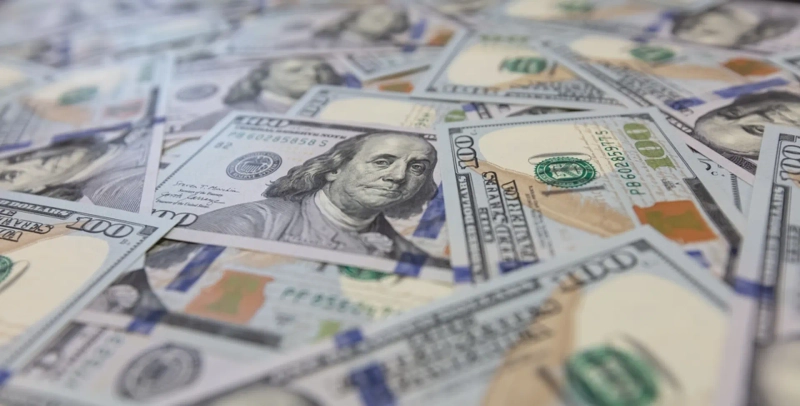
As the possibility of a US attack on Iran emerges, instability in the foreign exchange market is intensifying. The preference for safe assets has appeared, with the KRW-USD exchange rate climbing to its highest level in a month.
On the 19th, at 3:30 p.m. in the Seoul foreign exchange market, the KRW-USD rate ended weekly trading at ₩1,380.20, up ₩10.80 from the previous day. It is the first time since June 30th (₩1,380.10) that the previously stable rate exceeded ₩1,380. This marks the highest level in about a month, since June 22nd (₩1,381.30).
That day, the exchange rate opened at ₩1,375, up ₩5.60 from the prior day. Reports surfaced that the US may attack Iran’s nuclear facilities as soon as the weekend, causing the rate to jump as high as ₩1,386.30.
The Dollar Index, which measures the value of the dollar against six major currencies, rose 0.55% from the previous day to 99.103. The Dollar Index, which had remained around 98 since June 11th (99.104), returned to the 99 level. Analysts cite a preference for safe assets due to Middle East tension as the reason for the dollar’s rise.
At 3:30 p.m., the KRW-JPY cross rate stood at ₩950.26 per 100 yen, up ₩5.49 from the previous day at the same time. The JPY-USD rate recorded a 0.2% increase to ¥145.24.
Government bond yields mostly edged higher. In the Seoul bond market, the 3-year treasury bond yield closed at 2.475% p.a., up 0.003 percentage points from the previous session. The 5-year and 2-year yields each rose by 0.003 and 0.018 percentage points, closing at 2.640% and 2.483% p.a., respectively. However, the 10-year yield fell 0.002 percentage points to 2.874% p.a.
The bond market focused on the government’s second supplementary budget proposal that day. According to the proposal, the volume of deficit bond issuance matches market expectations, at ₩19.8 trillion. Since this was largely priced in, the market remained mostly flat, according to experts.
By Kang Jin-kyu, josep@hankyung.com

Korea Economic Daily
hankyung@bloomingbit.ioThe Korea Economic Daily Global is a digital media where latest news on Korean companies, industries, and financial markets.