

PiCK
Digital Asset Bills Emerging… Ruling Party Reveals Differences of Opinion on Key Issues
Summary
- The bills on the Digital Asset Industry Act promoted by the Minjoo Party of Korea have revealed differences of opinion regarding key issues such as stablecoin issuance requirements, market surveillance systems, and the affiliation of the Digital Asset Committee.
- In particular, the Korea Fintech Industry Association draft raises entry barriers for stablecoin issuers by increasing the minimum capital requirement and basing the standard for reserve assets on market evaluation value, which could limit the entry of operators with weaker capital.
- Amid varying proposals on market surveillance systems and which body should install the Digital Asset Committee, the bills are expected to have a significant impact on both the innovation and institutional integration of the Korean digital asset market depending on policy direction.
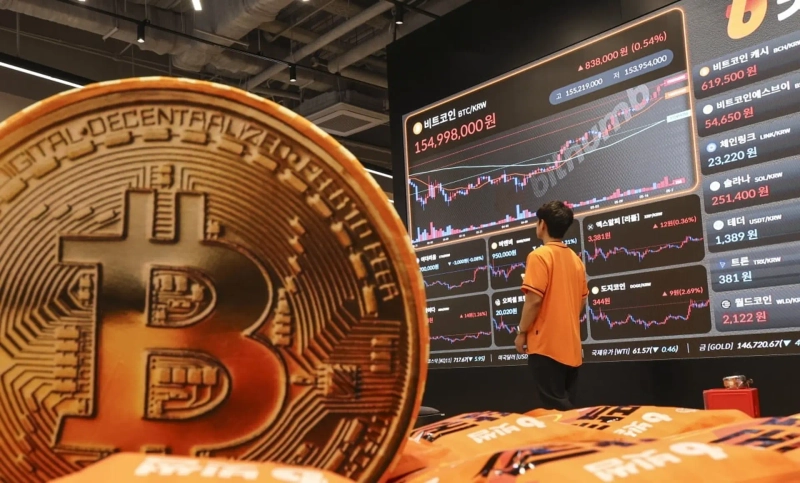
With two digital asset (virtual asset) industry-related bills being simultaneously promoted by the Minjoo Party of Korea, internal differences in regulatory standards and policy direction have become apparent. This is because the two bills diverge on critical aspects such as stablecoin issuance requirements, market surveillance systems, and the affiliation of the Digital Asset Committee.
According to political circles on the 20th, the ruling Minjoo Party is pursuing a digital asset industry bill that centers on allowing stablecoin issuance and establishing a regulatory framework for coin exchanges. Stablecoins are cryptocurrencies pegged 1:1 to the value of certain assets such as the US dollar.
On the 10th, National Assembly member Min Byung-deok proposed the 'Digital Asset Basic Act', and subsequently, Kang Jun-hyun and other members of the Political Affairs Committee, in conjunction with the Korea Fintech Industry Association (KFIA), are scheduled to propose a similar 'Digital Asset Innovation Act' in July. National Assembly member An Do-geol is also preparing a bill focused on the stablecoin sector. The proposal includes the formation of a consultative body involving the Ministry of Economy and Finance (foreign exchange), Bank of Korea (monetary policy), and Financial Services Commission (supervision).
In addition to the three Minjoo Party bills, a government (Financial Services Commission) plan is also set to be announced in the second half of the year. Once the subcommittee for bill deliberation of the Political Affairs Committee convenes and the legislative process begins, these bills are expected to be reviewed together.
There are notable differences between the draft from KFIA and the bill from National Assembly member Min in several key areas that have drawn significant market interest.
First, the KFIA draft significantly raises the entry threshold for stablecoin issuers. While the Digital Asset Basic Act proposed by Min puts the stablecoin minimum capital requirement at ₩500 million, the KFIA proposes an increased standard of ₩1 billion, reflecting concerns of the Bank of Korea and financial regulators about indiscriminate stablecoin issuance.
The KFIA draft also specifies standards for the 'reserve assets' backing digital assets. The bill mandates that the value of reserve assets must be equal to or greater than the outstanding issuance, effectively requiring assets equivalent to the amount of issued won. The catch is that the criteria are based on 'market evaluation value' rather than book value.
For example, if coins worth ₩100 billion are issued, a 'risk discount' (which lowers the recognized value for higher-risk assets) is applied to reserve assets, meaning issuers may need to secure assets worth several billions more. In addition, if the 'additional equity capital ratio' to be set aside is 1%, an additional ₩1 billion is required. Thus, if realized, existing banks and large operators with sufficient capital would be able to enter, but smaller players with limited capital would effectively be excluded, drawing criticism.
Another difference lies in the inclusion of the 'Integrated Market Surveillance System', a pledge of President Lee Jae-myung and also a campaign promise of the Minjoo Party. The KFIA draft omits this, instead maintaining the structure of assigning market surveillance responsibility to the exchanges themselves, leaving concerns over conflicts of interest and lack of transparency unresolved.
In contrast, Min's bill requires exchanges to transmit transaction data to an independent integrated surveillance agency, granting surveillance authority exclusively to this third-party professional body. The aim is to reduce the burden on exchanges and enhance market transparency by outsourcing monitoring to an independent entity.
There are also differences regarding who oversees market regulation. The Digital Asset Innovation Act proposes the establishment of a Digital Asset Committee under the Financial Services Commission, with overall industry oversight. The vice chairman of the FSC serves as committee chair, with civilian members constituting more than half of a 20–30 member committee. This follows the government’s current roadmap, which envisions a two-stage legislative process with a virtual asset committee headed by the FSC's vice chairman.
This contrasts with Min’s proposal, which would establish the Digital Asset Committee directly under the president. Min’s camp believes that innovative policy cannot be fostered if the committee is under the FSC, a governmental organization.
An academic commented, “At a time when policy direction and execution power are critical, today's discussions mark a turning point for Korea's digital asset market. Integrating into the institutional system is essential, but in the process, we must not stifle the momentum for innovation.”
Shin Min-kyung, Hankyung.com journalist radio@hankyung.com

Korea Economic Daily
hankyung@bloomingbit.ioThe Korea Economic Daily Global is a digital media where latest news on Korean companies, industries, and financial markets.