

PiCK
Trump: "Decision on strike within 2 weeks"…Iran pursues two-track negotiations with US and Europe
Summary
- President Donald Trump has given Iran a two-week deadline and is pressuring them to negotiate on eliminating its nuclear program.
- Iran is pursuing a two-track diplomatic strategy, engaging in negotiations not only with the US but also with the UK, France, and Germany.
- Despite President Trump's pressure, it remains uncertain whether the nuclear program will be dismantled, and failure in the negotiations could increase long-term instability in the Middle East.
Will Iran give up its nuclear ambitions?
US: Even with a bunker buster strike,
No guarantee of total elimination of nuclear facilities
Pressure on Iran for 'voluntary nuclear abandonment'
Even MAGA voices oppose intervention
Iran cornered by concentrated bombing
Talks with UK, France, Germany…Approaches US as well
Breaks out 'banned weapon' cluster munitions
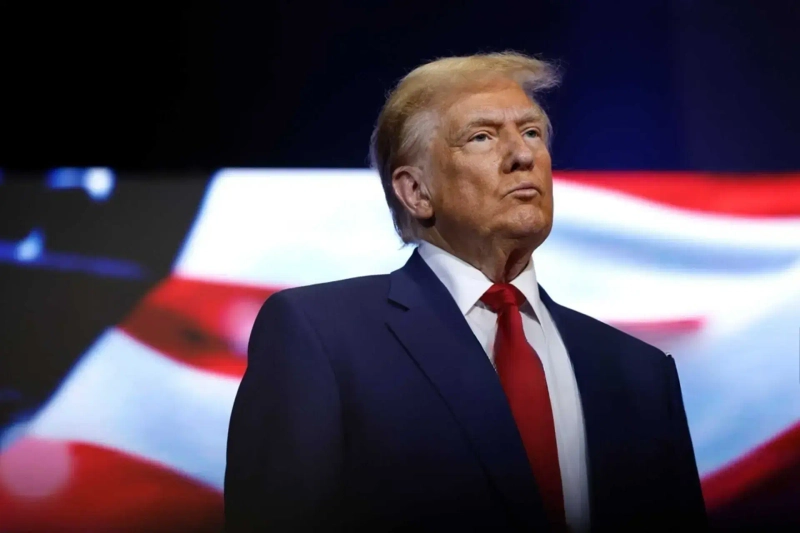
US President Donald Trump gave Iran a two-week negotiation deadline, pressuring Iran to dismantle its nuclear program voluntarily and 'surrender.' While Iran is displaying a stance of resistance, it is also engaging in 'two-track negotiations' with the United States, United Kingdom, France, and Germany. However, analysts point out that it remains uncertain whether Iran will eliminate its nuclear program as President Trump demands.
◇ "Considerable chance for negotiation"
White House Press Secretary Caroline Leavitt reported that on the 19th (local time), President Trump stated, "Within the next two weeks, I will decide whether or not to proceed with a strike." According to Leavitt, President Trump explained the two-week deliberation as being based on the "considerable possibility of negotiations with Iran, though it may or may not happen in the near future."
The US believes that with much of Iran's war infrastructure and military leadership neutralized, now is the opportunity to solve the nuclear issue. President Trump approved a military plan for a strike on Iran on the 17th, but has withheld the final order, out of concern that the US could become entangled in a protracted Middle East conflict like the Iraq or Afghanistan wars. The uncertainty over whether deeply-buried nuclear facilities at Fordow could be completely destroyed even with bunker busters is another reason for hesitation. Furthermore, Trump's core support base, the 'MAGA (Make America Great Again)' camp, is opposed to US intervention in Middle East conflicts, adding to the reluctance. On the other hand, hardliners like Senator Lindsey Graham are urging Trump to go ahead with the bunker buster strike.
◇ "Diplomatic solution still possible"
Iran has yet to officially respond to Trump's 'two-week deadline.' However, it has agreed to join nuclear talks with the UK, France, and Germany in Geneva, Switzerland on the 20th. According to Reuters, the talks, coordinated by the US, will include foreign ministers from the three countries, aiming to secure a guarantee that Iran's nuclear program will be used solely for civilian, not military, purposes. David Lammy, the UK Foreign Secretary, after meeting with US Secretary of State Marco Rubio and US Middle East Envoy Steve Witkoff, announced on social media that there is "an opportunity for a diplomatic solution in the next two weeks."
Direct communications between the US and Iran are also ongoing. Since Israel's airstrikes began on the 13th, US envoy Witkoff and Iranian Foreign Minister Abbas Araqchi have reportedly held several phone calls seeking a diplomatic solution. Araqchi said, "If Israel halts its attacks, retaliation will also stop."
The US wants Iran to abandon its nuclear program and disable the Fordow facility. A US administration source told CBS, "(For President Trump) to finish the job means to destroy Fordow."
The key concern is the possibility that the US may not achieve its desired outcome through negotiations. Iran's Supreme Leader, Ali Khamenei, declared on the 17th, "The battle has begun. There will be no mercy for (Israel)," reiterating determination to fight. Should negotiations break down, Iran may well pursue a prolonged confrontation with the US.
In this case, President Trump would again face the dilemma of 'strike or negotiate.' In the Ukraine war, Trump pressured Russia to agree to a truce within a two-week period, but despite Russia's refusal, he took no special measures. If a similar situation unfolds with Iran, confidence in Trump's 'maximum pressure' strategy could be undermined.
There are also predictions that Iran may decide to develop nuclear weapons. According to the New York Times (NYT), US intelligence believes Iran might take this step if the Fordow facility is attacked or if Supreme Leader Khamenei is assassinated.
◇ Iran deploys 'devil's weapon' cluster bombs
Armed clashes between Israel and Iran are intensifying day by day. An Israel Defense Forces (IDF) spokesperson announced that Israel had struck Iran's heavy water nuclear facility in Iraq, Natanz nuclear facility, and, in cooperation with Russia, the Bushehr nuclear power plant. The Bushehr announcement was later corrected as a mistake, but neither confirmation nor denial of the actual attack was provided.
Cornered by concentrated Israeli missile strikes, Iran reportedly launched ballistic missiles fitted with cluster munition warheads. The IDF confirmed that at least one of the Iranian ballistic missiles that landed in central Israel that morning was a cluster munition. Cluster bombs are weapons that spread dozens or hundreds of smaller bomblets from a single warhead upon detonation; because they indiscriminately kill civilians and soldiers alike, they are called the 'devil's weapon.'
Casualties from this conflict continue to increase. According to the Israeli government, as of the previous day, at least 24 people have been killed in Israel as a result of Iranian attacks. The Iran Human Rights group in Washington, D.C., estimated that in Iran, at least 639 people, including 263 civilians, have died, and more than 1,300 have been injured.
Washington, D.C. = Sang-Eun Lee, Correspondent / Ju-Wan Kim, Reporter selee@hankyung.com

Korea Economic Daily
hankyung@bloomingbit.ioThe Korea Economic Daily Global is a digital media where latest news on Korean companies, industries, and financial markets.