

Iran: "Enriched nuclear material has already been relocated"… Maintains refusal of ceasefire agreement
Summary
- A senior Iranian official reported that enriched nuclear material has already been relocated to places difficult to detect.
- The United States and the international community are facing a dilemma, choosing between the pursuit of hidden nuclear material or accepting Iran's terms for negotiation.
- While Iran is attempting to preserve its right to uranium enrichment, the United States and major countries continue to maintain their refusal of such demands.
Senior Islamic Revolutionary Guard Corps official, National TV Interview
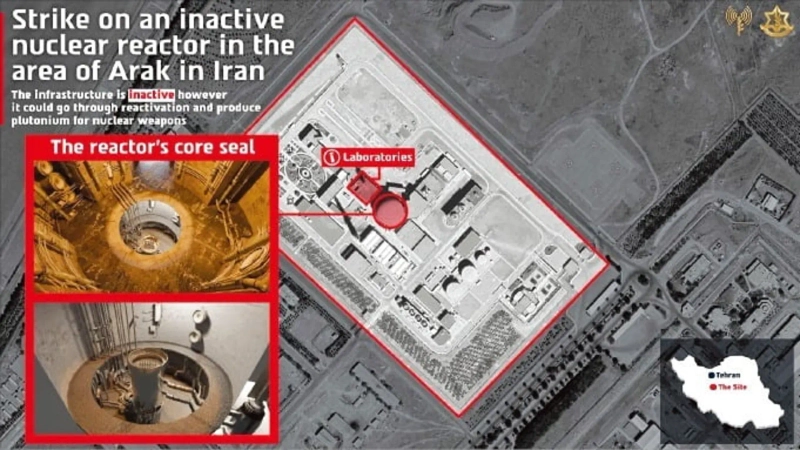
A senior Iranian official stated on the 20th (local time) that agreeing to a ceasefire at this stage would be a 'mistake', and claimed that Iran's enriched nuclear material has already been moved to locations where it is difficult to be found.
Mohsen Rezaei, a general of the Islamic Revolutionary Guard Corps (IRGC), said in an interview with Iranian state television broadcast that "all enriched materials have been relocated (before Israel's attack) and are in a secure location," adding that Iran will continue to possess nuclear material going forward.
He continued, "Agreeing to a ceasefire at this stage would only allow weakened enemies to regroup" and argued that it would be a 'strategic mistake'.
These remarks came as U.S. President Donald Trump is stepping up pressure on Iran to abandon nuclear development by issuing a 'two-week ultimatum.' Regarding this statement, the Institute for the Study of War (ISW), a think tank based in Washington, D.C., analyzed that Iran is employing a strategy to put the West in a 'dilemma.' ISW interpreted, "This dilemma presents the U.S. and the international community with a choice: to accept the conditions put forth by Iran in nuclear negotiations or risk a long and difficult quest to uncover Iran's hidden nuclear materials."
This suggests that Iran aims to highlight that locating all hidden nuclear material would take a long time, require significant effort, and offer no guarantee of success. ISW added, "This dilemma is designed to prevent the destruction of Iran's nuclear program," explaining that Iran is either trying to secure terms in negotiations to continue uranium enrichment, or to hide nuclear material, making efforts by the U.S. or Israel to destroy the nuclear material more difficult.
It is expected that Iran will attempt to preserve its "right" to uranium enrichment in future negotiations, but the United States, Israel, and major European Union (EU) member states are maintaining their refusal of such demands.
Reporter Hyewon Ahn, Hankyung.com anhw@hankyung.com

Korea Economic Daily
hankyung@bloomingbit.ioThe Korea Economic Daily Global is a digital media where latest news on Korean companies, industries, and financial markets.