

"Inflation Risks Outweigh Employment… No Need to Rush Rate Cuts"
Summary
- Rafael Bostic, President of the Federal Reserve Bank of Atlanta, said that U.S. companies have reached the limits of absorbing tariffs, making a price increase inevitable.
- Bostic stated that because the labor market remains stable, the Fed does not need to rush a rate cut.
- President Bostic projected that inflation will rise to 3% by year-end, adding that a one-time 0.25% rate cut at that time would be appropriate.
Rafael Bostic, President of the Federal Reserve Bank of Atlanta
"Companies absorbing tariffs have reached their limit; prices expected to rise gradually"
Governors Waller and Vice Chair Bowman support a rate cut in July
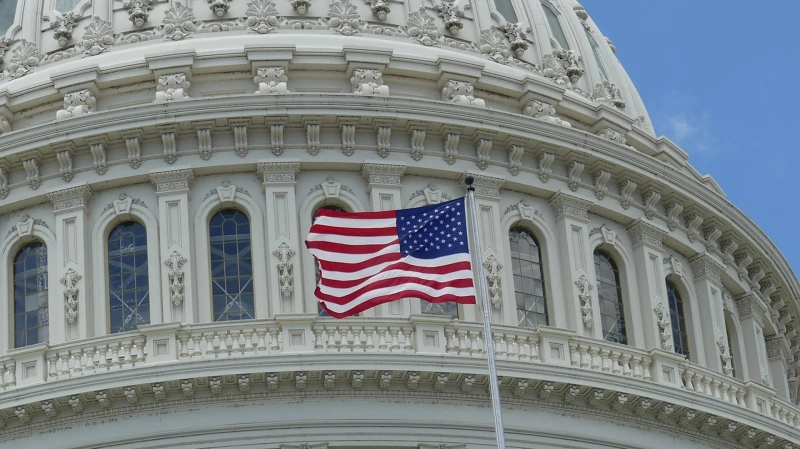
Rafael Bostic, President of the Federal Reserve Bank of Atlanta, stated that while American companies have so far been absorbing tariffs, they are likely to start reflecting tariffs into prices by the end of this year. He emphasized that the labor market remains stable and that the Fed does not need to rush a rate cut.
According to Reuters on the 23rd (local time), Bostic told Reuters in an interview that the Fed has “time and breathing room” to observe tariffs and other policy debates. He projected that economic growth could slow to about 1.1% this year and that inflation could rise to 3% by year-end. Based on this outlook, he believes that a single 0.25% point rate cut at the end of the year would be appropriate.
While President Trump continues to pressure the Fed to lower rates, Christopher Waller, a member of the Board of Governors, and Michelle Bowman, the Fed's Vice Chair for Supervision, have both commented that a rate cut in July is possible.
However, Bostic said, “I am more concerned about failing to achieve the 2% inflation target than about potential weakness in the labor market,” indicating that the risk of a rebound in inflation outweighs any employment downturn. He added, “By the final quarter of this year, we should have enough information to make a move.”
Bostic noted that with the Trump administration delaying what would have been the highest tariffs in a century, recent business sentiment has improved somewhat. Chairman Powell also mentioned this in a press conference last week.
Bostic commented that "corporate leaders have lowered the probability of a doomsday scenario where tariffs and prices surge and demand collapses," and that management teams are formulating strategies to address tariffs.
He said that these strategies include gradually raising prices. He pointed out that U.S. companies are running out of options to maintain prices, and that "it looks like they will have to raise prices." The issue is not "whether" to raise prices, he said, but rather "when."
Although Bostic does not have a vote on rates this year, like all Fed officials, he participates in Federal Open Market Committee (FOMC) discussions.
This week's congressional hearings are expected to focus on Fed policy, with Jerome Powell, the Fed Chair, scheduled to testify before the House Financial Services Committee on the 24th and 25th.
While President Trump has called for an immediate rate cut, lingering uncertainties surrounding trade and other policies have led the Fed to take a cautious stance, and the current geopolitical uncertainties in the Middle East could further intensify this approach.
If Trump’s reciprocal tariff exemptions for most countries expire on July 8, the resulting tariff policies or bilateral agreements could still create inflationary pressures for U.S. prices.
Guest Reporter Jung-A Kim kja@hankyung.com

Son Min
sonmin@bloomingbit.ioHello I’m Son Min, a journalist at BloomingBit