

Tax Cuts Bill Reaches the 'Decision Desk'... Trump Further Consolidates Control Over State Affairs
Summary
- The passage of this bill marks the realization of President Trump's tax cuts and debt ceiling increase, which is expected to strengthen his political standing.
- The bill includes an expansion of the semiconductor tax credit, which is likely to have a positive impact on South Korean semiconductor companies.
- As tax credits for eco-friendly industries such as electric vehicle batteries are reduced, related South Korean companies are expected to be adversely affected.
Tax Cut Bill Passes Congress, Signed on the 5th
Trump Demonstrates Influence Within the Republican Party
Pushes Tax Cuts Despite Some Concerns
Expected to Gain Momentum in State Affairs, Including Debt Ceiling Increase
Accelerating 'Undoing Biden', Such as Reducing the IRA
Unilateral Passage Could Lead to Backlash
South Korea Benefits in Semiconductors, Electric Vehicles Take a Hit
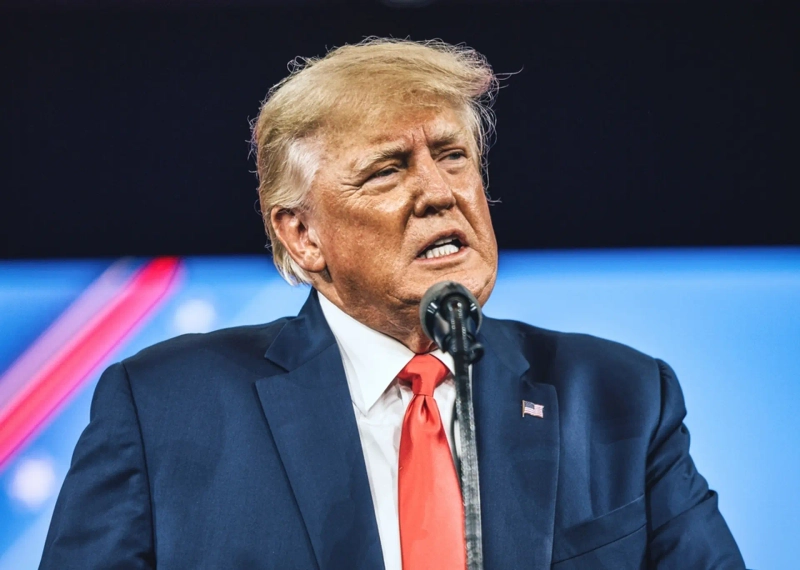
Donald Trump's 'One Big Beautiful Bill (OBBBA)', which consolidates his plans for a second presidential term, passed the House on the 3rd (local time) after clearing the Senate, thus overcoming the legislative threshold. Although a considerable number of Republican lawmakers expressed opposition or concerns over this bill, which includes large-scale tax cuts and cutbacks in welfare spending, its eventual passage will boost President Trump's ability to steer policy.
◇ 'Wings' for Political Agenda
The U.S. House handled Trump's tax cuts bill with 218 votes in favor and 214 against. The Senate had previously passed the bill by a margin of 51 to 50. As the bill passed the House, shouts of 'USA! USA!' and applause erupted. U.S. media described it as "Trump's big victory." As originally planned, President Trump intends to hold a signing ceremony at The White House at 5 p.m. on U.S. Independence Day (July 4).
With this bill passing, President Trump is now positioned to pursue the key policy commitments made during the campaign throughout the remaining three and a half years of his term. The bill permanently eliminates the sunset provision of the Tax Cuts and Jobs Act (TCJA), which had been passed during Trump's first term in 2017. It lowers personal and corporate income tax rates and exempts tips and overtime pay.
To offset revenue losses, benefits under Medicaid (health insurance for low-income individuals) and the Inflation Reduction Act (IRA) were significantly reduced. This also reflects President Trump's intention to erase the legacy of former President Joe Biden. Although there were criticisms that excluding social security benefits in the fast-tracked 'budget reconciliation process' violated procedure, Republicans justified the move under the pretext of 'fraud prevention', implementing the President's agenda.
A notable 'invisible victory' is the $5 trillion increase in the federal debt ceiling. The U.S. government had nearly reached its debt ceiling of $36.1 trillion. At this rate, the federal government could have faced a shutdown between August and October. But with the increased debt ceiling, President Trump no longer needs to negotiate with the Democratic Party.
The Democrats were left powerless. House Democratic Leader Hakeem Jeffries used his customary floor privileges to delay the vote with an 8-hour, 44-minute speech (surpassing the previous record of 8 hours and 32 minutes), but this only briefly postponed the outcome.
◇ Warnings of "Losing the Midterms"
At a time when Trump was seen to have somewhat lost momentum early in his term, his show of control over the party by pushing through the tax bill carries great symbolism. President Trump consistently implemented his 'my way' strategy, successfully seeing it through.
There were suggestions within the Republican Party after last year’s presidential election to split the bill and use the budget reconciliation process twice, but Trump directed, "Do it as one." When there was debate within the party about the extent of Medicaid cuts, he was reportedly furious and said, "Don't touch it." He set a timeline—pass in the House before Memorial Day (May 26), and in Congress as a whole before Independence Day (July 4)—and pushed to meet these goals, which were ultimately achieved.
However, there is strong criticism that the bill, assembled mainly by Trump and his ardent supporters, passed unilaterally without sufficient review, debate, or amendment, which could backfire on the Republican Party. Republican Senator Thom Tillis (North Carolina) told President Trump in a call on May 28, "You are making a mistake." The Washington Post reported that he warned the cuts to Medicaid could cost the party its House majority.
Contrary to President Trump's claim of reducing the fiscal deficit, the Congressional Budget Office estimates that the new bill will increase the federal deficit by $3.3 trillion over the next ten years. There are also criticisms of the inconsistency of raising the debt ceiling while simultaneously emphasizing debt reduction.
South Korean companies will also be greatly affected by this bill. Expanding the semiconductor tax credit from 25% to 35% is viewed as positive. However, with the early termination or reduction of tax credit benefits for electric vehicle batteries, wind, and solar power, South Korean companies that have invested in the United States in these sectors are expected to be negatively impacted.
Washington = Sang-Eun Lee, Correspondent selee@hankyung.com

Korea Economic Daily
hankyung@bloomingbit.ioThe Korea Economic Daily Global is a digital media where latest news on Korean companies, industries, and financial markets.