

U.S. Reciprocal Tariff Suspension Expires in 3 Days... Government Makes Final Push in Negotiations
Summary
- With the suspension of U.S. reciprocal tariffs set to expire in 3 days, the government announced it is making a final push in negotiations.
- In these negotiations, the government plans to present concrete proposals regarding the removal of non-tariff barriers and trade balance demands.
- The U.S. stated that reciprocal tariffs of up to 60–70% could be imposed on some countries, and that a rate of 25% is currently applied to South Korea.
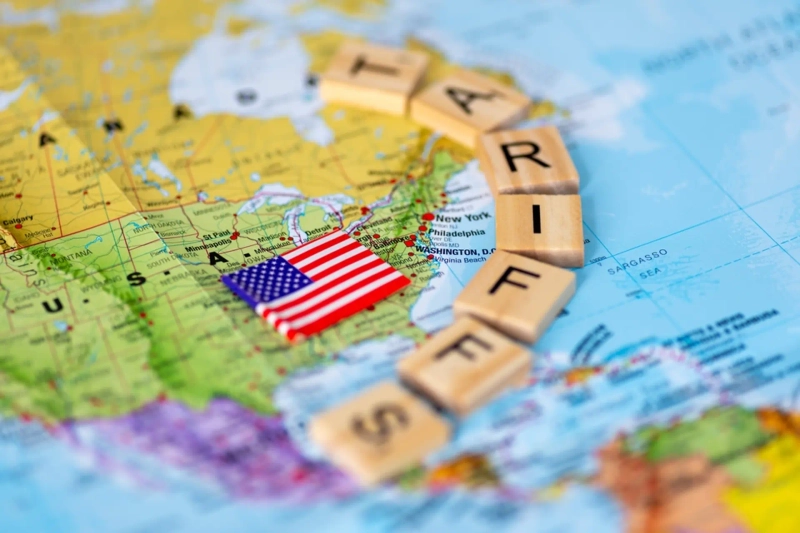
As the suspension period for reciprocal tariffs imposed by the United States on various countries is set to end on the 8th, the government has launched last-minute negotiations.
The Ministry of Trade, Industry and Energy announced on the 5th (local time) that Trade Minister Yeo Han-koo visited Washington, D.C., U.S., and is scheduled to hold tariff negotiations as early as that day with representatives such as Jamison Greer of the U.S. Trade Representative (USTR).
Yeo is expected to present a specific negotiation plan concerning the removal of non-tariff barriers and trade balance demands raised by the United States. This plan has been prepared based on working-level and ministerial-level discussions that have taken place since April.
The main goal is to secure an extension of the reciprocal tariff suspension to gain more time until a Korea-U.S. trade agreement is finalized. Before departing, Yeo stated, "In the current situation, rather than recklessly rushing to meet the deadline, I believe that taking more time and strengthening the substance of the negotiations would be most beneficial to our national interest," adding, "If necessary, we are also considering creating mutually beneficial, substantial 'win-win' negotiation results by continuing the reciprocal tariff suspension."
Previously, in April, the United States set reciprocal tariffs on 56 countries, including South Korea and the European Union, to take effect from the 9th, but immediately implemented a 90-day suspension.
On the 4th, President Trump increased pressure by announcing that he would begin sending letters specifying reciprocal tariff rates to each country. It is reported that letters will be sent to at least 10–12 countries on that day alone.
So far, the Trump administration has failed to reach agreements with most countries except for the United Kingdom and Vietnam. However, it appeared to be considering partial extensions, with the negotiation deadline set for the end of July.
Reciprocal tariffs can impact the burden on U.S. consumers and the interest rate policy of the Fed, posing a significant concern for President Trump as well. Accordingly, this is interpreted as a strategy to encourage the easing of non-tariff barriers and an increase in U.S. imports, rather than simply lowering reciprocal tariff rates.
Furthermore, President Trump raised the pressure by stating that reciprocal tariffs could be imposed on some countries at rates as high as 60–70%. Currently, a rate of 25% is applied to South Korea.
The Ministry did not specify the timing of Yeo's return, which appears to reflect the uncertainty in the negotiation situation.
Shin Hyun-bo Hankyung.com Reporter greaterfool@hankyung.com

Korea Economic Daily
hankyung@bloomingbit.ioThe Korea Economic Daily Global is a digital media where latest news on Korean companies, industries, and financial markets.