

End of Reciprocal Tariff Grace Period Nears…Will Donald Trump Push Forward This Time?
Summary
- President Donald Trump announced his intention to send tariff letters to up to 15 countries ahead of the conclusion of the reciprocal tariff grace period on July 9.
- The White House stated that it is leaving the possibility of an extension open for some countries that are actively negotiating.
- This move is interpreted as a strategy to increase pressure on key negotiating countries over tariff rates, trade imbalances, and non-tariff barriers ahead of the expiration of the reciprocal tariff grace period.
Donald Trump: "Letters to be sent on the afternoon of the 7th…Targeting up to 15 countries"
The White House: "Countries making negotiation progress may extend the deadline"
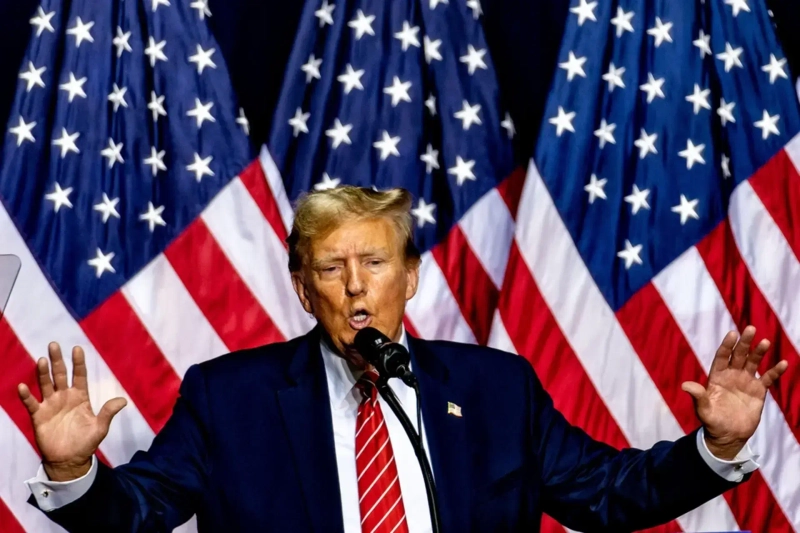
With the July 9 deadline for reciprocal tariff implementation just one day away, there is growing attention on whether Donald Trump, President of the United States, will maintain his hardline stance or once again back down with the so-called 'TACO (Trump Always Chickens Out)' approach.
President Trump announced that, starting at 1 a.m. KST on July 8, he will sequentially send letters specifying reciprocal tariff rates to trading partner nations. However, The White House has indicated that it is leaving open the possibility of grace periods for some countries that are actively negotiating.
On the night of the 6th (local time), President Trump stated via social media, "I am pleased to announce that U.S. tariff letters or negotiated agreements for various countries worldwide will be delivered starting at 12:00 p.m. (Eastern U.S. time) on Monday, July 7." Previously, President Trump had suggested his intention to notify countries of tariff rates on exports to the U.S. or to finalize negotiations by July 9 through settlements.
He added, "With most countries, everything will be concluded—either with a letter or through an agreement—by the 9th. For some countries where agreements have been reached, both letters and agreements are involved. On Monday (the 7th), I plan to send letters to 12 countries, possibly up to 15, and some will receive them on Tuesday (the 8th) and Wednesday (the 9th) as well."
Scott Besant, U.S. Treasury Secretary, warned in a CNN interview that day, "President Trump will send letters stating, 'If negotiations do not progress, as of August 1st, we will return to the tariff levels first announced on April 2nd.'"
However, as with previous instances, The White House is reviewing possible deadline extensions for certain countries, making it unclear whether any nation will immediately face strong trade reprisals. Kevin Hassett, Chairman of the National Economic Council (NEC), said, "There is a set deadline, but there are significant matters close to agreement. Some could go past the deadline." Thus, this move is interpreted as a strategy to increase pressure on key negotiating partners just two days before the reciprocal tariff grace period ends.
Previously, the Trump administration set reciprocal tariff rates on April 2 for 57 economic entities (56 countries plus the European Union), including Korea, and implemented them on April 9, but immediately granted a 90-day grace period. July 7 marks the end of this grace period, which is the final deadline for negotiations around tariff rates, trade balance disparities, and the elimination of non-tariff barriers.
Reporter Dayeon Lim allopen@hankyung.com

Korea Economic Daily
hankyung@bloomingbit.ioThe Korea Economic Daily Global is a digital media where latest news on Korean companies, industries, and financial markets.