

A letter to Korea and Japan, copied word-for-word—what is Trump's true intention?
Summary
- President Trump announced that he had informed Korea and 13 other countries of a 25~40% tariff imposition.
- He stated that starting August 1, an additional 25% tariff would be applied to all Korean products.
- Attention is focused on whether the two countries can resolve tariff uncertainties depending on the outcome of trade negotiations with the United States.
25~40% Notification to 14 countries
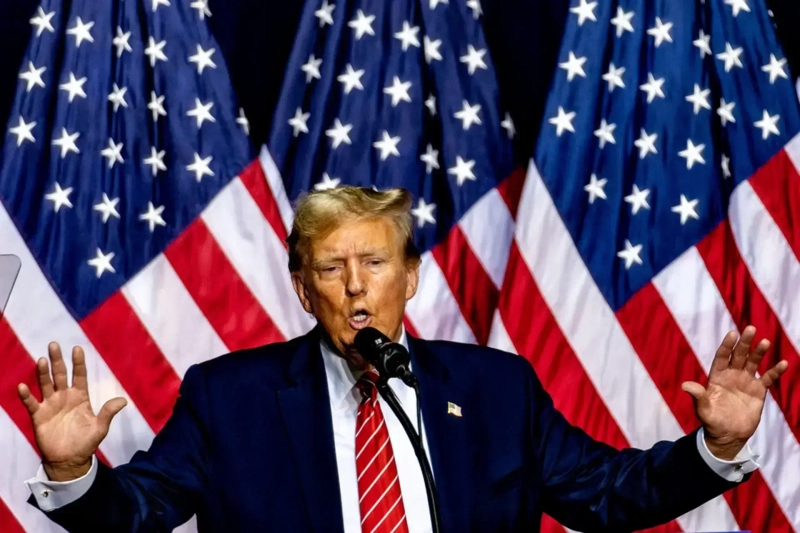
On the 7th (local time), U.S. President Donald Trump sent letters notifying Korea and 14 other countries of new tariff rates.
President Trump publicly disclosed on Truth Social that at around 12:20 p.m. he sent letters to Korea and Japan specifying a 25% tariff rate for each country. Although the recipients differed—President Lee Jae-myung for Korea and Prime Minister Shigeru Ishiba for Japan—the contents of the documents were identical except for the country names. Subsequently, letters listing country-specific tariff rates were sent to a total of 12 countries, focusing on Southeast Asian nations such as Malaysia and Indonesia.
In his letter to Korea, President Trump wrote, "Unfortunately, our trade relationship has been far from reciprocal," and emphasized, "I have concluded that it is now time to change course to address the long-standing trade deficit caused by Korea's tariff and non-tariff policies and trade barriers." He further stated, "Beginning August 1, a 25% tariff will be imposed on all Korean products imported into the United States, in addition to sector-specific tariffs." The planned start date for these reciprocal tariffs, originally July 9, has been pushed back by about three weeks. The Ministry of Trade, Industry and Energy commented, "With this letter, the de facto deferral of the reciprocal tariff enforcement is extended until August 1, and we will accelerate negotiations during the remaining period to promptly resolve uncertainty stemming from the tariffs and to achieve mutually beneficial outcomes."
The countries receiving letters that day included Malaysia, Kazakhstan, Tunisia (25%); Bosnia and Herzegovina, South Africa (30%); Indonesia (32%); Bangladesh, Serbia (35%); Thailand, Cambodia (36%); and Laos, Myanmar (40%).
President Trump plans to send similar letters to about 10 countries per day over the coming days. Among those receiving letters were both major U.S. trading partners like Korea and Japan, and minor partners with small trade volumes such as Bosnia and Herzegovina.
Selecting major manufacturing countries and U.S. security allies like Korea and Japan as the first recipients is symbolic. Both countries record substantial trade surpluses with the U.S. and focus mainly on manufacturing goods such as automobiles. Both seek reductions in sector-specific tariffs rather than reciprocal tariffs. Although the reasons for slow progress in negotiations differ for each, the Trump administration’s decision to group Korea and Japan together in the trade talks became evident through the letter dispatch process. This reflects President Trump’s long-standing view that "our allies have been taking advantage of us."
President Trump clarified that product-specific tariffs, such as 25% on automobiles and 50% on steel, are separate from the reciprocal tariffs. However, according to Reuters, White House officials explained that goods subject to product-specific tariffs are not affected by the reciprocal tariff.
National Security Advisor Wi Sung-rak reported, following a meeting in Washington, D.C. with U.S. Secretary of State and National Security Advisor Marco Rubio, that the American side expressed the desire for the two countries to communicate closely in hopes of reaching an agreement before the actual tariff imposition date of August 1.
The Ministry of Trade, Industry and Energy immediately held an emergency meeting, chaired by the first vice minister, to assess the domestic sectoral impacts of the tariffs. However, it appears unlikely that a deal satisfying President Trump can be found in the short term.
Washington, D.C. = Lee Sang-eun, correspondent selee@hankyung.com

Korea Economic Daily
hankyung@bloomingbit.ioThe Korea Economic Daily Global is a digital media where latest news on Korean companies, industries, and financial markets.