

Japanese Prime Minister: "Regrettable Tariff Increase"... Asian Countries Scramble Over Tariff Letters
Summary
- President Trump announced the imposition of tariffs of 25% or more on countries including Japan and South Korea, making trade negotiations expected to become more complicated.
- Japan and South Korea mentioned concerns that tariffs could expand beyond automobiles and steel to include semiconductors and pharmaceuticals.
- The Japanese government warned of the negative impact on the automotive industry and stated that it would take all possible measures, while Asian countries have also become busy preparing for negotiations.
South Korea: "Responding to Requests to Lower Non-Tariff Barriers"
Japan: "All Measures Taken to Lessen Impact of 25% Tariff"
Taiwan: "Focusing on Cooperation in Technology and Security Negotiations"
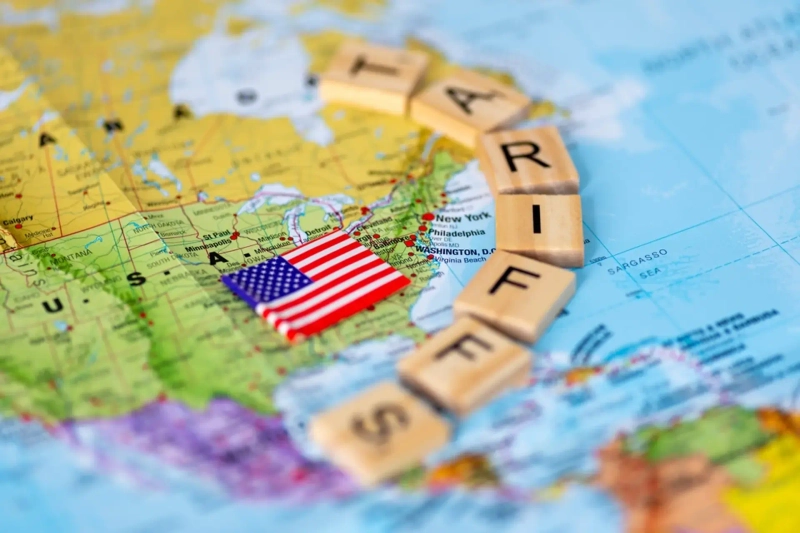
After President Trump postponed the mutual tariff imposition date to August 1, South Korea, Japan, and other Asian countries gained about three more weeks for negotiations with the United States. However, the negotiation process does not seem easy.
According to Bloomberg on the 8th (local time), Asian countries such as South Korea and Japan, which received tariff letters from President Trump, are busy preparing for negotiations.
In the letter to major trading partners, President Trump announced a 25% tariff on products from Japan and South Korea and more than 30% tariffs on goods from Indonesia and Thailand.
David Boling, Director of Japanese Trade at consulting firm Eurasia Group, stated, "For Trump, whether a country is an ally matters less than whether it contributes to America's trade deficit in goods." He added, "This will pose an obstacle to the economic growth of Asian countries that depend on the US market."
In the case of South Korea and Japan, the complexity of trade negotiations is heightened by the fact that there are already sector-specific tariffs of 25% and 50% respectively, on industries such as automobiles and steel, and that sectoral tariffs could potentially be extended to semiconductors and pharmaceuticals.
When asked why Trump decided to target Japan and South Korea first, White House spokesperson Karoline Leavitt replied, "It is the President's prerogative."
The 25% tariff announced by President Trump for all items from South Korea is at the same level as what was scheduled to take effect on July 9. South Korea stated it would revise rules and regulations to meet America's request to lower non-tariff barriers.
Japan’s new tariff rate is 1 percentage point higher than what was first announced on April 2. Japanese Prime Minister Shigeru Ishiba said at a cabinet meeting in Tokyo, "It is regrettable that the United States has raised tariff rates." Japan is in a difficult situation to make excessive concessions due to the Upper House election later this month.
James Hulse, CEO and CIO of Senjin Capital, pointed out, "If tariffs remain at their current level, negative effects are likely to spread to Japanese automakers and suppliers along the supply chain."
Although rapid negotiations were expected for Japan, talks hit an impasse over auto tariffs. The automotive industry both accounts for most of the US trade deficit with Japan and is a key driver of Japanese economic growth. Chief Cabinet Secretary Yoshimasa Hayashi of Japan stated that all possible measures would be taken to mitigate the impact of the 25% tariff.
President Trump announced a 25% tariff on Malaysian products, and a 40% tariff on those from Laos and Myanmar. Additionally, Indonesia faces 32%, Bangladesh 35%, and Thailand and Cambodia 36% tariffs.
Thailand was hopeful tariffs might be set lower than those proposed by Trump, based on its suggestion to reduce import tariffs on most US goods to 0%. Thai Finance Minister Pichai Chunhavajira said Thailand's latest proposal, "reducing import tariffs to zero on 90% of US products, would be advantageous for the US," but added that Trump's proposal of a 36% tariff in his letter was shocking.
Indonesia announced plans to immediately resume tariff negotiations with the US. Airlangga Hartarto, who has been leading negotiations as Coordinating Minister for Economic Affairs, is scheduled to arrive in Washington on the 8th and meet the US delegation.
Taiwan’s strategy in US negotiations is to balance bilateral trade in goods and focus on strengthening bilateral cooperation in fields such as technology and national security.
Steven Olson, a former US trade negotiator now working at the ISEAS–Yusof Ishak Institute, said the deadline could be pushed back from August. He said, "Negotiations over the most difficult issues will continue," and that it was hard to predict what the final agreement would look like.
Guest correspondent Kim Jeong-ah kja@hankyung.com

Korea Economic Daily
hankyung@bloomingbit.ioThe Korea Economic Daily Global is a digital media where latest news on Korean companies, industries, and financial markets.