

[Fed Watch] Besant: "Interest Rates Need to Drop by 1.5%P"... Intensified Pressure on Powell
Summary
- Treasury Secretary Scott Besant emphasized that the base interest rate should be lowered by 1.5~1.75%P, highlighting that this is a much larger cut than the market currently expects.
- As statements from President Trump and candidates for the next Fed chair intensify pressure on the Fed, expectations for lower interest rates are rising.
- Buoyed by expectations of a rate cut, the stock market reportedly reached record highs.
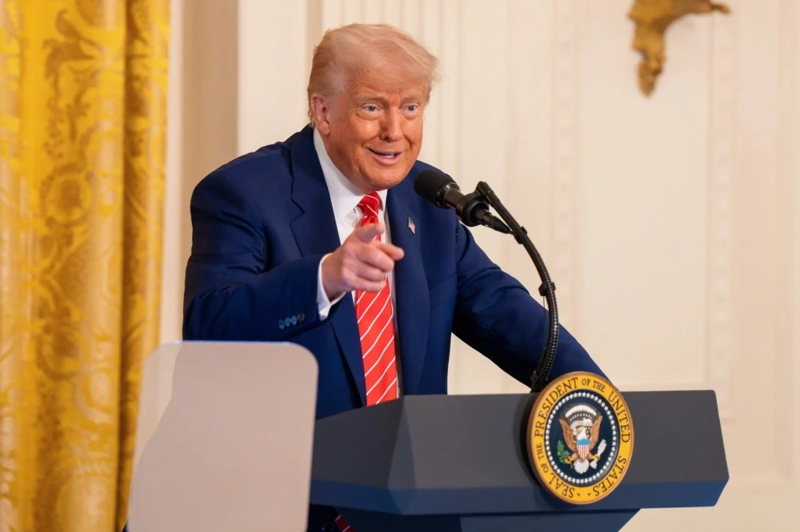
The White House's pressure on the Fed is intensifying. Yesterday, President Trump threatened to sue Chairman Powell. He said, "We are considering allowing a massive lawsuit against him due to his incompetent handling while managing Federal Reserve building construction." Previously, when President Trump visited the Fed at the end of July, he said he would not interrupt Chairman Powell's term if there were no fraud issues in the construction process. Back then, it was interpreted as a sign of respecting his term, but now there is a possibility that allegations of fraud could be raised against him. Today, President Trump told reporters, "I'm thinking of appointing a new chairman a bit earlier," adding that he had "narrowed the choices down to three or four candidates."
Treasury Secretary Scott Besant stated that the base rate should be 1.5~1.75% lower than it is now. This means the target should be 2.75~3.0%. The current market expectation for a September FOMC cut is just 0.25% points, which is a significant difference. Of course, compared to President Trump saying rates should be "3~4% points lower," Besant's proposal is less drastic, but it is still more aggressive than market expectations. This appears to be a move to further pressure the Fed. As the prospects for a rate cut increased, stock markets once again hit record highs.
Statements from those aspiring to be the next Fed chair are also shaking up the Fed. Following previously mentioned candidates like Board Member Christopher Waller, this time, former St. Louis Fed President James Bullard stepped up. Appearing on CNBC yesterday, he praised President Trump’s economic policies and stated that tariffs would not push up inflation in the long run. He also said that over the year starting from September, the Fed would lower rates by 1% point, returning to the neutral rate. Bullard, who once wielded significant influence as a sort of casting vote, continues to be a key figure. With him siding with President Trump, Powell's position appears increasingly undermined.
Attempts to challenge the very employment statistics underlying the Fed's judgment are also causing market concern. On the 1st, when the Bureau of Labor Statistics (BLS) released July’s nonfarm job gains—substantially revising down the figures for May and June—President Trump called the data manipulated, dismissed the then-director, and named loyal Heritage Foundation chief economist E.J. Antoni as the successor.
Moreover, the recent appointment of Economic Council Chairman Steven Myron to replace outgoing Fed Board Member Adriana Kugler, who resigned with five months left in her term, is another example of efforts to sway the Fed. Kugler had specialized in labor economics and interpreted labor statistics, so bringing in Myron, known for his Mar-a-Lago Agreement ideas, is seen as paving the way for a more dovish interest rate stance at the Fed.
Washington, D.C. = Sang-eun Lee, correspondent selee@hankyung.com

Suehyeon Lee
shlee@bloomingbit.ioI'm reporter Suehyeon Lee, your Web3 Moderator.