

PiCK
Korea, China, and Japan: Stablecoin Three Kingdoms… Challenging 'Digital Dollar' Hegemony
Summary
- East Asian powers including Korea, China, and Japan are entering a race to issue stablecoins backed by their own currencies, presenting a challenge to the dominance of the existing digital dollar.
- Japan is on the verge of issuing yen-based stablecoins such as JPYC, while China is officially reviewing stablecoin policies with a focus on yuan internationalization.
- Korea is pursuing legislation for won-based stablecoins, but adoption is expected to be difficult due to differences in views between the government and the Bank of Korea.
Korea, China, and Japan compete to issue domestic currency stablecoins
Moves to counter the 'dollar-backed' 99% market dominance
Korea faces differing views with the Bank of Korea… 'Will take time'

Major East Asian countries such as Korea, China, and Japan are accelerating efforts to issue stablecoins backed by their own currencies. Japan is on the verge of issuing a yen-based stablecoin, and China is reviewing a roadmap for internationalizing the yuan through stablecoins. Korea is also pushing for legal reforms, but differences in perspective between the Bank of Korea and the government have become an obstacle.
The virtual asset (cryptocurrency) industry views stablecoins as an emerging tool to challenge the dominance of the 'digital dollar.' According to the Bank for International Settlements (BIS), stablecoins backed by the US dollar account for more than 99% of the global supply of stablecoins—a near-monopoly.
Jinsol Bok, researcher at Populus, said, "With dollar-based stablecoins virtually dominating the market, the digital dollar's influence is growing stronger, making it inevitable for countries to be on high alert. To preserve their sovereign currency value and not fall behind in the virtual asset market hegemony, each country will have no choice but to move ahead with issuing their own fiat-currency-backed stablecoins."
Japan, imminent launch of yen-based stablecoin
Japan is the country most advanced in implementing institutional frameworks and adopting stablecoins. Two years ago, through revisions to the Payment Services Act, Japan was quick to define stablecoins as 'currencysignifying assets' and has supported issuance by regulated financial institutions such as banks and trust companies.
The Financial Services Agency of Japan is expected to register fintech company JPYC as a fund transfer operator this month, and approve the first issuance of a yen-based stablecoin. To maintain its 1JPYC=1 yen peg, JPYC will back the stablecoin with highly liquid assets such as bank deposits and government bonds, targeting issuance of up to 1 trillion yen (approximately ₩9.5 trillion) over the next three years.
JPYC plans to begin sales within a few weeks after registration. The stablecoins issued are expected to be used for overseas remittances, corporate payments, and blockchain-based asset management services. There is also discussion among institutional investors about using them for carry trades aimed at profiting from interest rate gaps.
Okabe, CEO of JPYC, said, "Should JPYC be widely adopted, demand for Japanese government bonds could increase," and emphasized the need to accelerate stablecoin institutionalization and adoption in consideration of monetary policy aspects.
China eyes stablecoins as tool for yuan internationalization
China is also officially reviewing the adoption of stablecoins as part of its strategy to internationalize the yuan. As the influence of US dollar-based stablecoins grows, China is moving to counter the dollar and maintain the competitiveness of the yuan.
The Chinese government is expected to finalize policy direction through a high-level research meeting on stablecoins at the end of this month, and by late August, approve a 'yuan internationalization roadmap.' The roadmap is expected to include measures to expand global adoption of the yuan, responsibilities of regulatory agencies, and risk management frameworks.
However, there are clear limits to the internationalization of the yuan. According to SWIFT (Society for Worldwide Interbank Financial Telecommunication), the yuan accounted for just 2.88% of global payments in June, the lowest in two years, while the dollar maintained an overwhelming 47.19% share.
Reuters assessed, "China operates limited connection programs for capital allocation in markets such as Hong Kong, but with this structure, there may be limits to internationalizing the yuan through stablecoins as well."
Korea, speed on institutionalization amid gaps with the central bank
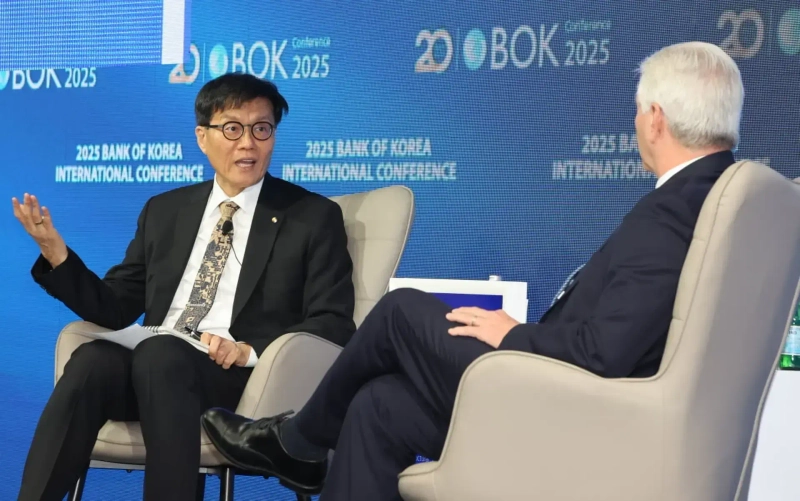
Korea is also speeding up efforts to institutionalize won-based stablecoins.
Earlier, lawmaker Min Byung-deok of the Democratic Party of Korea proposed a bill, the 'Basic Digital Asset Act,' that would allow issuance of won-based stablecoins. The Financial Services Commission plans to submit a government bill in October that includes incorporating stablecoins into the regulatory system as part of the 'second stage of virtual asset legislation.'
A representative from the FSC stated, "Stablecoins will be integrated into the regulatory framework to serve as means of payment and cross-border fund transfer."
On the 20th, the government announced through the '5-Year State Affairs Management Plan' that it would quickly establish a regulatory system for stablecoins. However, differences in viewpoint between the government and the Bank of Korea are acting as roadblocks. The government is promoting the introduction of won-based stablecoins led by the private sector, while the Bank of Korea is urging caution, particularly regarding issuance by non-bank financial institutions.
Lee Chang-yong, Governor of the Bank of Korea, stated at the National Assembly Finance and Economy Committee's plenary session on the 19th, "If a won-based stablecoin is issued while capital controls remain in place, it would in effect be the same as holding won deposits overseas, which could undermine capital regulation. Even if total stablecoin issuance is regulated, non-bank financial institutions issuing won-based stablecoins could cause significant market shocks depending on economic circumstances."
An industry official commented, "For Korea to take the lead in the fiat-currency-backed stablecoin market, regulatory authorities such as the FSC and the Bank of Korea must first reach a consensus. As the Bank of Korea points out, rapid introduction of won-based stablecoins may not be easy due to the need to amend the Foreign Exchange Act and the associated concerns about short-term government bond issuance."

Doohyun Hwang
cow5361@bloomingbit.ioKEEP CALM AND HODL🍀