

習 'anti-US coalition' Putin 'crude oil exports' Modi 'tightrope act'…three leaders flicking abacus beads
Summary
- At the Shanghai Cooperation Organization (SCO) summit, attention is focused on whether a joint statement checking US hegemonism will be issued.
- President Putin emphasized strengthening an energy alliance and is persuading China and India to engage in Russian energy transactions.
- Due to differing national interests, it was noted that one should watch cautiously for the tangible results of any joint action.
Shanghai Cooperation Organization meeting to be held on the 31st…China, Russia and India leaders to gather
Xi to showcase power with Victory Day and the SCO
Efforts to consolidate forces to check US hegemonism
Attention on whether a statement criticizing Trump will be issued
Putin, cash-strapped, emphasizes an energy alliance
Europe export routes blocked after the invasion of Ukraine
Persuading China and India for energy deals
Modi, hit by US tariffs, moves closer to China
Visits China for the first time in seven years to attend the meeting
Skips Victory Day events, practices neutral diplomacy
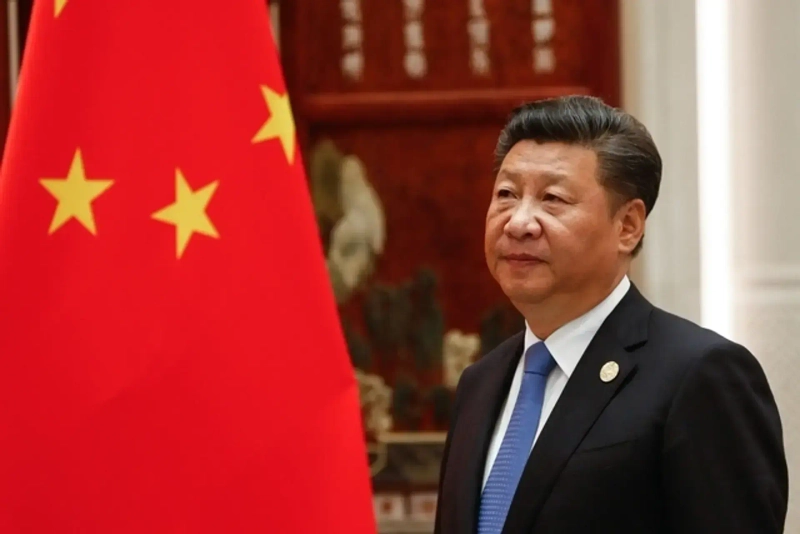
The leaders of China, Russia and India are meeting together for the first time since the start of Donald Trump’s second administration, which is pushing a "America First" policy. They will meet for two days starting on the 31st at the Shanghai Cooperation Organization (SCO) summit in Tianjin, China. Because the SCO summit is an event led by China, attention is focused on whether the three leaders will voice opposition to the US-led world order. However, commentators note that each country's interests differ. Xi Jinping of China is focusing on an "anti-US coalition," while Vladimir Putin of Russia is expected to focus on expanding his country's position and securing routes for oil and gas sales. Narendra Modi of India intends to counteract tariff pressure from the Trump administration but, at the same time, participates in the US-led Quad (the US, Japan, Australia and India security consultative group), so he is unlikely to tilt fully toward China.
◇ China: "Unilateralism causes serious harm"
The SCO is a political, economic and security consultative organization led by China and Russia. It was launched in 2001. Ten countries are members: China, Russia, Kazakhstan, Uzbekistan, Tajikistan, Kyrgyzstan, India, Pakistan, Iran and Belarus. Including two observer countries and 14 dialogue partners, 26 countries are involved. Its anti-Western color has become more distinct.
Experts say that Xi plans to hold the SCO prominently before the Victory Day and military parade in Beijing on September 3 and proclaim the construction of a new world order confronting the Western camp. On the 29th, the China state-run news agency Xinhua directly targeted the United States, saying, "Unilateralism, hegemony, tyranny and bullying cause serious harm."
China, Russia and India will also hold bilateral summits during the SCO summit. The three leaders gathering together is the first time in ten months since the BRICS summit held in Kazan, Russia in October last year. China and the participating countries are likely to issue a joint statement, the so-called "Tianjin Declaration," to check President Trump’s America First policy and hegemonism. Jeremy Chan, chief analyst for China and Northeast Asia at Eurasia Group, said, "If the statement contains direct criticism of the US and India participates in the joint statement, it would be an important signal showing that India is shifting toward China and Russia."
Xi is likely to emphasize that President Trump's diplomatic strategy has not been effective through this SCO summit.
◇ Putin visits China amid the war in Ukraine
President Putin is expected to place more emphasis on energy cooperation. Since early 2023, more than half of Russia's energy exports have gone to China and India. The second Trump administration imposed high tariffs of 50% on Indian products on the grounds that India was purchasing Russian oil. While the US is strongly pressuring China and India, President Putin wants India to continue importing Russian oil and wants China to increase its imports of Russian natural gas. European countries have stopped importing Russian natural gas after the invasion of Ukraine, causing significant losses. However, this is not easy. India still remains wary of China, and China is concerned about becoming overly dependent on Russian energy.
Russia's support for the war in Ukraine and the competition for hegemony centered on the US and China also make securing Russia's position a task for President Putin. In particular, President Putin is under pressure from the US and Europe to end the war in Ukraine. In this situation, analysts say he also aims to strengthen ties with China to secure diplomatic space.
◇ Modi's precarious tightrope walk
Prime Minister Modi is visiting China for the first time in seven years. India and China have had border disputes, but recently India has rapidly moved closer to China amid US tariff pressure. They have even agreed to resume border trade and direct flights after five years. On a one-night, two-day trip to Japan, where he held a summit with Prime Minister Shigeru Ishiba, Modi said in an interview with the Yomiuri Shimbun, "Considering the unstable state of the global economy, it is important for major economies such as India and China to cooperate to seek stabilization of the global economic order." Modi will attend the SCO summit on the 31st.
However, it is not easy for India to clearly tilt toward China. While Modi will attend the SCO summit, unlike President Putin he will not attend the Chinese Victory Day events. Modi’s meeting with Prime Minister Ishiba and the decision to strengthen economic cooperation with Japan before visiting China can be seen as part of a neutral diplomacy to avoid leaning toward either the West or China. A Beijing diplomatic source said, "While the SCO summit currently highlights the character of an alliance directed at the United States, whether it will lead to concrete joint action as a cooperative body remains to be seen," and added, "There are not many means for joint action, the countries' interests are very different, and India has a high need to maintain balance among great powers, so it is difficult to guarantee results."
Beijing=Kim Eun-jung/Tokyo=Kim Il-gyu correspondents/Lee Hye-in reporter kej@hankyung.com

Korea Economic Daily
hankyung@bloomingbit.ioThe Korea Economic Daily Global is a digital media where latest news on Korean companies, industries, and financial markets.