

PiCK
Appeals court also rules U.S. reciprocal tariffs 'illegal'…Will conservative-leaning Supreme Court back Trump? [Lee Sang-eun's Washington Now]
Summary
- The U.S. Court of Appeals for the D.C. Circuit ruled that former President Trump's imposition of reciprocal tariffs executive order was unlawful.
- The appeals court said there is a lack of legal basis for imposing tariffs under the International Emergency Economic Powers Act (IEEPA) and suggested the possibility of weakened leverage based on these measures.
- The Trump administration is preparing to appeal to the Supreme Court, but even a conservative-leaning court faces significant uncertainty in the ruling.
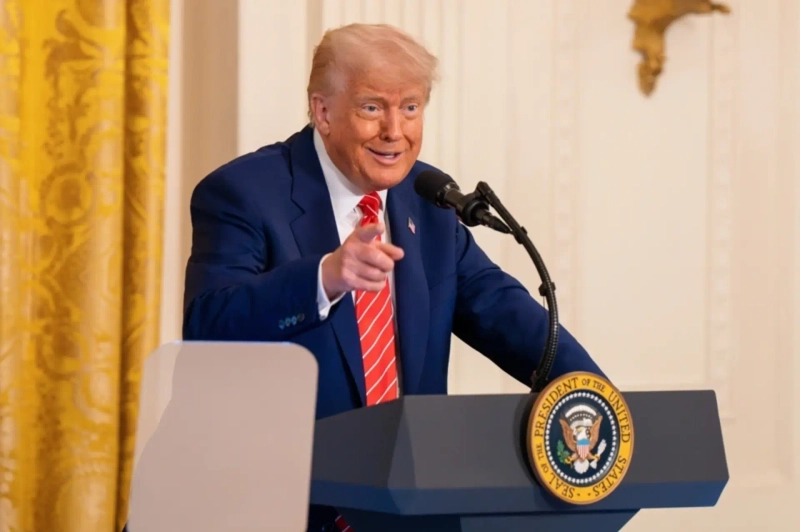
A U.S. court upheld a ruling in the appeals court that President Donald Trump's executive order imposing reciprocal tariffs was illegal. The Trump administration said it would immediately appeal to the Supreme Court.
The U.S. Court of Appeals for the D.C. Circuit on the 29th (local time) ruled that the U.S. government's use of the International Emergency Economic Powers Act (IEEPA) as a basis for imposing reciprocal tariffs was unlawful. This is the same conclusion as the U.S. Court of International Trade (CIT), which heard the first instance and in May ruled against the U.S. government in a lawsuit filed by U.S. companies harmed by the tariffs.
"Taxing authority belongs entirely to Congress"
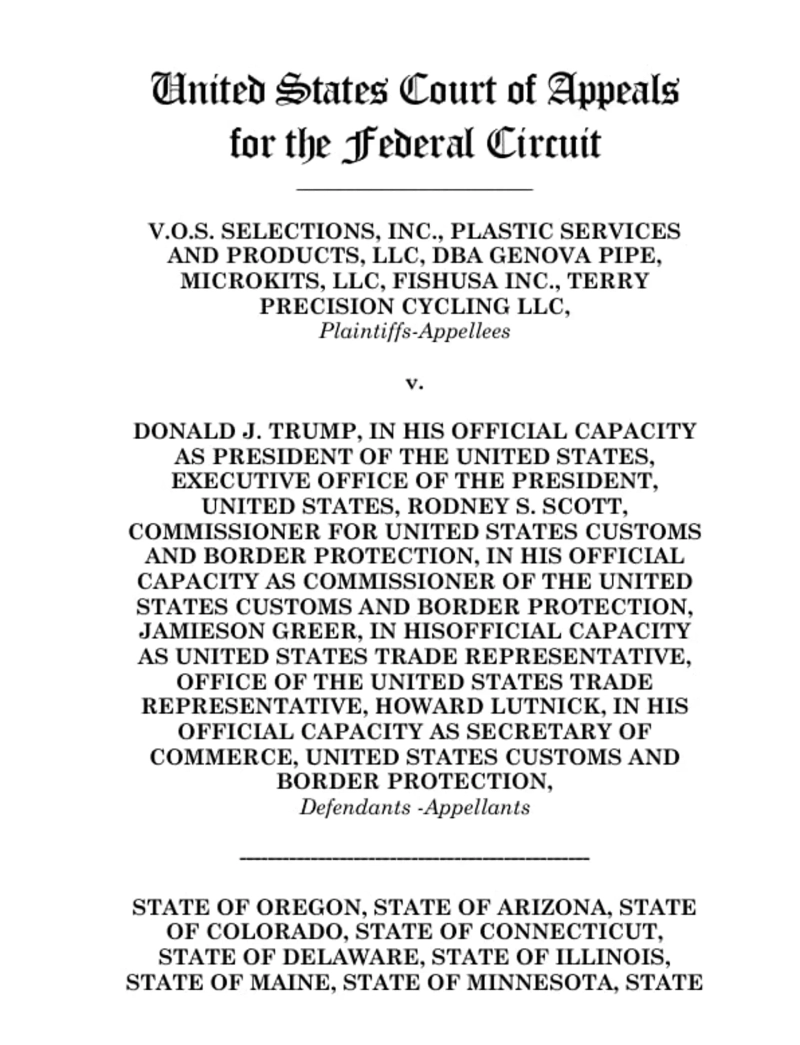
The appeals court panel noted in its opinion that "it cannot be clearly confirmed that Congress had authorized the Trump administration's actions, which invoked a series of executive orders to impose broad tariffs on countries including Canada and China on the grounds of fentanyl imports across the U.S. border."
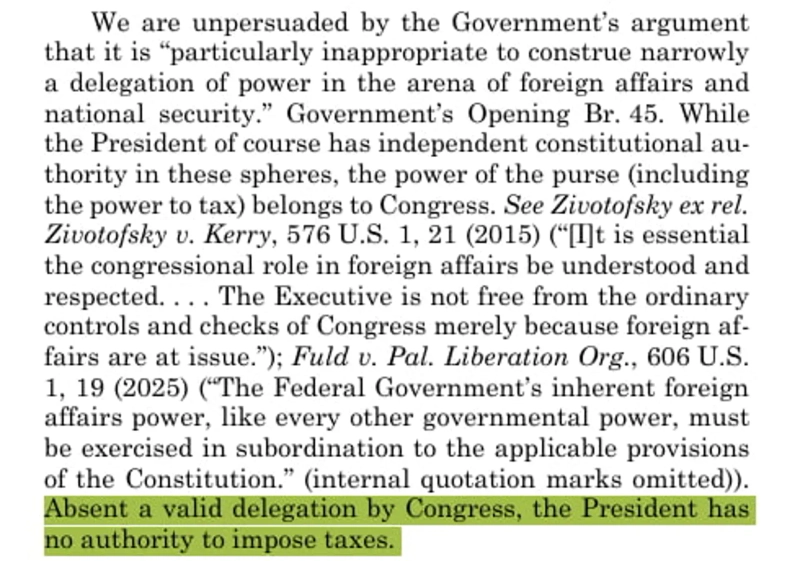
The appeals court said the scope of authority the Trump administration claimed falls under the 'Major Questions Doctrine,' which involves "significant economic and political importance," and emphasized that clear congressional approval is required. The court also stated that "the power of the purse (including the power to tax) belongs to Congress." "Absent a valid delegation by Congress, the President has no authority to impose taxes," the court said.
The court also pointed out that while IEEPA mentions authority to regulate "imports," it says nothing at all about imposing tariffs. The court explained that in the past 50 years no president has imposed tariffs on imports under IEEPA, and instead used measures such as restrictions on financial transactions and asset freezes.
President Trump, relying on IEEPA, unilaterally imposed reciprocal tariffs on countries and applied so-called "fentanyl tariffs" on Canada, Mexico, and China. But since all were found unlawful through the second instance, the leverage based on these measures is likely to be considerably weakened. However, the appeals court said it would stay the enforcement of the judgment until October 14, considering that President Trump may contest the matter at the Supreme Court. Attorney General Pam Bondi said she would immediately appeal. President Trump wrote on social media, "With the help of the Supreme Court, I will use (the tariffs) to benefit our country."
This ruling follows the government's appeal of the U.S. Court of International Trade (USCIT) decision on May 28 ordering the rescission of the reciprocal tariffs that President Trump implemented under IEEPA, on the grounds that the exclusive authority to impose tariffs lies with Congress.
At that time the CIT concluded that when Congress enacted IEEPA there was an explicit intent to limit the authority, and that the reciprocal tariffs and fentanyl tariffs "exceeded the President's authority and were unlawful." The Trump administration argued that tariffs were used as leverage in negotiations with foreign governments, but the court said, "That interpretation is rejected because it would effectively permit any action." The CIT had canceled the effect of the tariff measures taken under IEEPA and ruled to permanently prohibit them, but the appeals court vacated the permanent injunction and remanded for reconsideration.
According to the Wall Street Journal (WSJ), before the appeals court result was announced, the Trump administration's lawyers warned the panel that a ruling against President Trump would have "catastrophic consequences," saying it could unravel agreements with the European Union (EU), Indonesia, the Philippines, Japan, and others. They argued the court should not immediately enforce a decision even if it invalidated the tariffs. They added, "The United States cannot repay the trillions of dollars it has already promised other countries, which could lead to fiscal insolvency," and said, "President Trump believes that invalidating the (tariff) agreements could produce results similar to 1929 (the Great Depression)."
Product-specific tariffs imposed on automobiles, steel, and others are based on Section 232 of the Trade Expansion Act and are unrelated to this measure. The same applies to proposed future tariffs related to semiconductors and pharmaceuticals.
Trump pins hopes on conservative-leaning Supreme Court
The Supreme Court currently has nine justices (one Chief Justice + eight Associate Justices). Six of them are considered conservatives appointed by Republican administrations. Clarence Thomas, Samuel Alito, Neil Gorsuch, Brett Kavanaugh, and Amy Coney Barrett are generally regarded as pro-Trump, having been appointed by President Trump in his first term or by George H. W. Bush. However, because in recent Supreme Court rulings they have not automatically accepted the Trump administration's arguments, there remains the possibility that one or two could change their minds.
Chief Justice John Roberts is counted among the conservatives but is an institutionalist who values the existing constitutional order and principles, and is relatively neutral. He is unlikely to endorse a radical interpretation regarding tariffs. The three justices appointed by Democratic administrations—Ketanji Brown Jackson, Elena Kagan, and Sonia Sotomayor—are solid progressives and are very unlikely to approve the imposition of tariffs.
Using IEEPA to impose tariffs was regarded as a "stretch" even before the Trump administration took office. Many assessed that the legal basis was weak and that it would lose in litigation. Indeed, the content of the first- and second-instance rulings clearly pointed out IEEPA's vulnerabilities. Therefore, even the Supreme Court lacks strong grounds to automatically side with President Trump. However, it is quite possible to extend the practical effect of reciprocal tariffs by delaying rulings or postponing implementation. The Trump administration’s argument during the appeals process that "even if the reciprocal tariff measures are invalidated, their implementation should be delayed" comes from this background.
Washington=Correspondent Lee Sang-eun selee@hankyung.com

Korea Economic Daily
hankyung@bloomingbit.ioThe Korea Economic Daily Global is a digital media where latest news on Korean companies, industries, and financial markets.