

Won appreciation outlook…"Bonds in a trading range"
Summary
- Last week the won–dollar exchange rate rose due to the dividend repatriation from Samsung Electronics, but this week that effect is expected to fade and the won may strengthen.
- It noted that the Bank of Korea's hawkish signal and the Fed's new governor confirmation hearing are identified as factors that could affect the exchange rate.
- The bond market is expected by many to remain in a trading range this week, as expectations of policy rate cuts have already been priced in.
Exchange rate·Bonds
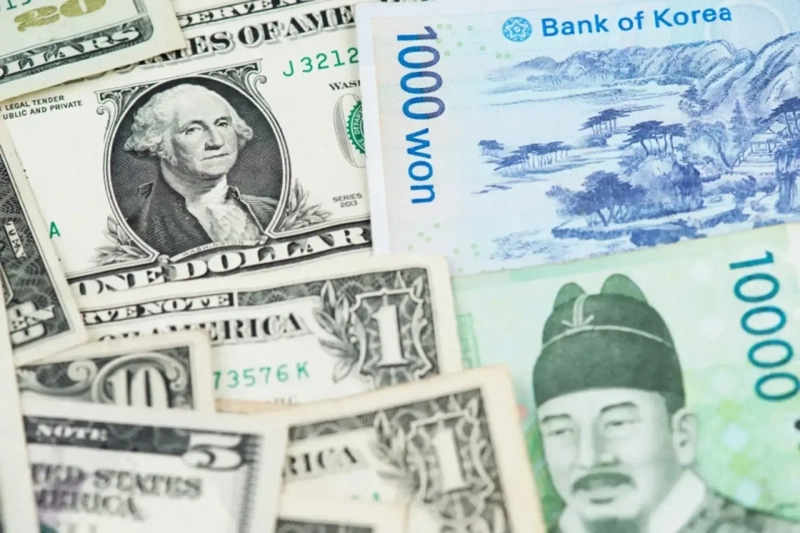
Last week the won–dollar exchange rate closed at 1,389 won 80 jeon, down 2 won 20 jeon in night trading on the 30th. Samsung Electronics paid out its quarterly dividend, and on the 27th during trading it exceeded 1,394 won and came close to 1,400 won. Samsung Electronics paid about 2.45 trillion won in quarterly dividends on the 20th, of which 1.3 trillion won was remitted to foreign investors. Analysts say that foreign investors sequentially converted the dividends they received into dollars, pushing up the exchange rate. This is the so‑called 'dividend repatriation' effect.
This week, this dividend repatriation effect is expected to dissipate, easing the won's weakness. Jin-kyung Lee, a researcher at Shinhan Investment Corp., said, "The Bank of Korea sent a 'hawkish' (preference for monetary tightening) signal at last week's Monetary Policy Board, so the exchange rate could show won appreciation in the first week of September."
However, the congressional hearing on Steven Myron, who was nominated as a new governor of the U.S. central bank (Fed), scheduled for the 4th of this month is cited as a factor that could push up the exchange rate. He authored the 'Myron report' last November, which argued that the currencies of major U.S. trading partners, including Korea, should be revalued. That report became the basis of the Trump administration's tariff policy.
Last week the bond market showed a downward trend. On the 29th at the Seoul bond market, the 3-year government bond yield was annual 2.426%, down 0.03% percentage points from the previous week (annual 2.456%). Since factors that would move the bond market have already been priced in, many expect a 'trading range' market this week. Sung-soo Kim, a researcher at Hanwha Investment & Securities, diagnosed, "Because the market has already priced in expectations that the Fed and the Bank of Korea will cut policy rates within the year, a trading range is likely to continue for the time being."
Ik-hwan Kim, reporter lovepen@hankyung.com

Korea Economic Daily
hankyung@bloomingbit.ioThe Korea Economic Daily Global is a digital media where latest news on Korean companies, industries, and financial markets.