

PiCK
U.S. tariff refund possibility sends Treasury yields surging… 30-year breaks 4.97% annual
Summary
- The U.S. Court of Appeals for the D.C. Circuit ruled that most of the Trump administration's tariffs were unlawful, raising the possibility of tariff refunds for duties already collected.
- As a result, U.S. Treasury yields surged, with the 30-year yield breaking through an annual 4.97%, its highest since late July.
- The possibility of tariff refunds has highlighted concerns about worsening fiscal deficits, affecting stock markets and overseas yields.
Trump administration tariffs blocked by federal appellate court
Concerns over fiscal deterioration rise on possible tariff refunds
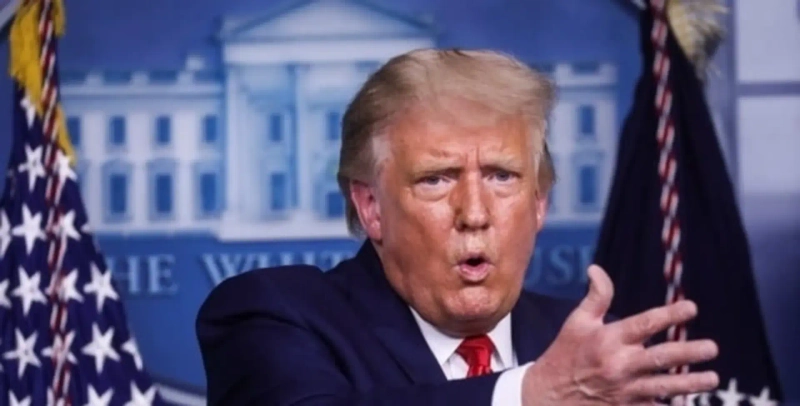
The U.S. Court of Appeals for the D.C. Circuit recently ruled that most of the Trump administration's tariffs were unlawful, raising the possibility that the U.S. government may have to refund tariffs it has already collected. Concerns that refunding tariffs already received by the government could worsen the fiscal deficit have grown, sending U.S. Treasury yields sharply higher again.
On the 2nd (local time), the U.S. 10-year Treasury yield rose 5bp (1bp is 0.01% point) from the previous session to an annual 4.281%. The 30-year Treasury yield rose more than 5bp to as high as an annual 4.977%. The 2-year Treasury yield also rose 3bp to an annual 3.658%. On an intraday high basis, the 30-year Treasury yield broke through an annual 4.97%, marking its highest level since late July, and the 10-year reached 4.279%, its highest since August 27. The surge in yields shocked stock markets as the Dow fell more than 500 points.
Overseas yields also rose. Germany's 30-year bond yield hit its highest level since 2011, and France's long-term bond yield rose to its highest since 2009.
On the 29th of last month (local time), the U.S. Court of Appeals for the D.C. Circuit ruled that the International Emergency Economic Powers Act (IEEPA), which President Trump relied on as the authority for the executive order imposing reciprocal tariffs, "grants the president the power to regulate imports only and does not include the power to impose tariffs by executive order." The court decided not to give the ruling effect until Oct. 14 to allow the Trump administration an opportunity to appeal.
When the Trump administration's tariff imposition first began, Treasury yields rose on inflation concerns, but by summer bond investors were reassured by the increase in revenue from tariffs. The revenue increase was a positive factor for the U.S., which is experiencing a widening fiscal deficit. According to the Tax Foundation, tariffs are expected to generate $172.1 billion in revenue in 2025 alone.
Ed Mills, a policy analyst at financial services firm Raymond James, noted, "If this ruling is finalized, refunds of existing tariffs may be unavoidable, which would lead to Treasury issuance and a surge in yields."
New York=Shin-young Park, correspondent nyusos@hankyung.com

Korea Economic Daily
hankyung@bloomingbit.ioThe Korea Economic Daily Global is a digital media where latest news on Korean companies, industries, and financial markets.