

"U.S. could become a Third World country without tariffs"…Trump pressing for Supreme Court ruling
Summary
- U.S. President Donald Trump requested a swift ruling from the U.S. Supreme Court on the legality of imposing tariffs.
- Trump emphasized that if tariff policy is withdrawn the U.S. could become a Third World country and said he is drawing investors' attention.
- The U.S. Court of Appeals for the D.C. Circuit ruled that the president's imposition of reciprocal tariffs lacks legal authority, increasing uncertainty for investors.
Backlash after court halts legality
Aiming for reversal in conservative-leaning Supreme Court
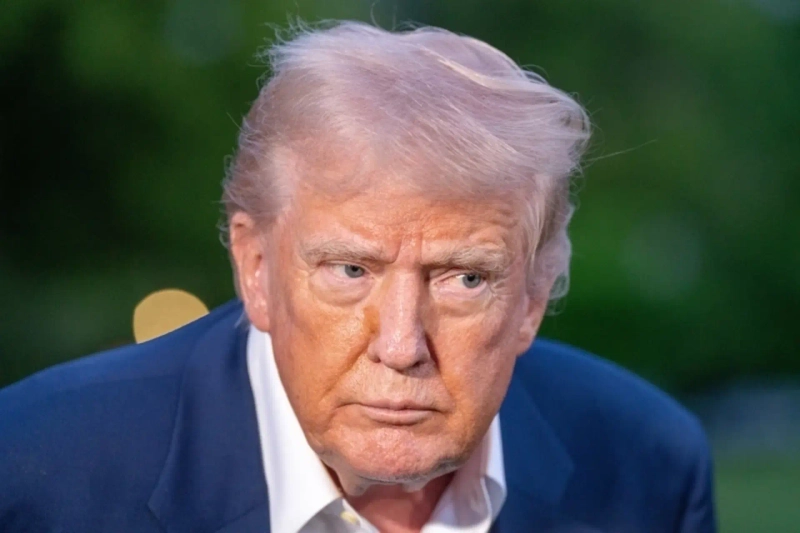
U.S. President Donald Trump has requested expedited review by the U.S. Supreme Court on the legality of imposing tariffs. After the appeals court put a hold on the Trump administration's tariff policy, it is interpreted as an attempt to obtain a 'reversal' from the conservative-leaning Supreme Court.
On the 2nd (local time) at the White House, President Trump said, "This matter is now going to the Supreme Court," and added, "We will request an early start to the Supreme Court hearing tomorrow and demand a swift ruling." He emphasized, "If we remove tariffs, the United States could be reduced to a Third World country," saying, "That is how important this ruling is and why we are requesting a swift decision." He went on, "(From the tariff policy) a lot of money is already coming in," and said, "These countries (Japan, South Korea, the European Union) will pay us $850 billion (about 1,180 trillion won)."
President Trump expressed hope for the final ruling, saying, "The Supreme Court is made up of great people and has made wise decisions so far." The U.S. Supreme Court has a conservative-leaning majority.
Legal circles point out that the president's act of pressuring the Supreme Court by putting forward the worst-case scenario that 'the U.S. could collapse if tariffs are rescinded' is itself unusual. Ted Murphy, co-chair of law firm Sidley Austin, criticized, "The Trump camp is emphasizing the importance of results over legal legitimacy with the logic that the ends justify the means."
On the 29th of last month, the U.S. Court of Appeals for the D.C. Circuit put a hold, ruling that the reciprocal tariffs imposed by President Trump on trading partners 'lack legal authority.'
The court acknowledged that the International Emergency Economic Powers Act (IEEPA), which President Trump relied on as the basis for his executive order, "grants the president broad authority to take various actions in response to a national emergency," but it concluded that "no provision explicitly includes authority to impose tariffs, tariff charges, or similar taxes."
Reporter Im Day-yeon allopen@hankyung.com

Korea Economic Daily
hankyung@bloomingbit.ioThe Korea Economic Daily Global is a digital media where latest news on Korean companies, industries, and financial markets.