

Japan long-term government bond sell-off…30-year yield 3.285% hits post-listing high
Summary
- It reported that Japan's 30-year government bond yield reached 3.285%, a post-listing high.
- It reported that Japan's political uncertainty and global bond selling have increased upward pressure on long-term government bond yields.
- It reported that expanded fiscal spending could further deepen the rise in long-term government bond yields.
Amid a surge in U.S. and European government bond yields and heightened political uncertainty in Japan
Attention on whether the 30-year auction on the 4th will break 3.5%
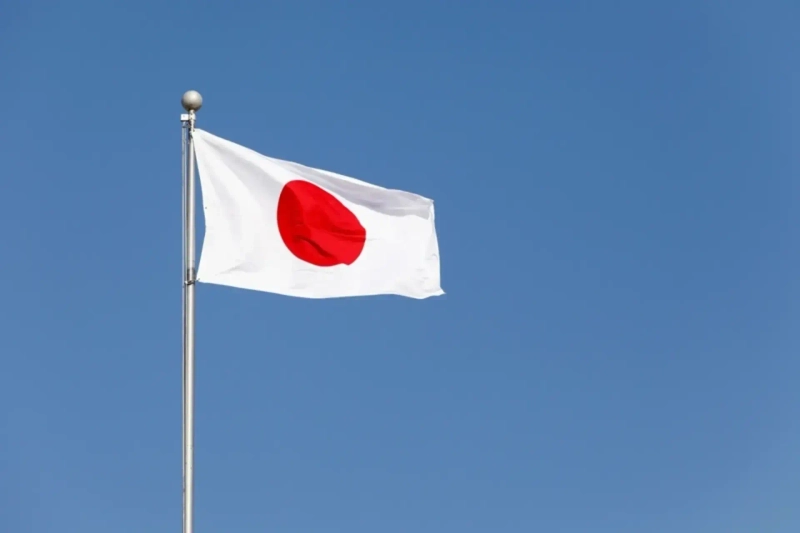
With long-term bonds in the U.S. and Europe weak, long-term Japanese government bonds, where political uncertainty has increased, also saw selling surge and plunged.
On the 3rd (local time), the yield on Japan's 30-year government bond jumped 8.5 basis points (1bp=0.01%) to 3.285%, a post-listing high. The 40-year bond yield also rose 9bp to 3.533%. The 20-year bond yield also rose to its highest level since 1999.
Bond yields and bond prices move in opposite directions.
Japan is due to hold a 30-year government bond auction on the 4th local time. With selling pressure on bonds elevated worldwide, the result of Japan's 30-year bond auction is being watched.
With the 30-year Japanese government bond yield exceeding 3.0% and reaching 3.25%, bond investors are watching whether it will move on to exceed 3.5%.
The previous day saw selling of long-term U.S. and European government bonds that pushed up yields, and on this day selling of long-term bonds surged as Japan's political uncertainty was highlighted.
Political uncertainty surrounding the ruling party increased after one of Prime Minister Shigeru Ishiba's key aides, with Ishiba's approval, decided to step down from the LDP secretary-general post.
According to Bloomberg, long-term interest rates are rising in global bond markets amid concerns over increased government spending and inflation.
A surge in corporate bond selling is also affecting demand in the government bond market.
On the previous day, when U.S. and European government bond yields surged, global bond issuers were reported to have sold at least $90 billion of investment-grade bonds.
Rajiv de Mello, global macro portfolio manager at Gama Asset Management, said, "We are currently reducing our exposure to Japanese bonds and avoiding long-term bonds in all regions globally." He said that because global uncertainty is high, long-dated bonds face strong upward pressure on long-term yields.
Political risk is also putting pressure on the Japanese yen. The yen hit its lowest level against the dollar in about a month on the previous day.
In bond markets, Ishiba's continued leadership is generally taken as a signal of fiscal soundness, but markets see the possibility that if Ishiba resigns he could be replaced by a politician who would push for expanded fiscal spending. Expanded fiscal spending is expected to put upward pressure on long-term government bond yields, given Japan's already serious fiscal deficit.
Toshinobu Chiba, a fund manager at Simplex Asset Management, said, "The next LDP leader may pressure the Bank of Japan to keep policy rates low while also pushing for fiscal expansion."
Jeong-ah Kim, guest reporter kja@hankyung.com

Korea Economic Daily
hankyung@bloomingbit.ioThe Korea Economic Daily Global is a digital media where latest news on Korean companies, industries, and financial markets.