

Summary
- Fed governor Christopher Waller said rate cuts should start this month and be carried out several times in the coming months.
- Raphael Bostic, president of the Atlanta Federal Reserve Bank, reiterated that one rate cut this year would be appropriate.
- Fed officials are likely to implement the year's first policy rate cut at the meeting in two weeks.
A rate cut at the September meeting is almost certain
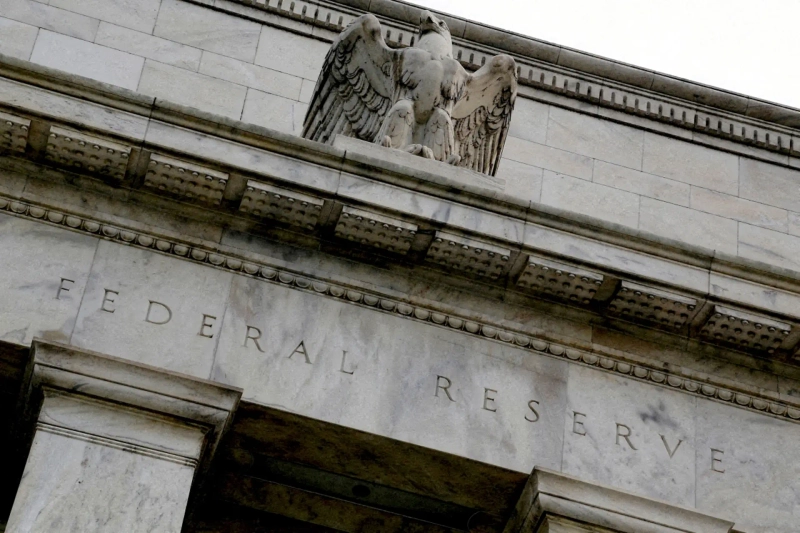
Federal Reserve governors and regional Federal Reserve bank presidents are expressing differing views on U.S. rate cuts.
On the 3rd (local time), Christopher Waller, a Fed governor who is one of the candidates for the next Chair of the Federal Reserve, said in an interview with CNBC that the Fed should start cutting rates this month and should cut rates several times over the coming months.
Waller said that the Fed should begin cutting rates this month and that several rate cuts over a few months would be necessary. He emphasized, "Typically when the labor market weakens it does so quickly, so the Fed should be prepared." He added that roughly 100~150bp of cuts are needed, but how long that will take depends on incoming data.
He also said that if the impact of tariffs begins to wane, inflation is likely to move closer to the Fed's target starting in about 6–7 months. However, he said he is not worried, but that people (at the Fed) still worry about tariff-driven inflation.
Raphael Bostic, president of the Atlanta Federal Reserve, reiterated in a separate speech that, given the current situation, "one rate cut this year (0.25%) is likely to be appropriate."
Bostic said, "I do not think the effect of tariffs on consumer prices will disappear quickly; in fact, it will not fully show itself for several months." He emphasized, "I will not simply assume that complacency will keep expectations unchanged and that another wave of inflation will not occur."
Bostic told reporters that "based on economic indicators the timing of a rate cut could be moved forward," and said he would watch wage growth, wages, and other indicators to assess labor market conditions.
Alberto Musalem, president of the St. Louis Federal Reserve, who spoke separately that day, said that rates are well aligned with the current economic environment but acknowledged that risks to employment have increased and the threat of high inflation has somewhat diminished.
In a speech at the Peterson Institute for International Economics in Washington, Musalem said, "The current moderately restrictive policy rate setting is consistent with today's full-employment labor market and core inflation that is about 1 percentage point above the Fed's 2% target."
Fed officials are expected to cut the policy rate for the first time this year at the meeting in two weeks. Officials have kept the policy rate unchanged since last December amid concerns that President Trump's tariffs could re-ignite inflation.
However, Christopher Waller and Michelle Bowman, among others, say that action to support the labor market is needed even before inflation prospects are clear, as the monthly job gains have slowed significantly.
Guest reporter Jeongah Kim kja@hankyung.com

Korea Economic Daily
hankyung@bloomingbit.ioThe Korea Economic Daily Global is a digital media where latest news on Korean companies, industries, and financial markets.