

China, right after the military parade…imposes 'anti-dumping duties' on US optical fiber
Summary
- China said it imposed anti-dumping duties of up to 78.2% on US blocking-wavelength tunable single-module optical fiber.
- The move suggests it is a countermeasure against US semiconductor equipment sanctions.
- China's imposition of duties is expected to act as an important variable for trade negotiations with the United States and investment in optical fiber-related companies.
'Tariff truce' sees up to 78% imposed
Countermeasure to US semiconductor equipment sanctions
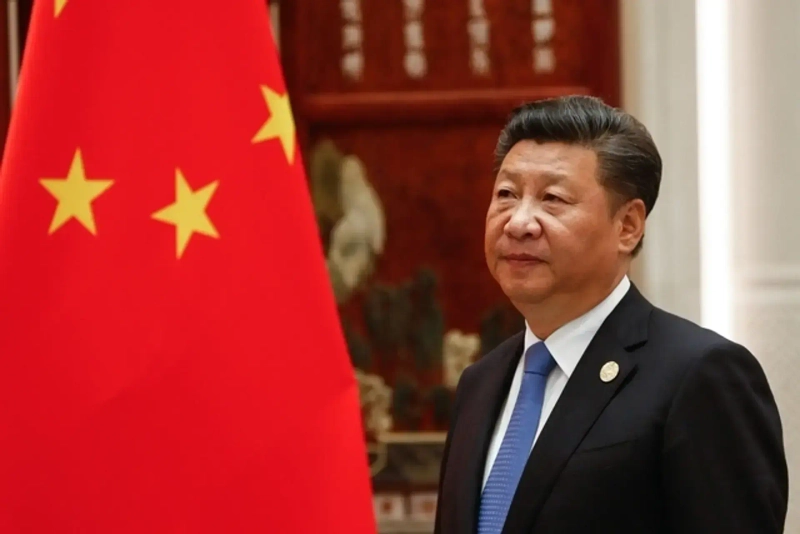
China, which is in a tariff-war truce with the United States, imposed anti-dumping duties of up to 78.2% on US specialty optical fibers immediately after the 80th Victory Day military parade ended.
China's Ministry of Commerce announced on its website on the 3rd that, from the 4th, it would impose duties of 33.3∼78.2% on US 'blocking-wavelength tunable single-module optical fiber.'
This optical fiber adjusts the blocking wavelength higher than general optical fiber and is used for submarine cables and long-distance high-speed communications.
According to the Ministry of Commerce, this anti-dumping investigation was carried out from March at the request of the Chinese company Changfei Optical Fiber & Cable. The ministry has been imposing anti-dumping duties on US non-dispersive single-module optical fiber since April 2011. In July 2018, it sharply increased the duty rates from the previous 4.7∼18.6% to 33.3∼78.2%.
The anti-dumping duty rate imposed on the special blocking-wavelength tunable single-module optical fiber this time is the same as the current duty rate on non-dispersive single-module optical fiber. Neo Wang, senior analyst for China's macroeconomy at Evercore ISI, told Bloomberg News, "It is meant to remind the United States to refrain from actions that undermine mutual trust and harm the atmosphere of trade negotiations."
According to Bloomberg, earlier the United States revoked the blanket authorization allowing Taiwan semiconductor firm TSMC's Nanjing factory in China to import US semiconductor equipment. The factory had been using verified end user (VEU) status to evade US export controls on China that began in October 2022.
Beijing=Kim Eun-jung, correspondent kej@hankyung.com

Korea Economic Daily
hankyung@bloomingbit.ioThe Korea Economic Daily Global is a digital media where latest news on Korean companies, industries, and financial markets.