

'Bank of Korea overdraft' criticized...the new government also drew 75 trillion won [Kang Jin-kyu's BOK Watch]
Summary
- It reported that the Lee Jae-myung administration secured nearly 75 trillion won over the past three months through temporary loans from the Bank of Korea.
- It stated that the cumulative loan amount from January to August this year reached 150 trillion won, indicating continued expansion of the government's temporary borrowing.
- It said that the government's temporary borrowing increase suggests weaknesses in the revenue base and difficulties in securing funds due to mismatches between fiscal execution and tax revenue flows.
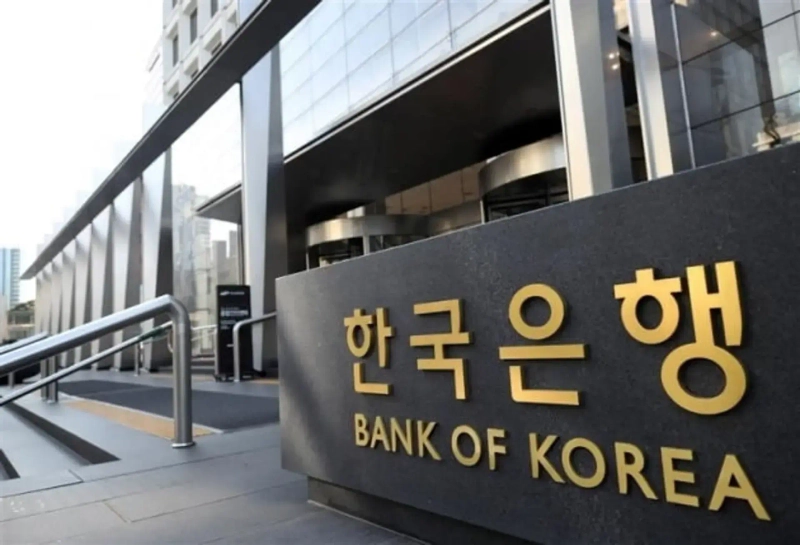
It was revealed that the new government borrowed nearly 75 trillion won from the Bank of Korea over three months following President Lee Jae-myung's inauguration. The cumulative loan amount from January to August this year reached 150 trillion won.
According to materials submitted to Park Seong-hoon of the People Power Party by the Bank of Korea on the 8th, the government temporarily borrowed 31.6 trillion won from the Bank of Korea last month. Adding the loans of 17.9 trillion won and 25.3 trillion won in June and July, respectively, the government drew 74.8 trillion won over three months.
The cumulative loan amount from January to August this year was calculated at 145.5 trillion won. The government borrowed 5.7 trillion won in January, 1.5 trillion won in February, 40.5 trillion won in March, and 23 trillion won in April. There were no loans only in May, when the presidential election was held. However, the government has been repaying the amounts it temporarily borrowed each month, and the current outstanding loan balance is estimated to be around 22.9 trillion won.
The Bank of Korea's temporary lending system to the government is a means the government uses to cover temporary cash shortages arising from timing differences between revenues and expenditures during the fiscal year. This is similar to an individual opening a negative balance account (credit line loan) at a commercial bank to draw funds as needed.
The more the government relies on the so-called 'Bank of Korea overdraft (ma-tong),' the more it implies frequent temporary sourcing of funds due to revenue shortfalls relative to expenditures. In particular, the scale of use tends to increase as the mismatch between fiscal execution and tax revenue flows widens.
Until last year, the Bank of Korea's temporary borrowing system was a major point of criticism among Democratic Party of Korea lawmakers. Lawmakers with backgrounds as economic bureaucrats, such as Ahn Do-geol and Lim Kwang-hyun, led the criticism. Ahn pointed out, "We must stop the chaotic fiscal execution that increases government bonds and temporary borrowings," and Lim said, "Temporary borrowing from the central bank by the government is, in principle, prohibited under central bank laws in major countries including the United States and European countries," noting, "It is a system allowed only in some countries such as Canada and Argentina."
However, as the administration changed, the roles of offense and defense have also switched. Park Seong-hoon said, "The Lee Jae-myung government is repeatedly carrying out the largest-ever temporary borrowing by relying on the Bank of Korea overdraft," and urged, "Before calling for expansionary fiscal policy, fundamental measures to strengthen the revenue base and restructure spending should be prepared first."
Reporter Kang Jin-kyu josep@hankyung.com

Korea Economic Daily
hankyung@bloomingbit.ioThe Korea Economic Daily Global is a digital media where latest news on Korean companies, industries, and financial markets.