PiCK
"We need a won-denominated stablecoin"…Industry pushes for speed, regulators urge caution
Summary
- The industry said that rapid institutionalization of the won-denominated stablecoin (Wonsco) is needed to expand global competitiveness, cross-border transaction liquidity, and usability for K-content payments.
- Kakao Pay and KakaoBank said they expect Wonsco to be able to make a leap to a sovereign stablecoin through digitalization of local currencies and innovation in financial infrastructure.
- Policy authorities said that securing risk management and regulatory consistency comes first, through a bank-centered issuance structure, mandatory reporting for cross-border virtual asset transactions, and linkage with the second-phase bill under the Virtual Asset User Protection Act.
Forecast Trend Report by Period


Industry and regulators gather at a won stablecoin forum
Industry stresses stronger global competitiveness and broader usability
Authorities put the focus on risk management and regulatory consistency
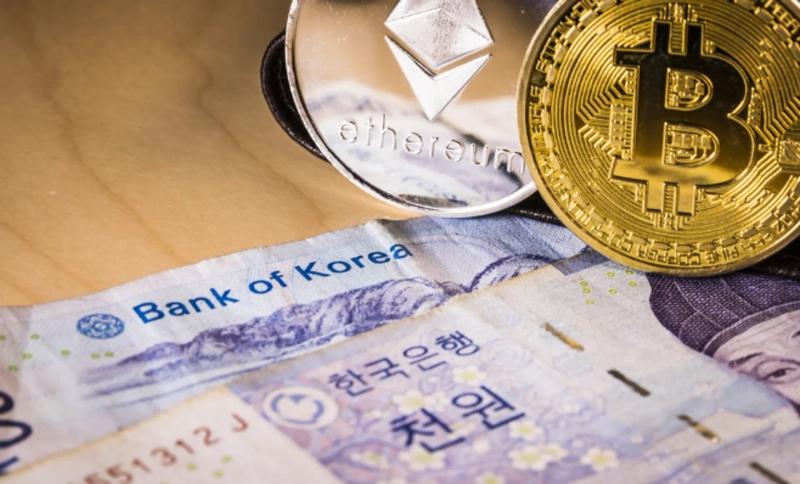
Discussions on introducing a won-denominated stablecoin (Wonsco) are gaining momentum. The industry is calling for rapid institutionalization to secure global competitiveness and expand new use cases, while financial regulators appear to be placing greater weight on a cautious approach aimed at managing cross-border capital flows and minimizing risks.
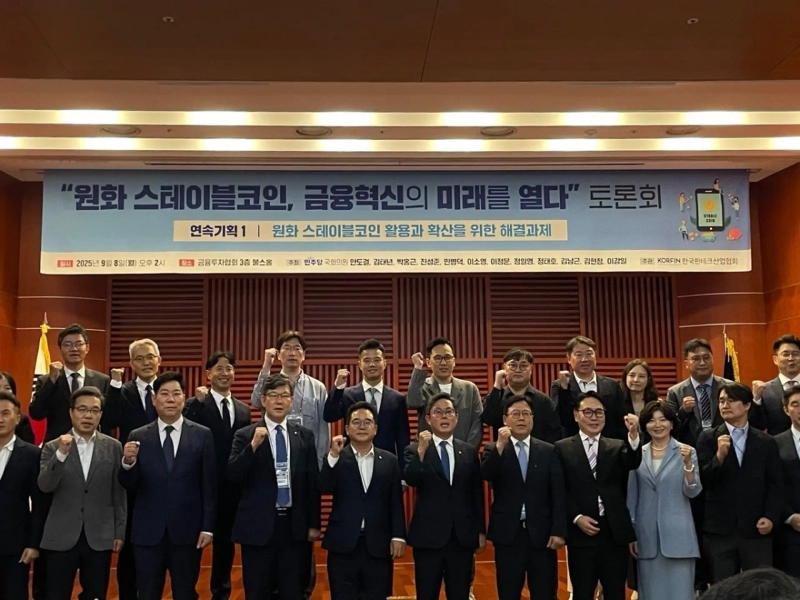
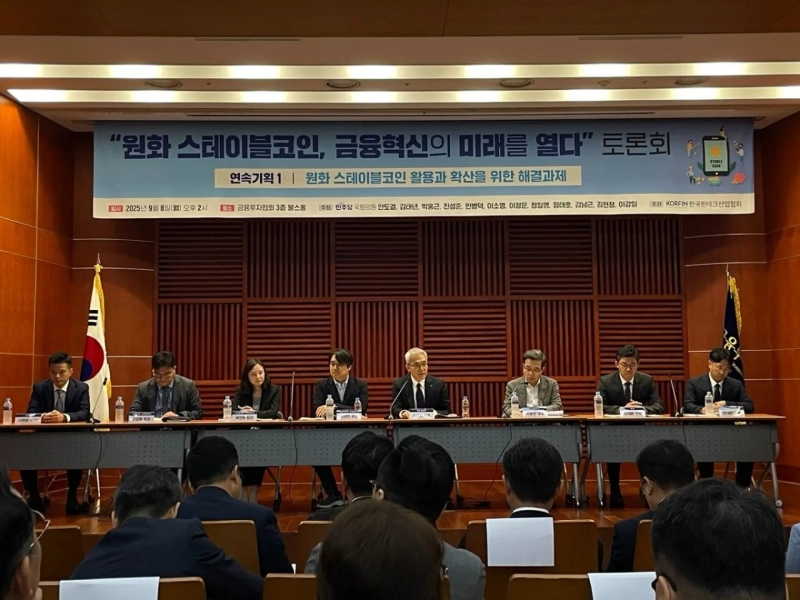
At the forum titled "Won Stablecoin, Opening the Future of Financial Innovation," held on the 8th at the Korea Financial Investment Association in Yeouido, Seoul, industry stakeholders—banks, virtual asset (cryptocurrency) exchanges, and electronic payment firms—met with policy authorities including the Financial Services Commission, the Bank of Korea, and the Ministry of Economy and Finance to discuss issues such as eligible issuers, regulatory design, and use cases for Wonsco. A range of views was presented on how to balance innovation and stability.
Industry: "Expand usability and secure global competitiveness"
Kim Tae-yoon, executive director at Bithumb, said that "as the digital asset market has already grown in scale, the next step is to pursue qualitative growth," adding that "cross-border transaction liquidity can be secured only if foreigners are able to use Wonsco." He stressed that "if, like the stock market, customer due diligence (KYC) and anti-money laundering (AML) safeguards are strengthened to allow foreigners to participate in the domestic market, and Wonsco is listed on overseas exchanges in parallel, it can achieve global success."
Myung Jae-hyun, managing director at KG Inicis, pointed to the link between demand for K-content and payments. He said, "For concert ticket payments for domestic artists such as NCT and Stray Kids, the share of overseas foreigners exceeds half. If Wonsco is introduced here, foreigners’ access to Korean content will improve," adding, "Global payments carry high risks of fraudulent use and chargebacks, but Wonsco can provide a defense against that." He added that "Wonsco is not merely a means of payment, but an element that protects Korea’s digital competitiveness."
Park Jung-ho, vice president at Kakao Pay, said, "As a platform with more than 30 million users, it is important to create new use cases based on Wonsco," adding, "In particular, the digitalization of local currencies can lead to efficient execution and revitalization of local economies."
Song Ho-geun, deputy president at KakaoBank, also said, "Stablecoins are a technology that will bring innovation to finance," adding, "Just as artificial intelligence (AI) is reshaping daily life, stablecoins can change the financial infrastructure itself. If a system that balances innovation and stability is quickly put in place even now, (Wonsco) can make a leap to a 'sovereign stablecoin.'"
Authorities: "Risk management and regulatory consistency come first"
Policy authorities are emphasizing risk management and regulatory consistency. Ko Kyung-chul, head of the Electronic Finance Team at the Bank of Korea, said, "There are concerns that issuing Wonsco could amount to permitting specialized payment and settlement banking," adding, "Therefore, a structure is needed in which issuance is centered on the banking sector, applying foreign exchange transaction regulations and banks’ know-how, with accountability." He said, "Banks would not be the only eligible issuers; cooperation is possible if non-banks contribute through technology development or product development," adding, "Just as PayPal separates issuance and distribution, banks could handle issuance while fintechs such as pay providers take charge of distribution networks to generate synergy."
Bae Kyung-hwa, team leader at the International Finance Division of the Ministry of Economy and Finance, said, "Wonsco is an opportunity for financial innovation, but institutional design must be meticulous and side effects minimized," adding, "We are pushing to mandate reporting for cross-border virtual asset transactions, and we will strengthen monitoring to prevent circumvention." She added, "We will move in line with the second-phase bill under the Virtual Asset User Protection Act."
Kim Sung-jin, director of the Virtual Assets Division at the Financial Services Commission, said, "We are preparing the second-phase legislation, including stablecoins," adding, "The FSC’s goal is to align with global standards while striking a balance between innovation and safety." He said, "People must be able to feel what benefits they gain by using Wonsco, and we need to consider diverse applications such as K-content and real-world asset tokenization (RWA)." He added, "In the working-level consultations, we are preparing safeguards for concerns, and we are also reviewing innovative use cases via a sandbox, referencing overseas examples."

Doohyun Hwang
cow5361@bloomingbit.ioKEEP CALM AND HODL🍀