

This 'Thing' Essential for Issuing KRW Stablecoins [Hankyung Koala]
Summary
- Stated that issuing and cashing mainnet coins is impossible domestically due to regulations.
- Pointed out that this fundamentally blocks creating an ecosystem capable of issuing and operating won-denominated stablecoins.
- Therefore, current regulations act as a decisive limitation on domestic companies' ability to build and operate mainnets and dApps.
Kim Min-seung's ₿Official
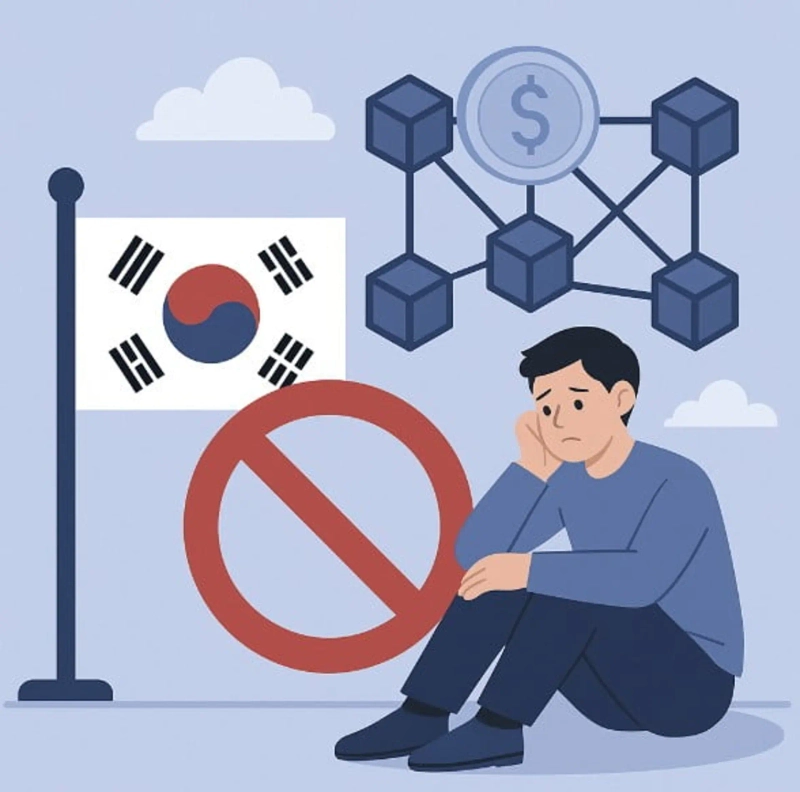
As discussions around stablecoins deepen, conversations about a 'K-mainnet' that would issue won-denominated stablecoins have also begun. While progress in the discussion is welcome, the reality is regrettable. Under the current system, a K-mainnet cannot be created.
A mainnet cannot exist without a 'mainnet coin.' In Korea, issuing and selling coins is impossible. Even if issuers circumvent regulations by issuing coins through overseas entities, the issuer cannot convert those coins into cash. Therefore, a mainnet cannot be created and operated in our country. Let’s look into the details.
In fact, 'mainnet' is not the most precise term. Mainnet is a concept contrasted with 'testnet.' If we mean a blockchain network responsible for issuing and circulating stablecoins, it is more appropriate to use the Layer 1 (L1) concept. However, in this article I will use the widely used term mainnet.
Mainnet refers to blockchain networks like Bitcoin, Ethereum, and Solana. Actual assets are issued and circulated on these blockchain networks. In other words, records on these blockchain networks are equivalent to assets with value.
A blockchain usually means a distributed ledger recorded on numerous nodes (servers). Because a very large number of nodes record the same content through a consensus algorithm, records on the blockchain are reliable and immutable, which is an argument for ownerless blockchains to function as public goods.
A node is a computer. To operate a blockchain, many nodes must provide computing power. The more nodes there are, and the less relationship there is between participants, the higher the trustworthiness of the blockchain. The question is how to reward node participants. That is why mainnet coins exist. To operate a network as a public good open to anyone, nodes that provide server resources are paid by issuing coins used for things like transaction fees on that network. Bitcoin 'mining' is exactly this. The Bitcoin network currently has more than 20,000 nodes participating.
Going a bit further, most mainnets other than Bitcoin operate using a proof-of-stake (PoS) or a variant of that consensus algorithm. Simply put, node participants lock up a significant amount of mainnet coins as collateral to demonstrate that the node is an honest participant. Nodes recognized in this way participate in the network and provide computing power to receive rewards. If a node submits incorrect records, the staked coins are confiscated or burned in many networks. Ethereum, a representative proof-of-stake blockchain, has more than 10,000 nodes participating.
In summary, a mainnet coin is essential for decentralized operation of a mainnet. Even if someone creates a mainnet as a nonprofit at their own expense, they cannot secure a sufficient number of participants over time to achieve adequate decentralization. There have been attempts to create coinless mainnets, but none have managed to secure a large number of participants and build an ecosystem.
A mainnet is not a simple technological product. Just as the participation of many nodes is essential, various dApps (applications on the blockchain) must form an ecosystem on the mainnet. This, too, is fundamentally blocked in Korea. Issuance and cashing of coins, which are essential to creating and operating mainnets and dApps, are blocked.
In December 2017, Korea's government issued emergency measures on virtual currency, banning the issuance and sale of virtual assets (ICOs). Financial institutions were also prohibited from holding, buying, acquiring as collateral, or investing equity in virtual assets. In February 2018, the Office for Government Policy Coordination made clear the government's stance by saying, "We will prevent illegal acts and opacity in virtual currency trading while actively fostering blockchain technology," meaning the government would "foster blockchain but prohibit coins." Many large companies such as Samsung, LG, SK, and Lotte launched their own mainnets at that time, but they were blockchains without proprietary assets (mainnet coins). Eight years later, those corporate mainnets are not used in practice.
If you look closely at so-called kimchi coins, they were issued by establishing entities in jurisdictions where coin issuance is legal, such as Singapore or the British Virgin Islands. To avoid regulations, issuers often put the issuing entity overseas and have domestic companies receive payments as technical service fees, but the problem is that domestic companies cannot cash out virtual assets. Since the enforcement of the Special Financial Transactions Information Act in 2021, domestic companies have been blocked from using domestic virtual asset exchanges. There was an announcement in February that corporate use of exchanges would be allowed in the second half of this year, but even after September there has been no change. Because issuing coins or earning coins and cashing them out to hire employees and pay office rent is fundamentally blocked, our companies cannot build or operate mainnets or dApps. In other words, current regulations block creating and operating mainnets and dApps.
It is both pleasing and bittersweet that, as the world changes and stablecoins rise, people are now asking why there is no K-mainnet. If the government's blanket ban in 2017, when the world was rushing to build "a better Ethereum," had not occurred, Korean companies might now have world-class mainnets and world-class kimchi coins created by Korean firms. DApps made by our companies would have formed ecosystems on mainnets made by our companies, freely used by the ten million domestic virtual asset investors. Won-denominated stablecoins could have been integrated into that ecosystem very naturally.
A few days ago, a payment-only mainnet for the stablecoin named 'Tempo' was unveiled. Among its partners are payment specialist Stripe, online shopping solution Shopify, Deutsche Bank, Standard Chartered, and Coupang, Korea's leading online shopping company. It is a regrettable situation.

Kim Min-seung is the head of the Kobit Research Center...
He is a founding member and the head of the Kobit Research Center. He explains complex events and concepts occurring in the blockchain and virtual asset ecosystem in an easy-to-understand way and helps people with different perspectives understand each other. He has experience in blockchain project strategy planning and software development.

Korea Economic Daily
hankyung@bloomingbit.ioThe Korea Economic Daily Global is a digital media where latest news on Korean companies, industries, and financial markets.